
The rapid evolution of corporate intelligence has pushed the retail sector past the stage of simple automation toward a sophisticated paradigm where digital agents function as accountable, full-time staff members. This transformation marks a departure from the days when artificial intelligence was viewed as a peripheral tool for generating text or organizing schedules. In the current landscape, the focus has shifted toward high-capability General Agents, frequently described in the industry as “Lobsters.” These agents are celebrated for their creative adaptability and their capacity to handle varied, unpredictable tasks. However, as these technologies migrate from the consumer sphere into the high-stakes environment of enterprise retail, a significant gap has become apparent between generalized capabilities and the rigid demands of professional chain management.
The fundamental challenge lies in the nature of retail operations themselves, which require far more than just flexible reasoning. A retail business functions through a series of interlocking standards, clear chains of responsibility, and strict system constraints that traditional artificial intelligence models often struggle to navigate. While a general agent might understand a request to check store cleanliness, the retail enterprise requires that such an action be integrated into a broader business logic. This includes identifying the issue, recording it within the corporate database, assigning a task to a specific human employee, and verifying the completion through a closed-loop accountability system. The industry is consequently moving toward the deployment of digital employees that assume full responsibility for execution within these established frameworks, bridging the divide between intelligent assistance and controllable corporate processes.
The Transformation of Retail Chain Management Through AI
Retail chain management is undergoing a structural metamorphosis as artificial intelligence transitions from a reactive tool to a proactive participant in store operations. In the past, the primary goal of digital systems was to provide data to human managers who would then make decisions and enforce standards. Today, the introduction of digital employees allows for a more autonomous approach to these repetitive but critical tasks. These AI-driven entities are no longer just observing; they are executing. By functioning within the existing business rules of a brand, they can maintain a level of consistency that was previously impossible to achieve across thousands of disparate locations.
This shift is particularly evident in how brands handle store inspections and compliance. Traditionally, a supervisor would need to physically visit a location or manually review hours of video footage to ensure that promotional displays were correctly positioned or that safety protocols were being followed. Such a model is inherently limited by human bandwidth and the potential for subjective bias. In contrast, the current generation of digital employees can continuously monitor these parameters, using visual data to verify compliance in real-time. This ensures that every store, regardless of its distance from the regional headquarters, adheres to the exact same operational standard, thereby protecting the brand equity and ensuring a uniform customer experience.
Moreover, the integration of these digital employees into the chain of responsibility has changed the way retail leaders perceive their workforce. Instead of viewing AI as a replacement for human staff, it is increasingly seen as a specialized layer of the organization that handles high-frequency, low-variance tasks. This allows human personnel to focus on more complex, interpersonal aspects of retail, such as customer service and community engagement. The resulting hybrid workforce is more resilient and adaptable, capable of maintaining rigorous operational standards while remaining flexible enough to respond to the nuanced needs of individual shoppers.
Navigating Trends and Growth in the Intelligent Retail Market
Technological Convergence and the Rise of Agile Operations
A defining trend in the current retail market is the pivot from growth driven by physical expansion to growth driven by operational efficiency. As the density of stores in many urban centers reaches a point of saturation, enterprises are no longer finding high returns simply by opening new doors. Instead, the focus has moved toward maximizing the performance of existing assets. This has given rise to the concept of “agile state” management, where a brand must be able to change its marketing strategy, product displays, and operational focus almost overnight to respond to market shifts or seasonal demands.
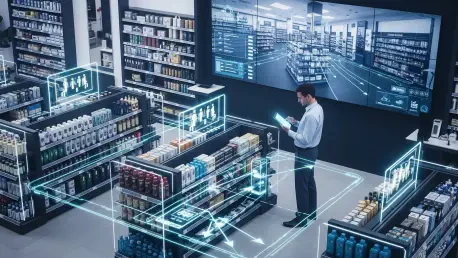
The technological backbone of this agility is the convergence of edge computing and multi-modular AI agents. By processing visual and operational data directly at the store level, retailers can capture a live pulse of their business without the latency associated with traditional manual reporting. This enables a brand to launch a nationwide campaign and receive confirmation within minutes that every single location has implemented the required changes. This level of synchronization was once a dream for retail executives, but it has now become a baseline requirement for staying competitive in a fast-moving market where consumer preferences can shift in the span of a few days.
Market Projections and the Shift Toward Performance-Based AI
Current data suggests that a vast majority of retail enterprises—exceeding 80 percent—are now prioritizing the optimization of internal processes over the acquisition of new real estate. This shift is reflected in the rising demand for AI-native applications that are deeply intertwined with business logic rather than serving as standalone utilities. Projections for the coming years indicate a substantial increase in the adoption of these systems, as companies seek to insulate themselves against rising labor costs and the challenges of high staff turnover. The market is increasingly valuing AI solutions based on their ability to deliver measurable performance improvements rather than just technological novelty.
The evolution of performance indicators is moving from simple automation statistics to comprehensive “closed-loop” accountability metrics. Retailers are looking for systems that can not only identify an operational failure, such as an empty shelf or an incorrectly labeled product, but can also track the remediation process until the problem is solved. This focus on the full lifecycle of an operational task is what distinguishes the current era of intelligent retail from previous iterations. Future forecasts point toward a retail environment where the management radius of a single executive is effectively infinite, as digital labor provides the eyes and ears necessary to oversee vast networks of stores with pinpoint accuracy.
Addressing Complexity and the Crisis of Scale
The expansion of a retail chain from a handful of local boutiques to a national or international powerhouse brings with it a complexity crisis that can often cripple even the most successful brands. As the number of stores grows, the ability of a central headquarters to maintain a clear and accurate understanding of what is happening on the ground diminishes. Traditional management tools like ERP and CRM systems are excellent for tracking financial data and customer transactions, but they are often blind to the physical realities of the store environment. This disconnect can lead to a gradual erosion of standards, where the actual customer experience begins to diverge significantly from the brand’s intended vision.
To combat this crisis of scale, industry leaders are adopting a dual-management strategy that separates the “stable state” from the “agile state.” The stable state involves the core, unchanging processes of the business, such as logistics and financial reporting, which are handled by traditional, robust IT infrastructures. The agile state, however, encompasses the fluid and dynamic aspects of the store experience, such as visual merchandising and staff behavior. The challenge of managing this agile state across thousands of locations is being met through the deployment of “atomic skill modules.” These are standardized, reusable units of digital capability that can be combined and deployed to handle specific, evolving tasks without requiring a complete overhaul of the store’s digital infrastructure.
Furthermore, the problem of information lag is being solved by using flexible AI agents that can interpret natural-language instructions and translate them into specific store actions. This allows a regional manager to issue a directive—such as “ensure all summer inventory is placed on the front tables by noon”—and have the digital employee verify the execution across all stores in that region. This approach effectively eliminates the ambiguity that often plagues manual communication chains. By bridging the gap between high-level strategic intent and ground-level execution, these systems allow a large enterprise to operate with the speed and precision of a much smaller, more nimble organization.
The Regulatory Landscape and Security in Digital Execution
As digital employees become more integrated into the daily operations of retail chains, the regulatory landscape is evolving to address new concerns regarding data integrity, privacy, and accountability. Compliance is no longer just about financial transparency; it now encompasses the ethical and secure management of the vast amounts of visual and operational data collected by AI systems. Governments and industry bodies are increasingly focused on ensuring that these systems operate within predefined boundaries, preventing unauthorized data access or the potential for AI “hallucinations” to lead to incorrect business decisions or safety violations.
Security in this context is being built directly into the architectural foundation of the systems. One of the primary strategies for maintaining data privacy is the use of edge-based processing, where sensitive visual information is analyzed locally at the store level rather than being transmitted to a central cloud. This significantly reduces the risk of data breaches during transmission and ensures that only anonymized, high-level insights are sent to the corporate headquarters. Additionally, strict permission layers are being implemented to ensure that digital employees only interact with the data and stakeholders relevant to their specific tasks, preventing the unauthorized spread of sensitive information across the organization.
Maintaining trust in these automated systems is critical for their long-term viability. This requires a high degree of transparency in how AI models make their judgments. For instance, if a digital employee flags a store for non-compliance, the system must be able to provide the specific visual evidence and the logic used to reach that conclusion. This auditability ensures that human managers can verify the actions of their digital counterparts and that the system remains a reliable and fair tool for performance management. Adhering to these rigorous standards is not only a regulatory necessity but also a strategic advantage for brands looking to build a sustainable and ethical digital infrastructure.
The Future Radius: Innovation and Business Optimization
The retail industry is rapidly approaching a state where the boundaries between human labor and digital execution are almost entirely transparent. We are moving toward a future where the primary role of technology in retail will shift from “standardized operations”—ensuring that no mistakes are made—toward “business optimization,” which involves identifying and acting upon opportunities for growth. In this advanced stage, digital employees will not only monitor for compliance but will also analyze customer flow, product interaction patterns, and local market trends to suggest and implement changes that can actively increase revenue.
Innovation in this space is focusing on the development of store-specific “memories.” This allows an AI system to learn from the unique history and operational context of a specific location, refining its execution strategies over time. For example, a digital employee might learn that a certain store experiences a surge in demand for specific products during local events and can automatically adjust display recommendations or inventory alerts to capitalize on that traffic. This level of localized intelligence allows a massive retail chain to maintain its global brand standards while simultaneously operating with the intimacy and responsiveness of a neighborhood shop.
Furthermore, the global economic climate is driving a push toward low-cost, high-efficiency models that can weather fluctuations in consumer spending and labor availability. The expansion of the “management radius” through digital labor is the key to this resilience. By allowing a central team to oversee a much larger number of stores with greater detail, brands can reduce the overhead associated with middle management while actually increasing the quality of oversight. This evolution will likely redefine the very structure of retail organizations, creating a more streamlined, data-driven hierarchy that is better equipped to handle the challenges of a volatile market.
Summary of Findings and Strategic Recommendations
The transition toward digital employees represented a fundamental change in the operational philosophy of the retail sector. The investigation revealed that the limitations of general-purpose AI were overcome by creating specialized, enterprise-grade agents that integrated directly into existing business processes. These systems provided the necessary accountability and structure that the retail environment demanded, moving beyond mere assistance to provide genuine execution. The research highlighted that the primary value of these technologies lay in their ability to bridge the gap between high-level corporate standards and the daily physical reality of store operations.
Market trends indicated that efficiency-driven growth became the dominant strategy for successful retail chains. The shift from physical expansion to the optimization of existing locations necessitated a new level of on-site visibility that only automated, visual AI systems could provide. It was observed that the complexity of managing thousands of locations was significantly mitigated through the use of atomic skill modules and the separation of stable and agile business states. These innovations allowed brands to maintain a high degree of flexibility without sacrificing the consistency required for large-scale success.
Retail leaders found that investing in collaborative intelligence was the most effective way to expand their management radius. By positioning digital employees as a layer between the IT infrastructure and the human workforce, companies achieved a level of oversight that was previously unattainable. The data showed that this did not lead to a displacement of human staff but rather to a refocusing of human efforts toward high-value activities. Security and regulatory compliance were maintained through edge computing and strict permission protocols, which ensured that the deployment of AI was both safe and ethical.
The future outlook for the industry suggested a move toward autonomous business optimization. The focus shifted from simply preventing errors to actively identifying revenue opportunities through localized store intelligence. Strategic recommendations for the coming period included the prioritization of integrated AI-native applications that could offer a closed-loop system of task identification and verification. Brands were encouraged to build store-specific digital memories to enhance localized performance and to continue refining the partnership between human judgment and machine execution. Ultimately, the adoption of these digital employees provided the foundation for a more resilient, agile, and intelligent retail landscape.