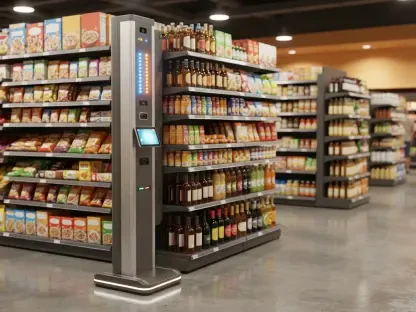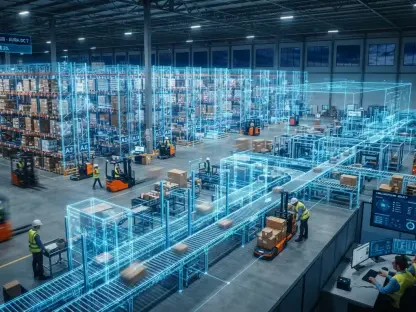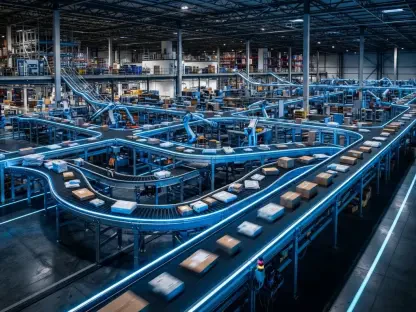

Retailers across the globe are currently grappling with the reality that approximately one trillion dollars in value remains trapped in inefficient supply chains and opaque inventory systems. As of 2026, the industry has pivoted away from basic robotic automation toward a holistic ecosystem known as Physical AI. This paradigm shift focuses on the seamless integration of digital data with physical assets, creating a responsive environment where every item is tracked with surgical precision. Leading this movement is GreyOrange, which has successfully expanded its footprint to over 3,800 retail locations, establishing a new benchmark for what modern storefronts can achieve through autonomous orchestration.
The Rise of Physical AI and Autonomous Orchestration in Modern Retail
The transition toward sophisticated multi-agent warehouse orchestration signifies a departure from the rigid automation of the past decade. Modern retail environments now require a dynamic interplay between various agents that can navigate complex physical spaces while processing vast amounts of real-time data. By bridging the gap between back-end logistics and front-end store operations, these systems ensure that inventory truth is no longer a goal but a standard operational reality. High-scale deployments in the fashion and specialty sectors demonstrate that the ability to synchronize digital records with physical presence is the only way to sustain growth in a competitive global market.
Furthermore, the role of orchestration has evolved to manage heterogeneous fleets of hardware and software agents simultaneously. These agents act as the connective tissue between the digital directives of a management system and the physical movement of goods on the floor. For key market players, this technology provides a scalable solution to the inventory inaccuracies that have historically plagued large-scale operations. As global retail standards continue to rise, the implementation of these intelligent systems becomes a necessary component for any brand seeking to maintain a high-precision supply chain.
Market Dynamics and the Rapid Adoption of Intelligent Systems
Emerging Technologies and the Drive Toward Omnichannel Excellence
Innovation in the retail sector is increasingly defined by sensor-agnostic platforms that combine diverse inputs such as RFID, computer vision, and smart mirrors. These technologies work in tandem to eliminate the friction typically found in the customer journey, facilitating seamless click-and-collect services and ensuring that in-store availability is always accurate. However, the movement is not just about purchasing off-the-shelf software; it has evolved into deep co-development partnerships where global brands and tech providers work together to build custom workflows. This collaborative approach allows retailers to tailor AI capabilities to their specific logistical needs and customer behaviors.
Consumer expectations have reached a point where the distinction between online and offline shopping has virtually disappeared. A shopper might check availability on a mobile device and expect the item to be ready for pickup within minutes. To meet this demand, retailers are deploying intelligent systems that turn the store itself into a micro-fulfillment hub. By leveraging real-time data from every shelf and fitting room, brands can ensure that their inventory is always positioned to meet the immediate needs of the local market, thereby maximizing sales and customer loyalty.
Data-Driven Projections for the AI-Powered Supply Chain
Analysis of the current landscape reveals a massive surge in the deployment of autonomous agents, with fleet sizes growing from 30,000 to approximately 130,000 units during the period from 2026 to 2028. This exponential growth is supported by performance metrics that show the capability of locating specific units within a 3-to-5-foot radius, a level of precision previously thought impossible at scale. Managing over $1 billion in monthly inventory flow, these systems provide a robust dataset that informs future growth forecasts. The integration of Physical AI is expected to move deeper into urban centers through micro-fulfillment centers that optimize last-mile logistics for a rapidly expanding consumer base.
The impact of these systems is best measured by the sheer volume of inventory managed without human intervention. With hundreds of millions of items flowing through the orchestration layer, the ability to predict stockouts and automate replenishment has become a core competitive advantage. As retailers continue to integrate Physical AI, the efficiency of the global supply chain is projected to improve significantly, reducing waste and ensuring that production more closely aligns with actual consumer demand.
Navigating the Complexities of Large-Scale Physical AI Deployment
Executing a large-scale Physical AI rollout requires a delicate synchronization between warehouse-centric logic and storefront realities. The technical hurdle lies in ensuring that the warehouse orchestration layer communicates flawlessly with store logic, maintaining a unified view of inventory across different geographical sites. One of the most significant challenges involves overcoming the traditional blind spots of retail, such as items being abandoned in fitting rooms or misplaced on incorrect shelves. By employing real-time spatial precision, these platforms bridge the gap between legacy infrastructure and the high-speed requirements of modern commerce.
Maintaining system agility across diverse hardware and heterogeneous agent fleets is another critical factor for success. As retailers upgrade their infrastructure, they often find themselves managing a mix of old and new technology that must work together seamlessly. To address this, sophisticated AI platforms are designed to be hardware-agnostic, allowing for the integration of various sensors and robotic units into a single cohesive system. This flexibility ensures that the retail environment can evolve without the need for constant, costly overhauls of the underlying technological framework.
The Regulatory and Compliance Landscape for AI-Driven Inventory
As AI-driven inventory becomes the norm, the regulatory landscape has adapted to address concerns regarding data privacy and the ethical use of computer vision. Standards for shopper analytics now require rigorous protocols to protect consumer identity while still providing valuable foot-traffic data. Furthermore, loss intelligence protocols have become essential for maintaining security compliance and reducing shrink across multi-continent distribution networks. Organizations must navigate a complex web of global trade regulations while ensuring that workforce orchestration remains ethical and supportive of labor management standards across different jurisdictions.
Ethical considerations also extend to how AI affects the daily workflows of the retail workforce. Modern systems are designed to augment human labor by handling repetitive tasks, such as inventory counting and shelf auditing, which allows employees to focus on customer service. Ensuring that these technologies are implemented in a way that enhances the worker experience is a key priority for major brands. Compliance with labor regulations is increasingly tied to how transparently these AI systems are managed and how they interact with human staff in a shared workspace.
Future Horizons: Predictive Analytics and World Modeling in Retail
Looking ahead, the focus is shifting toward proactive orchestration that utilizes massive real-world datasets for predictive supply chain modeling. The next phase of innovation involves advanced heat map technology that dynamically optimizes store layouts based on customer flow and purchase intent. Such advancements will likely lead to the creation of fully autonomous micro-fulfillment centers, redefining the logistics of urban retail and shortening delivery times to mere minutes. Global economic factors will continue to influence the return on investment for these technologies, making specialized inventory flow synchronization a critical pillar for financial stability.
The potential for world modeling in retail suggests a future where stores can simulate various scenarios before implementing physical changes. By creating a digital twin of the entire operation, retailers can test the impact of new layouts or promotional strategies in a virtual environment. This level of predictive insight allows for a more scientific approach to retail management, where every decision is backed by data-driven simulations. As these capabilities become more accessible, the gap between traditional retailers and those powered by Physical AI will likely widen, further accelerating the autonomous revolution.
Strategic Outlook for the Autonomous Retail Revolution
The adoption of AI orchestration moved beyond a theoretical advantage to become the primary engine of global enterprise agility. Retailers that embraced these autonomous systems witnessed a significant reduction in overhead costs and a dramatic increase in inventory turnover rates. This transition proved that the survival of the high-stakes fashion and specialty markets depended on the consistent application of Physical AI across all store workflows. Ultimately, the synchronization of inventory flow redefined the relationship between brands and consumers, setting a high standard for efficiency that reshaped the global retail landscape.
The implementation of inventory truth standards provided a foundation for long-term growth and operational stability. Brands that integrated these systems were able to pivot their strategies in real time, responding to shifts in consumer behavior with a level of precision that was once unattainable. The trajectory of GreyOrange and similar innovators indicated a future where the physical and digital worlds were no longer separate entities but parts of a single, fluid operation. This evolution concluded that the path to retail success was paved with intelligent automation and the strategic use of spatial data.