
The traditional grocery landscape is undergoing a radical shift as retailers struggle to maintain operational excellence in a market characterized by volatile consumer behaviors and a tightening labor pool. Fujitsu Limited and AEON Food Style Co., Ltd. have responded to these pressures by launching an ambitious field trial for a sophisticated AI agent that functions as a digital collaborator for store management teams. This initiative, developed under the Fujitsu Uvance for Retail framework, seeks to bridge the gap between high-level corporate strategy and the daily realities of the sales floor. By integrating data-driven insights with real-time operational feedback, the pilot aims to empower managers with the tools needed to navigate an increasingly complex marketplace. The project represents a significant step toward transforming brick-and-mortar locations into more resilient and responsive environments. As this partnership unfolds, it provides a blueprint for how technology can supplement human expertise rather than merely replacing it.
Mitigating Labor Shortages and Corporate Integration
The retail sector is currently navigating a period of profound demographic change, where a dwindling workforce is compounded by the loss of institutional knowledge as veteran employees retire. Historically, the success of a specific store often depended on the “gut feeling” and specialized experience of a seasoned manager, whose unique skills were rarely documented or transferable to newer staff members. When these key individuals depart, the resulting vacuum often leads to a measurable decline in store performance and customer satisfaction. AEON Food Style, which recently underwent a series of corporate mergers, faces the additional challenge of unifying diverse operational cultures under a single brand identity. To address this, the company is utilizing the AI pilot to create a more consistent customer experience across all its locations. By standardizing decision-making processes, the AI helps ensure that even the least experienced employees can manage a store with the same level of proficiency as a veteran.
Beyond simply filling gaps in staffing, this approach focuses on the democratization of corporate data, making it accessible and actionable for those working on the front lines. The reliance on specialized knowledge has long been a bottleneck in the scaling of retail operations, as training new personnel to a high standard requires significant time and financial investment. The AI agent serves as a living repository of best practices, continuously learning from successful outcomes and providing guidance that aligns with the specific needs of each neighborhood. This helps eliminate the inconsistencies that often plague large retail chains where regional variations in management style can lead to disjointed branding. Furthermore, by automating the more technical aspects of store management, the platform allows employees to spend more time engaging with shoppers and addressing local community needs. This shift not only improves the bottom line but also enhances the overall quality of work for store staff, who are no longer burdened by the tedious manual analysis.
Human-Centric Design and Rapid Prototype Iteration
The development of this AI agent was not a purely technical exercise conducted in a vacuum; instead, Fujitsu engineers spent extensive time working alongside AEON staff to understand their daily frustrations. By observing the high-pressure environment of the sales floor, the development team identified the specific tasks that caused the most stress and administrative friction for store managers. They focused on defining the profile of an “ideal store manager” to determine exactly which capabilities the AI should augment to provide the most value. This collaborative spirit led to a rapid prototyping phase where the team was able to produce four distinct functional models in a mere ten days. This agile methodology ensured that the final products were grounded in reality rather than theoretical assumptions about retail management. By involving the end-users in the design process from the earliest stages, the project avoided the common pitfall of implementing technology that is technically impressive but practically cumbersome.
Following this intensive design phase, the team selected two primary areas for testing during the summer trials, focusing on strategic planning and the physical optimization of product placement. These areas were identified as the most critical levers for driving store profitability and maintaining a competitive edge in a crowded market. The rapid development cycle also allowed for immediate feedback loops, where managers could suggest refinements to the AI’s interface and logic before the system was fully deployed. This approach reflects a broader trend in the tech industry where the speed of iteration is just as important as the initial concept. By prioritizing human-centric design, Fujitsu and AEON have created a tool that feels like a supportive colleague rather than a rigid set of rules. This high level of integration helps overcome the natural skepticism that often greets the introduction of artificial intelligence in traditional workplaces. The success of the prototypes suggests that when technology is built to solve specific human problems, adoption follows quickly.
Strategic Optimization and the Shift Toward Autonomy
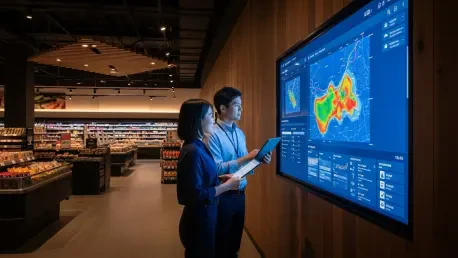
One specific iteration of the AI agent is dedicated to helping managers analyze their market position with a degree of precision that was previously reserved for corporate analysts. By synthesizing diverse datasets, including local customer demographics, competitor pricing strategies, and internal sales history, the AI generates high-level business strategies tailored to individual store locations. This capability is particularly transformative for junior managers who may lack the years of market observation required to spot subtle shifts in consumer demand. The AI does not just provide raw data; it offers contextualized recommendations that help managers decide which product categories to prioritize or when to adjust promotional pricing. By standardizing these complex analytical tasks, the system ensures that operational quality remains consistently high across the entire organization. This strategic transparency also makes it easier for corporate headquarters to communicate new directives, as the AI translates broad goals into specific, actionable steps.
The successful implementation of these AI agents demonstrated that the path to retail resilience lay in the seamless integration of human creativity and machine efficiency. In the final phases of the pilot, managers utilized the AI’s predictive capabilities to proactively adjust inventory during local festivals, which resulted in a significant reduction in waste and a boost in seasonal revenue. The data gathered during this period provided actionable insights for the next generation of store designs, suggesting that smaller, more agile layouts could perform just as well as larger footprints when managed with precision. Corporate leaders then established a roadmap for rolling out these digital collaborators to all regional branches, ensuring that every store had access to the same high-level strategic support. Moving forward, the industry turned its attention toward refining the ethical parameters of AI interaction, prioritizing data privacy and the continued professional development of the human workforce. This approach ensured that the technological transition supported both the company and the employees.