
The sophisticated nature of the Dutch grocery landscape has transformed food certification from a voluntary badge of honor into a rigorous, non-negotiable gateway for any supplier seeking to access major retail shelves. As the Netherlands maintains its position as a global leader in high-tech agricultural production and a critical European distribution hub, the pressure on the supply chain to provide absolute transparency has never been higher. For dominant players like Albert Heijn, Jumbo, and Lidl Nederland, the reliance on third-party audits is not merely about ticking boxes for compliance; it is a fundamental risk management strategy that ensures food safety, ethical sourcing, and logistical efficiency. This environment creates a barrier to entry that favors established, technologically advanced manufacturers while pushing smaller entities to modernize their operations or risk being sidelined. In this high-stakes market, a certificate is far more than a piece of paper—it is the operational language that allows diverse stakeholders to communicate and trust the integrity of every item from the greenhouse to the checkout counter.
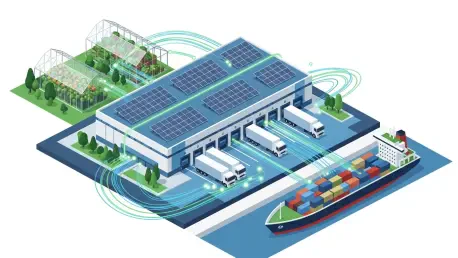
The geographical advantage of the Netherlands, home to the massive Port of Rotterdam and extensive inland waterway networks, further complicates these requirements. Because a significant portion of products sold in Dutch supermarkets is also destined for re-export or regional distribution, suppliers must satisfy a complex mosaic of international and local benchmarks simultaneously. This interconnectedness means that a single shipment of bell peppers or chilled poultry may need to meet the highest safety standards of multiple European jurisdictions. Consequently, the Dutch supply chain has become a laboratory for the future of global food retail, where standardized data and verified compliance protocols are used to mitigate the risks inherent in such a high-volume, fast-moving environment. The emphasis on these certifications has shifted the power dynamics within the industry, making the ability to provide real-time, audited evidence of quality a primary competitive advantage.
Standardized Frameworks: The Foundation of Private Labels
The International Featured Standards, commonly known as IFS, have established themselves as the primary operational language for manufacturers producing private-label goods for Dutch supermarkets. This certification is particularly critical in the Netherlands because of the high market share of store brands, which requires retailers to take direct responsibility for the products they sell under their own names. An IFS certification provides a granular look into a factory’s internal processes, covering everything from the hygiene of the production line to the robustness of food defense protocols designed to prevent intentional contamination. For a supplier, maintaining this standard involves a continuous cycle of internal audits and documentation that proves consistency over time. Retailers use these audit reports to compare diverse suppliers on an even playing field, ensuring that a private-label yogurt produced in Brabant meets the exact same safety and quality benchmarks as one produced across the border.
Parallel to the manufacturing standards found in IFS, the fresh produce sector is dominated by the GlobalG.A.P. framework, reflecting the agricultural prowess of the Dutch greenhouse industry. This certification focuses on the “upstream” portion of the supply chain, moving the scrutiny from the packing house back to the soil and the seedling. In an era where Dutch consumers are increasingly concerned about pesticide residues and water usage, GlobalG.A.P. provides a verified mechanism to track agricultural inputs and environmental impacts. It ensures that the massive quantities of tomatoes, cucumbers, and flowers grown in the Westland region are produced with a strict adherence to worker safety and sustainable farming practices. For retailers, this certification acts as a shield against reputational risks, allowing them to guarantee that their fresh produce aisles are not only safe for consumption but are also the result of responsible farming.
While IFS and GlobalG.A.P. cover much of the domestic and European trade, Dutch companies acting as global processing hubs often require the British Retail Consortium Global Standards or FSSC 22000. These certifications are essential for firms that export beyond the European Union or handle raw materials from a global network of providers. The BRCGS, in particular, is highly regarded for its focus on product integrity and the management of allergens, which is a major concern for the Dutch market’s sophisticated prepared-meal sector. Meanwhile, FSSC 22000 offers a management system approach that integrates easily with other ISO standards, making it the preferred choice for large-scale industrial food processors. By maintaining multiple certifications, Dutch suppliers can pivot between different international markets and retail requirements without needing to overhaul their primary safety management systems, thus preserving their role as the preferred middleman in the global food trade.
Regulatory Baselines: Merging Law With Logistical Precision
While private retail certifications often grab the headlines, the Hazard Analysis and Critical Control Points system remains the mandatory legal foundation for every food business operating in the Netherlands. Under Dutch law, HACCP is not just a suggestion but a requirement that mandates a scientific approach to identifying and controlling biological, chemical, and physical hazards. However, in the hyper-competitive Dutch retail market, simply meeting the legal minimum is rarely enough to secure a contract with a major chain. Retailers view legal compliance as a baseline and look for suppliers who have built more advanced, third-party audited systems on top of this foundation. This creates a two-tiered system where the law ensures a basic level of public health, while retail-driven certifications push the industry toward a higher level of operational excellence and consumer protection that goes beyond what government inspectors typically require.
The Dutch reputation as a logistics powerhouse adds a unique layer to these requirements, specifically regarding the integrity of the cold chain and warehouse management. Because the Netherlands serves as a central hub for chilled and frozen goods moving through Northern Europe, the precision of temperature-controlled transport is scrutinized with clinical intensity. Retailers demand proof that the “unbroken cold chain” is maintained from the moment a product leaves the production facility until it reaches the distribution center. This has led to the widespread adoption of specialized logistics audits that focus on the hygiene of transport vehicles, the calibration of temperature sensors, and the speed of loading and unloading processes. In a country where every minute of transit time is optimized, a failure in logistical certification can lead to the immediate rejection of entire shipments, making logistics integrity just as important as the quality of the food itself.
Furthermore, the emphasis on traceability within the Dutch supply chain has necessitated a massive investment in digital tracking technologies that link physical products to their certification data. In the event of a product recall or a safety concern, Dutch retailers expect to be able to trace a specific batch back to its origin within minutes, not days. This level of responsiveness is only possible through a combination of rigorous warehouse management certifications and advanced software systems that record every touchpoint in the journey. By enforcing these high standards for logistics and traceability, the Dutch supermarket industry has created one of the most resilient supply chains in the world. This resilience ensures that even in times of global disruption, the flow of goods remains transparent and safe, reinforcing the consumer trust that is essential for the continued success of the nation’s retail giants.
Environmental Stewardship: Measuring the Product Life Cycle
The Dutch market is currently undergoing a significant transformation where “food safety” is being expanded to include “food responsibility,” a shift driven by both consumer demand and emerging European regulations. Supermarkets are no longer just asking if a product is safe to eat; they are demanding data on its total environmental footprint, including carbon emissions and resource depletion. This means that suppliers must now undergo audits that measure the energy efficiency of their production facilities and the sustainability of their raw material sourcing. For many Dutch manufacturers, this has led to the adoption of life cycle assessment tools that provide a verified score for the environmental impact of every item produced. As these metrics become integrated into the standard auditing process, sustainability is moving from a marketing claim to a hard requirement for maintaining a place on the supermarket shelf.
Packaging compliance has emerged as a particularly sharp point of focus for Dutch retailers, who are under pressure to lead the way in reducing plastic waste and promoting circularity. Suppliers are now required to provide audited evidence that their packaging is either recyclable, compostable, or made from a high percentage of post-consumer recycled content. The Dutch “Plastic Pact” and associated national goals have created a scenario where a product with an uncertified or non-recyclable container may be delisted regardless of the quality of the food inside. This has forced packaging manufacturers and food brands to work closely together to redesign their delivery systems, often seeking third-party verification for the “circularity” of their materials. This push for sustainable packaging is not just about the environment; it is also about cost management, as the Dutch government increasingly uses financial incentives and taxes to penalize those who fail to meet circularity targets.
Building on this foundation of environmental accountability, Dutch retailers are increasingly looking at the social and ethical aspects of the supply chain as part of their broader ESG goals. This includes auditing suppliers for fair labor practices, even when those suppliers are located in distant countries. The expectation is that a Dutch supermarket should be able to guarantee that the cocoa in its private-label chocolate or the palm oil in its biscuits was produced without human rights violations or illegal deforestation. To manage this, retailers rely on a combination of established social audits and satellite-based monitoring systems that can verify claims in real-time. This holistic approach to certification ensures that the Dutch supply chain is not just efficient and safe, but also aligned with the values of a modern, conscious consumer base that views every purchase as an ethical choice.
Specialized Market Access: Meeting Diverse Consumer Expectations
The demand for organic products, known locally as “biologisch,” has moved from a niche interest to a mainstream powerhouse in the Dutch grocery sector, particularly in categories like dairy, eggs, and leafy greens. To carry the “Eko” mark or the European leaf logo in a Dutch supermarket, a product must undergo a rigorous certification process managed by organizations like Skal Biocontrole. This process involves strict limits on synthetic pesticides, a total ban on genetically modified organisms, and specific requirements for animal welfare and soil health. For Dutch farmers, transitioning to organic production is a long-term investment that requires a fundamental change in their operational culture, but it offers access to a high-value consumer segment that is willing to pay a premium for perceived health and environmental benefits. Retailers use these certifications to differentiate their offerings and appeal to the growing demographic of shoppers who prioritize “clean” labels.
Beyond the biological realm, Halal and Kosher certifications have become increasingly important for Dutch supermarkets as they cater to a diverse domestic population and maintain strong export ties to global markets. In cities like Amsterdam, Rotterdam, and Utrecht, the demand for certified Halal meat and prepared meals is a significant driver of retail strategy. Retailers look for credible, third-party certification bodies that can provide a transparent audit trail for the entire slaughter and processing chain, ensuring that there is no cross-contamination with non-compliant products. These certifications serve as a vital signal of purity and religious integrity, allowing supermarkets to serve a broader community while also positioning themselves as inclusive and culturally aware. For manufacturers, obtaining these certifications is a strategic move that opens doors to both local urban centers and lucrative international markets in the Middle East and beyond.
The intersection of these specialized certifications creates a complex environment where a single product may carry three or four different logos, each representing a different promise to the consumer. A bottle of milk might be certified organic, pasture-raised, and carbon-neutral, all while meeting the standard IFS and HACCP safety requirements. This “certification stacking” is a hallmark of the Dutch supermarket shelf, reflecting a market where consumers have high expectations and very little patience for unverified claims. For the supplier, this requires an incredibly high level of organizational discipline to manage the various audits and documentation streams required by each different standard. However, those who successfully navigate this complexity find themselves in a dominant position, as they can provide the exact combination of attributes that modern retailers need to fill their diverse and demanding category plans.
Strategic Integration: Digital Transparency as a Competitive Edge
The future of the Dutch supermarket supply chain is being defined by the integration of physical certification with real-time digital transparency, creating a “digital twin” of the entire production process. As of the current period, the most successful suppliers are those who have moved beyond annual audits to a system of continuous monitoring where data on temperature, humidity, and even carbon emissions are shared instantly with the retailer. This transition has required a significant investment in Internet of Things technology and blockchain-based ledgers that can provide an immutable record of a product’s journey. For the Dutch grocery giants, this level of data-heavy transparency is the ultimate goal, as it allows them to move from a reactive model of food safety to a predictive one where potential issues are identified and resolved before they ever reach the store.
This digital evolution also changes the nature of the audit itself, moving away from a single day of physical inspection toward a model of “always-on” compliance. In this scenario, the auditor becomes a data analyst who monitors a supplier’s performance throughout the year through remote sensors and automated reporting systems. This shift reduces the administrative burden on the supplier while providing the retailer with a much higher level of confidence in the ongoing integrity of the supply chain. For the Dutch market, which is characterized by its high volume and low margins, the efficiency gains from this digital integration are a major driver of profitability. Suppliers who can provide this level of verified data are no longer just vendors; they become strategic partners who help the retailer optimize their inventory, reduce waste, and provide a superior level of service to the end consumer.
The strategic integration of these advanced standards necessitated a fundamental shift in how suppliers viewed their operational documentation and long-term planning. Retailers recognized that the winners in the coming years would be the organizations that moved away from viewing certification as a periodic hurdle and instead treated it as a core component of their value proposition. The successful implementation of automated tracking systems and carbon-neutral logistics provided a clear roadmap for others in the industry to follow. By prioritizing holistic transparency and adopting a proactive stance toward emerging environmental and social standards, the Dutch food sector demonstrated that it was possible to maintain high growth while meeting the most stringent ethical and safety benchmarks in the world. This approach not only secured the domestic market but also reinforced the global reputation of the Netherlands as the gold standard for modern, responsible, and efficient food supply chain management.