
The global healthcare logistics sector is currently grappling with a volatile intersection of rising operational costs and the urgent need for rapid digital transformation across all supply levels. As Medline Inc. moves through the first quarter of 2026, it finds itself navigating a dual reality where soaring demand for essential medical products collides with a formidable gauntlet of macroeconomic headwinds. This unique landscape has prompted a decisive pivot toward the digitalization of the entire healthcare supply chain, leveraging high-level automation and artificial intelligence to absorb the financial shock of increasing logistics expenses. By embedding these sophisticated technologies into the core of its operational framework, the organization is attempting to fortify its market leadership while undergoing a significant fiscal and technological transformation. The primary objective is to create a more resilient ecosystem that can withstand external shocks while maintaining the efficiency required for modern medical care delivery.
Financial Growth Amidst Fiscal Challenges
The company reported a remarkably strong start to the current fiscal year, achieving a robust 10.7% increase in net sales to reach a total of $7.4 billion for the quarter ending in late March. This growth was predominantly organic, fueled by an aggressive expansion strategy and the successful execution of new customer contracts that brought in significant revenue streams. The U.S. Acute Care segment emerged as a major driver of this success, expanding by 12% to reach over $5 billion, while the Supply Chain Solutions division also demonstrated exceptional strength with a 15% increase in net sales. These figures underscore a high level of market demand and the company’s ability to secure large-scale agreements even in a competitive environment. The influx of new client signings totaling billions of dollars from the prior period highlights a deep trust in the reliability of the distribution network. This top-line momentum has provided a necessary cushion as the company invests in its infrastructure.
Despite the impressive revenue performance, the organization faced a challenging bottom line as net income experienced a significant decline of nearly 26% compared to the previous year. This downward pressure on profitability was largely the result of a complex mix of external and internal factors, including a substantial $120 million impact from international trade tariffs. Additionally, the company managed one-time operating expenses related to the onboarding of a surge of new clients and distributed bonuses following its initial public offering. While these costs temporarily suppressed earnings, the leadership team remains highly optimistic about the trajectory for the remainder of the year. By raising its organic sales growth forecast to a range of 8.5% to 9.5%, the company is signaling that the fundamental drivers of its business remain intact. The strategy focuses on absorbing these short-term fiscal shocks by optimizing long-term operational efficiency through technological adoption.
Intelligent Supply Management: The Mpower Advantage
Central to the company’s modernization efforts is the Mpower platform, an AI-enabled supply chain logic tool developed in close collaboration with Microsoft on the Azure cloud infrastructure. This system functions as a digital control tower, offering healthcare providers an unprecedented level of visibility into their inventory levels and potential supply chain disruptions. By using real-time data analytics, the platform helps clinical and administrative users identify risks before they manifest as product shortages in the hospital setting. Early data from the pilot programs, which expanded to ten major customers during the first quarter, indicates that the platform has already reduced the time required for complex order-substitution workflows by more than 50%. What used to be a five-to-seven-day manual process is now being handled with much greater speed, ensuring that critical medical supplies reach the front lines of patient care without the typical administrative delays.
The roadmap for this digital initiative continues to evolve, with plans to integrate even more sophisticated data collection methods such as the use of supply room cameras for physical inventory tracking. This upcoming advancement is designed to automate the replenishment signal, effectively removing the need for manual stock checks and reducing the likelihood of human error in high-stress environments. By creating a seamless loop between the physical shelf and the distribution center, the company aims to improve fill rates and provide a more reliable service for its partners. The integration of an AI chat agent further streamlines the experience, allowing users to navigate product alternatives and approval processes with intuitive, conversational interfaces. These improvements do more than just save time; they provide a crucial buffer against the unpredictability of global trade, allowing the organization to pivot its sourcing and distribution strategies based on real-time insights and predictive modeling.
Scaling Distribution with Autonomous Technologies
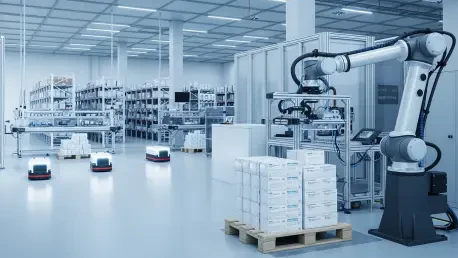
In the realm of physical logistics, the organization is positioning itself as an industry pioneer by becoming the first in its field to deploy AI-powered robotics from Symbotic. This partnership centers on a pilot program at a distribution center in Ohio, where advanced robotic systems will take over the most labor-intensive aspects of the warehouse environment. These robots are engineered to automate the breakdown of pallets, item storage, and the complex task of building outbound pallets for delivery to healthcare facilities. By automating these heavy-duty processes, the company can significantly increase its throughput and scalability, ensuring that it can handle the increased volume resulting from recent customer acquisitions. This move represents a strategic shift toward a more high-speed, automated logistics model that minimizes the physical strain on human workers while maximizing the accuracy of every shipment that leaves the facility for clinical sites.
Beyond the new Symbotic partnership, the company is actively scaling its existing robotic fleet to meet the demands of a volatile labor market and increasing order complexity. The distribution network currently utilizes over 2,000 AutoStore units, which are specialized goods-to-person robots designed for precision item picking. These systems are being supplemented by additional installations and automated packaging tools like Pick Pack Pro, which are specifically designed to manage the sharp demand spikes often seen in health plan orders for over-the-counter products. By investing heavily in these automated systems, the organization is effectively insulating its operations from the fluctuations of the manual labor market. This technological foundation allows for consistent service delivery and high-volume processing even during peak periods or economic shifts. The long-term goal is to create a fully integrated robotic ecosystem that can adapt to changing order profiles with minimal manual intervention.
Strategic Responses to External Economic Pressures
While the internal drive for automation is robust, the company must still navigate a complex landscape of external cost pressures and geopolitical risks that threaten profit margins. Significant tariff impacts have already left a mark on the fiscal results, and although some relief is expected in the coming months due to changing rates, other costs continue to climb. The ongoing instability in the Middle East, particularly around the Strait of Hormuz, has direct implications for oil-related expenses, which drive up fuel costs and the price of petroleum-based supplies like examination gloves. These external variables are difficult to control, yet they are a primary focus for the executive team as they manage the company’s cost structure. Rather than passing these increases directly to customers, the organization is leaning on its internal “playbook” to find efficiencies through its new digital tools and automated processes to offset the financial burden of global volatility.
Expansion into international markets has provided another avenue for growth and risk diversification during this period of domestic economic fluctuation. The company recently secured a major prime-vendor deal in Canada, serving nine acute care hospitals in Ontario, which highlights the global appeal of its integrated supply chain model. International sales have shown strong momentum, growing by 10% as the organization wins more multi-channel contracts that combine product manufacturing with sophisticated logistics services. This strategy of bundling high-quality Medline-branded products with advanced distribution solutions is resonating with large healthcare providers who are looking for stability in an uncertain world. By diversifying its geographical footprint and its service offerings, the company is creating multiple layers of protection against regional economic downturns. This multifaceted approach ensures that the organization remains a dominant force in the global healthcare market regardless of localized pressures.
Resilient Foundations for Future Healthcare Distribution
The first quarter of the year established a clear precedent for how a modern medical supply leader navigated the tension between rapid growth and intense economic pressure. By prioritizing the integration of AI-driven platforms like Mpower and cutting-edge robotics from Symbotic, the company effectively demonstrated a commitment to long-term operational resilience. The significant investments in automation were not merely reactive measures but represented a proactive attempt to decouple business success from the unpredictability of manual labor markets and volatile trade tariffs. Although net income faced temporary setbacks due to one-time costs and international taxes, the surge in new customer contracts and top-line revenue suggested that the core value proposition remained incredibly strong. The focus shifted toward internal mitigation strategies, where digital tools served as the primary mechanism for absorbing external shocks without compromising the quality of service provided to clinical partners.
Moving forward, the industry learned that the digitalization of the supply chain was no longer an optional upgrade but a fundamental requirement for survival in a global economy. The successful implementation of robotic systems proved that high-throughput warehouses could maintain precision even as order volumes increased. Leadership should have continued to expand these technological pilots into permanent, network-wide standards to ensure consistent performance across all distribution hubs. Future success for similar organizations will likely depend on the ability to turn real-time data into actionable logistics decisions that bypass traditional bottlenecks. By maintaining a steady hand on the pulse of geopolitical trends and technological innovation, the company set a benchmark for how to transform logistical challenges into competitive advantages. The path toward a fully automated, data-driven supply chain was firmly established, offering a blueprint for a more stable and efficient healthcare delivery system in the coming years.