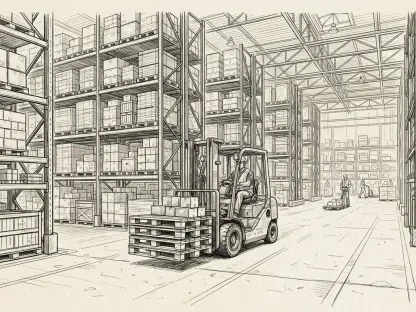

As the retail landscape undergoes a fundamental shift toward hyper-efficient supply chain management, Burlington Stores has officially unveiled its most advanced logistics hub to date in the heart of Georgia. This massive facility serves as a cornerstone for the company’s strategic expansion, bridging the gap between high-volume inventory procurement and rapid retail floor replenishment. Spanning over a million square feet, the distribution center utilizes a sophisticated network of conveyors and automated systems designed to process thousands of units per hour with minimal human intervention. The selection of Georgia as a primary logistics artery highlights the state’s growing importance as a nexus for East Coast commerce and international shipping routes. By integrating this new node into its national network, the retailer aims to slash lead times and ensure that its off-price merchandise reaches consumers reliably. This leap marks a transition to a digitized fulfillment model.
Automation Systems: Integrating Robotics for Enhanced Throughput
Central to the facility’s operational success is the deployment of autonomous mobile robots (AMRs) that navigate the warehouse floors with surgical precision. These units replace traditional manual picking methods, allowing the workforce to focus on high-level oversight rather than repetitive physical labor. The robotics suite includes advanced goods-to-person systems where shelving units are brought directly to stations, significantly reducing the walking time typically associated with large-scale distribution. Furthermore, high-speed cross-belt sorters have been installed to categorize items based on real-time store demand, ensuring that every truck leaving the bay is packed with a curated mix of inventory. This level of granular control is essential for the off-price model, where stock variety is high and inventory turnover must be rapid to maintain profitability. The synergy between mechanical hardware and human expertise creates a highly efficient output environment.
Beyond the physical hardware, the Georgia distribution center operates on a proprietary artificial intelligence platform that synchronizes every stage of the logistics journey. This software analyzes incoming shipment data to predict potential bottlenecks before they occur, re-routing tasks across the facility to maintain a steady flow of goods. Machine learning algorithms continuously refine sorting paths, learning from historical throughput data to optimize the energy consumption of conveyor belts and robotic charging cycles. By leveraging predictive analytics, the management team can anticipate shifts in consumer buying patterns across the Southeastern United States, adjusting inventory flow to match local preferences in real time. This digital nervous system ensures that the facility remains responsive to the volatile nature of retail fashion and home goods. Consequently, the reliance on manual data entry has been virtually eliminated, replaced by a seamless data stream.
Regional Development: Economic Growth and Sustainable Strategies
The establishment of this high-tech hub has generated significant economic momentum within the local Georgia community, creating hundreds of specialized roles in technical maintenance and logistics management. Instead of just entry-level positions, the facility offers opportunities for workers to gain experience with cutting-edge industrial technology, effectively upskilling the local workforce for a modern economy. This investment is accompanied by a strong commitment to environmental stewardship, as the building features an extensive array of rooftop solar panels and high-efficiency LED lighting systems. Water reclamation programs and advanced waste reduction protocols are standard features, reflecting a broader corporate push toward carbon neutrality in the coming years. Local government officials have noted that the presence of such a major retail player encourages infrastructure development, such as improved road networks and utility services. This results in a better quality of life for all residents.
As the facility reached full operational capacity, it set a new benchmark for how retailers should approach the integration of technology and physical infrastructure. The decision to prioritize high-speed automation over traditional storage methods proved to be a decisive factor in managing the complexities of modern consumer demand. Industry leaders observed that the successful launch necessitated a rigorous training program for staff to handle sophisticated AI interfaces and robotic repairs. To replicate this success, organizations had to invest heavily in resilient digital architectures that could withstand the demands of real-time data processing. Looking forward, the focus shifted toward expanding these automated capabilities across other regional nodes to create a truly unified national network. Retailers were encouraged to view their distribution centers as strategic assets capable of driving brand loyalty through consistent availability. The lessons from Georgia highlighted the importance of site selection.