
The transformation of a retail powerhouse into a global utility provider signals a fundamental shift in how physical products move across international borders and reach final destinations. Amazon has successfully transitioned from a dominant e-commerce retailer into a comprehensive logistics-as-a-service provider, effectively internalizing the complexities of the supply chain for the benefit of the broader market. This evolution marks a decisive entry into the eight trillion dollar global third-party logistics industry, where the company now competes directly with established shipping giants. By opening its sophisticated internal network to external businesses, the organization has turned a former proprietary competitive advantage into a standardized, revenue-generating enterprise utility that serves both internal and external clients.
The strategic pivot toward logistics-as-a-service reflects a broader trend where infrastructure becomes more valuable than the products moving through it. Legacy carriers and small-to-medium enterprises now find themselves in a landscape where Amazon functions as both a competitor and a critical service provider. This shift essentially democratizes high-end fulfillment capabilities, allowing smaller brands to leverage a delivery speed that was once reserved for the world’s largest corporations. Consequently, the distinction between a retail platform and a global infrastructure provider has blurred, positioning the company as the primary architect of modern physical commerce.
The New Frontier of Global Commerce Infrastructure
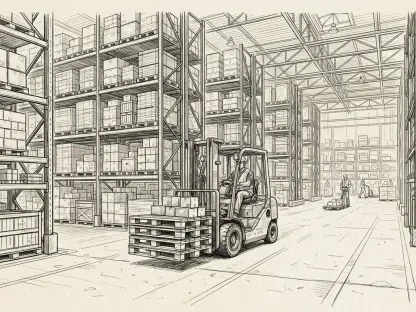
The current state of global trade demands a level of agility that traditional shipping models often fail to provide, leading to a massive gap in the third-party logistics market. Amazon has filled this vacuum by scaling its operations to handle not only its own massive order volume but also the inventory of businesses that have no presence on its retail website. This expansion into the global commerce infrastructure allows the company to capitalize on the same efficiencies that made its original marketplace successful. By standardizing the way goods are received, stored, and shipped, the company has created a physical version of a plug-and-play operating system for global trade.
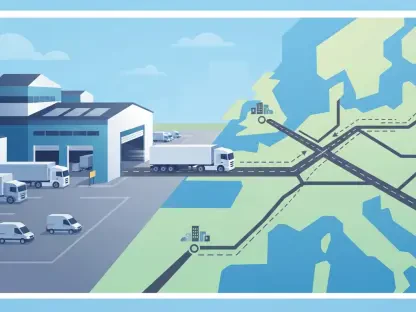
Moreover, the transition toward a utility model has significant implications for global retail competitors who must now decide whether to build their own costly networks or rely on a rival’s superior efficiency. The scale of this initiative is unprecedented, as it integrates air freight, ocean shipping, and massive ground fleets into a single, cohesive offering. This integration reduces the friction typically found in international shipping, where multiple handoffs between different carriers often lead to delays and increased costs. By maintaining control over the entire journey of a package, the company ensures a level of predictability that has become the new benchmark for the industry.
Replicating the Cloud Computing Blueprint for Physical Assets
Strategic Parallels: Why the AWS Model Works for Logistics
The current expansion of supply chain services is an intentional replication of the growth strategy that turned Amazon Web Services into a global leader in cloud computing. Years ago, the company built massive internal computing power to handle seasonal shopping spikes, eventually realizing that selling this excess capacity to others was more profitable than keeping it private. This high utilization model is now being applied to physical assets, where every empty square foot in a warehouse or every half-full delivery van represents a lost opportunity for revenue. Under the leadership of Andy Jassy, the focus has shifted entirely toward an infrastructure-first business model that prioritizes long-term utility over short-term retail gains.
By transforming cost centers into scalable service platforms, the organization effectively lowers the overhead for its own retail operations while generating high-margin fees from external users. This approach mirrors the transition of AWS from an internal support tool into the primary profit engine of the entire corporation. The logistics network is no longer a burden on the balance sheet but a product in its own right, sold to a diverse range of clients who require reliable delivery solutions. This strategy ensures that the infrastructure remains profitable year-round, regardless of the fluctuations in the company’s own consumer retail sales.
Market Projections: The Financial Trajectory of Supply Chain Services
Financial analysts project that external logistics revenue will soon account for a substantial portion of the company’s overall operating income, potentially rivaling the margins seen in the software sector. From 2026 to 2030, the adoption rates among non-Amazon marketplace sellers are expected to climb sharply as businesses prioritize speed and reliability over brand loyalty to traditional carriers. This shift is already beginning to erode the market share of legacy shipping giants like FedEx and UPS, which have struggled to match the technological integration offered by a digital-native logistics provider. The long-term trajectory suggests that the company will capture a dominant slice of the global fulfillment market by offering more competitive pricing through sheer volume and automation.
The growth indicators are particularly strong among small-to-medium enterprises that lack the capital to invest in their own sophisticated warehouse management systems. By tapping into a ready-made global network, these smaller players can offer delivery speeds that were previously impossible, driving further demand for the service. As more businesses join the ecosystem, the data gathered from these diverse shipping patterns will allow the company to further optimize its routes and inventory placement. This creates a powerful feedback loop where increased usage leads to better performance, making it increasingly difficult for traditional logistics providers to catch up.
Navigating the Complexity of Global Fulfillment Obstacles
Despite the aggressive expansion, the reality of physical logistics presents unique challenges that do not exist in the digital realm of cloud computing. Labor management remains a significant hurdle, as the human element of last-mile delivery is subject to regional labor laws, wage fluctuations, and the physical limitations of the workforce. Fuel costs and the volatile nature of global energy markets also introduce a layer of unpredictability that can impact service-level agreements. To mitigate these risks, the company has invested heavily in alternative energy and localized routing strategies, yet the sheer geographic diversity of a global network ensures that obstacles remain a constant factor.
Furthermore, the dilemma of co-opetition creates a complex trust dynamic between Amazon and the businesses it serves. Many retailers are understandably hesitant to hand over their supply chain data to a company that also produces competing private-label products. Managing this conflict of interest requires strict data siloing and transparent operational protocols to reassure external clients that their trade secrets are protected. Additionally, the technical challenge of handling diverse product categories, from oversized industrial equipment to fragile perishables, requires a level of warehouse flexibility that is difficult to maintain at such a massive scale during peak seasonal surges.
Compliance and the Changing Regulatory Landscape of Delivery
As the company cements its role as a global carrier, it must navigate an increasingly dense web of international shipping standards and cross-border trade regulations. Customs compliance and varying tax structures across different jurisdictions require a sophisticated legal and administrative framework to avoid costly delays. The impact of antitrust scrutiny also looms large, as regulators in multiple countries examine the implications of a single entity controlling both the dominant retail platform and the primary logistics infrastructure. These regulatory pressures could lead to forced structural changes or increased transparency requirements that might slow the pace of vertical integration.
Security measures within automated warehousing have also become a top priority, particularly concerning the protection of external client data and physical inventory. As warehouses become more reliant on robotics and connected devices, the risk of cyber threats targeting physical supply chains has increased significantly. Simultaneously, environmental regulations are pushing the industry toward a carbon-neutral future, necessitating a rapid transition to sustainable delivery fleets. Meeting these green mandates while maintaining low shipping costs for customers is a delicate balancing act that will define the operational success of the logistics branch in the coming years.
The Future of the Automated Supply Chain Ecosystem
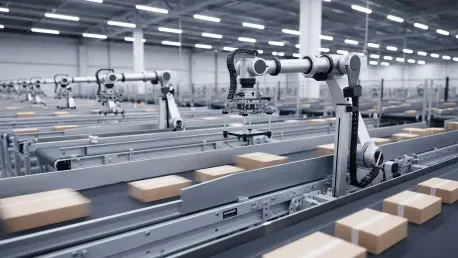
The integration of artificial intelligence and demand forecasting is set to revolutionize the way inventory is positioned across the global network. By predicting exactly what consumers in a specific neighborhood will buy before they even place an order, the company can move goods to hyper-local fulfillment centers, reducing the final delivery time to mere minutes. Emerging technologies like autonomous drones and specialized robotics are expected to further reduce the per-unit cost of delivery by eliminating many of the inefficiencies associated with manual labor. This shift toward a fully automated ecosystem will likely make the physical movement of goods as seamless and invisible as the flow of data through the internet.
Consumer preferences are also evolving, with an increasing demand for total transparency from the moment a product leaves the factory to the second it arrives at the door. This dock-to-door visibility is becoming a standard expectation rather than a premium feature, forcing all logistics providers to modernize their tracking systems. As Amazon continues to build out this infrastructure, it has the potential to become the foundational backbone of the entire physical economy. In this future scenario, the company would provide the essential rails upon which all commerce travels, regardless of where the transaction originated or who manufactured the product.
Redefining the Indispensable Backbone of Modern Commerce
The analysis of the supply chain initiative revealed that the democratization of high-end logistics provided an essential lifeline for smaller businesses seeking to compete in a fast-paced market. The transition from a closed system to an open utility demonstrated that the company’s greatest asset was not its retail catalog, but its ability to move objects through space with unparalleled efficiency. The findings suggested that the financial viability of this initiative was grounded in the same high-utilization principles that drove the success of cloud computing. By the end of the initial rollout phase, the infrastructure had already begun to reshape the competitive landscape for traditional carriers and independent retailers alike.
Strategic considerations for the future centered on the inherent trade-off between operational efficiency and the risk of platform dependency. Businesses that adopted the service gained immediate access to world-class delivery speeds, but they also integrated themselves into an ecosystem controlled by a primary competitor. Future stakeholders were advised to evaluate whether the gains in customer satisfaction and reduced overhead outweighed the strategic vulnerability of relying on a single infrastructure provider. Ultimately, the expansion of logistics services proved that the future of commerce depended less on the storefront and more on the invisible, automated systems that powered the delivery of every item.