
Phone lines ring off the hook while short-staffed crews race plates to the pass, and revenue quietly leaks with every missed call. The promise of voice AI has long dangled a fix, but only now has it begun to slot cleanly into point-of-sale workflows without new tablets, messy reconciliations, or brittle scripts.
This review examines an embedded approach: Maple’s voice agent inside Quantic POS. It traces how the integration evolved, what design choices unlock operational value, where trade-offs remain, and how this path differs from bolt-on assistants that sit outside the transaction core.
Overview of Quantic–Maple Voice AI Integration
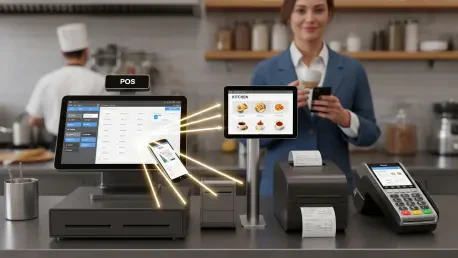
At its core, the integration places Maple’s conversational agent behind a restaurant’s phone number and binds it to Quantic’s menu, order, and payment objects. That coupling matters because it shifts AI from a parallel system to a natively transacting component.
The timing is pragmatic: operators face staffing pressure and abandoned calls that erode margin. By leaning on deep synchronization and direct order injection, the solution aims to capture demand without rearchitecting front-of-house routines or retraining kitchens.
Architecture and Core Components
Real-Time Menu Synchronization from Quantic
Menu sync streams items, modifiers, prices, and availability into the agent’s brain in real time, turning the POS into the single source of truth. This reduces brittle mappings and erases much of the traditional AI setup tax.
Performance follows architecture: fewer mismatches mean fewer make-goods, and faster deployments mean broader coverage during rushes and after hours. Consistency across channels becomes a feature, not a hope.
POS-Native Order Injection and Payments
Orders taken by the AI land in Quantic as standard in-store tickets, which keeps the KDS and printers humming without detours. Payments ride existing rails, preserving settlement, chargeback flows, and accounting codes that finance trusts.
The result is not just speed; it is risk reduction. Eliminating rekeying removes a major error vector while maintaining financial continuity that auditors and operators demand.
Conversational Call Handling and Intelligence
The agent parses complex orders with modifiers and allergy notes, and it fields routine questions on hours, directions, reservations, and catering. Natural confirmations and repair prompts catch mishears before they become waste.
This is where voice UX earns its keep: a calm backstop during peaks and a night-shift stand-in that protects throughput by keeping staff off the phone and on the line.
Deployment, Configuration, and Operator Controls
Setup compresses to connecting POS credentials, mapping call routing, and turning on menu sync, then layering business rules. Controls cover availability windows, staff escalation, and exception handling so edge cases do not derail service.
Operators track answer rates, completion rates, handle time, and accuracy. Those metrics become the tuning loop that separates a neat demo from durable ROI.
Market Momentum and Emerging Trends
Hospitality buyers now prioritize embedded AI that does not multiply tablets or fragment records. That tilt rewards vendors that treat the POS as substrate rather than an endpoint.
Maple’s expansion to platforms like Shift4’s SkyTab signals a multi-POS strategy, and that breadth implies faster learning curves, richer training data, and stronger benchmarks across formats.
Real-World Applications and Notable Implementations
Quick service and fast casual benefit from overflow capture, while independents gain after-hours coverage without adding headcount. Multilingual neighborhoods and heavy-modifier menus especially stress-test the stack and showcase its adaptability.
Crucially, kitchen rhythm stays intact: tickets appear where cooks expect them, and FOH routines do not bend around a new gadget. Vendors claim fewer missed calls and higher order accuracy; careful operators will still validate with store-by-store data.
Constraints, Risks, and Adoption Considerations
Speech variance, loud dining rooms, and rare menu edge cases remain hard problems. Even perfect NLU stumbles if out-of-stock sync lags or if escalation paths lack clarity.
Compliance adds weight: phone payments touch PCI scope, privacy rules govern recordings, and consent language must be explicit. Mitigations include rigorous menu hygiene, fast fallbacks to humans, continuous model tuning, and operator controls that favor safety over bravado.
Future Outlook and Development Pathways
Next steps likely include richer conversational memory, inventory-aware ordering that avoids promised-but-missing items, and smarter upsells tied to context, not guesswork. As connectors multiply, loyalty and CRM hooks could bring targeted offers to the humble phone call.
If benchmarks standardize and longitudinal ROI becomes table stakes, AI phone service will shift from novelty to baseline utility, freeing staff to focus on hospitality and exceptions.
Summary Assessment and Key Takeaways
This integration reads as a mature, embedded solution that respects existing workflows while expanding coverage. The value sits in always-on capture, POS-native tickets, preserved payment flows, and measurable accuracy gains without hardware sprawl.
Trade-offs persist, and outcomes hinge on adoption quality, clean menus, and vigilant monitoring. For U.S. Quantic merchants, Maple’s voice layer offered a pragmatic route to AI-driven ordering and inquiry handling with minimal friction, and the smartest next step was disciplined pilot-to-scale rollout with clear success criteria.