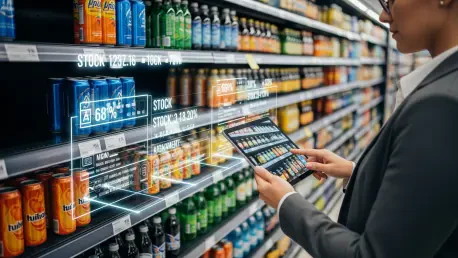

The unmistakable fluorescent orange glow of an Irn-Bru bottle remains a staple of the British retail landscape, yet behind its traditional fizz lies a sophisticated digital engine that is redefining how beverages reach the consumer. For AG Barr, the venerable Scottish manufacturer based in Cumbernauld, the challenge of maintaining market share against global conglomerates required more than just marketing; it demanded a technological overhaul. By transforming the physical retail shelf into a source of real-time intelligence, the company bridged a century and a half of history with the cutting edge of algorithmic commerce.
This transformation represents a fundamental shift in how the beverage industry perceives store visits and inventory management. Instead of relying on the intuition of individual sales representatives or outdated manual reporting, the organization now treats every shelf as a dynamic data point. This move is less about following a trend and more about survival in a landscape where retail space is finite and competition is relentless. By embracing this high-tech approach, AG Barr is demonstrating that even a long-standing heritage brand can pivot toward a future where data is just as vital as the secret recipe of its core products.
From Irn-Bru to Algorithms: A 150-Year-Old Tradition Meets the Digital Age
Surviving for 150 years in the competitive consumer goods market requires a unique blend of consistency and radical adaptation. For decades, AG Barr relied on the strength of its regional brand loyalty and a robust physical distribution network to maintain its presence in stores across the United Kingdom. However, the rise of e-commerce data and the rapid diversification of product portfolios meant that traditional sales tactics were no longer sufficient to guarantee visibility on crowded supermarket shelves.
The company recognized that to compete with global soft drink titans, it needed to view the retail environment through a digital lens. This necessitated a transition from being a producer of goods to being a manager of retail insights. By integrating advanced algorithms into its sales cycle, the company transformed its field operations into a high-precision instrument, ensuring that its products were not only present but also perfectly positioned to capture consumer attention. This strategic pivot ensured that its historical legacy was supported by modern operational excellence.
Identifying the 13-Minute Productivity Gap in Modern Field Sales
Before the digital shift, a hidden efficiency drain plagued the field sales team, manifesting as a significant loss of time during every store visit. Internal analysis revealed that representatives were spending approximately 13 minutes per visit on administrative “housekeeping” tasks. This included digging through old physical or digital notes, manually checking inventory levels, and documenting shelf conditions with pen and paper or cumbersome legacy spreadsheets.
In a hyper-competitive market where each representative might visit dozens of stores a week, this cumulative administrative friction resulted in hundreds of lost hours every month. This “dead time” was not just a matter of wasted salary; it was a missed opportunity for strategic interaction. Every minute spent on clerical work was a minute not spent negotiating better display positions, introducing new product lines, or strengthening relationships with store managers. Eliminating this gap became the primary catalyst for technological investment.
Co-Developing AvBuilding a Bespoke Ecosystem for Retail Excellence
To address these inefficiencies, AG Barr avoided the common pitfall of purchasing an inflexible, off-the-shelf software solution. Instead, the company entered a collaborative partnership with Aforza to develop a customized sales application known as “Ava.” This tool was designed to serve as a unified ecosystem that synchronized customer relationship management, retail execution, and live field data into a single, intuitive interface.
The application functions as a strategic briefing tool, providing representatives with a comprehensive view of a store’s history and potential before they even step through the front door. By merging disparate data streams into one “visible layer,” the technology provides a clarity that was previously impossible. This bespoke approach ensures that the digital tools are perfectly aligned with the specific commercial goals of the beverage industry, allowing the sales force to operate with the precision of a data analyst while maintaining their role as frontline brand ambassadors.
Real-Time Shelf Intelligence: Turning Mobile Photos into Actionable Data
The most innovative aspect of this digital framework is the integration of image recognition technology provided by Neurolabs. This system allows sales representatives to replace manual audits with a simple photograph of the beverage aisle. Once a photo is captured, the AI processes the image in seconds, identifying every product on the shelf and comparing the actual layout against the ideal planogram or distribution agreement.
This real-time intelligence instantly highlights missed opportunities, such as out-of-stock items or products that have been placed in the wrong section. Consequently, the sales representative no longer spends their energy counting cans or measuring shelf space. Instead, they receive an automated report that directs their attention to specific issues that need correction. This shift from manual observation to AI-driven analysis allows for a higher level of accuracy and ensures that every store remains in total compliance with the company’s retail standards.
Pivoting to Performance: How Outcome-Based Metrics Drive Real Revenue
The introduction of AI has enabled a total shift in how the organization evaluates the success of its field force. Historically, performance was often measured through activity-based metrics, such as the number of store visits completed or the total hours spent on the road. Today, the focus has moved toward outcome-based metrics, which prioritize the actual commercial results achieved during those visits.
This new measurement system focuses on three key pillars: increasing product distribution, ensuring shelf compliance, and maximizing the specific revenue impact of each visit. By focusing on these concrete results, the company ensures that its technological investments are directly linked to financial growth. The data allows leadership to identify which stores offer the highest return on effort, enabling the field team to prioritize their time toward the most lucrative opportunities rather than following a generic, predetermined route.
The App Recommends, the Human Decides: Implementing Responsible AI
Under the leadership of Chief Digital and Technology Officer Usman Hamid, the company adopted a framework of “responsible AI” that keeps the human professional at the center of the process. The core philosophy is that while the technology can process vast amounts of data and offer suggestions, the final strategic decision always rests with the sales representative. This prevents the sales process from becoming cold or mechanical, ensuring that the personal rapport necessary in retail remains intact.
This approach acknowledges that AI is a tool for augmentation rather than a total replacement for human judgment. For instance, the application might identify a distribution gap, but the representative uses their knowledge of the local manager’s preferences to decide the best way to pitch the solution. By maintaining this balance, the company fostered a culture where technology empowers employees, reducing the fear of automation and increasing the overall effectiveness of the sales strategy.
The Three-Lens Strategy for Measuring Digital Transformation Success
The organization established a rigorous evaluation process to ensure that its digital initiatives delivered a tangible return on investment. The first benchmark was adoption, as the tools only provided value if the field force found them useful enough to integrate into their daily routines. High daily usage rates confirmed that the technology was genuinely solving the problems representatives faced on the ground. Next, the company tracked revenue impact, observing how the closing of shelf gaps led to immediate sales lifts.
Finally, the focus turned toward capacity, where the 13 minutes saved per visit allowed the existing team to cover more territory without the need for additional hiring. This efficiency gain essentially expanded the reach of the sales force, allowing the company to compete more aggressively across broader geographic regions. By focusing on these three lenses, the leadership team demonstrated that digital maturity was not just a technical milestone but a core driver of sustainable competitive advantage in the modern retail market. The strategy successfully converted operational friction into a streamlined engine for growth, setting a new standard for beverage distribution.