


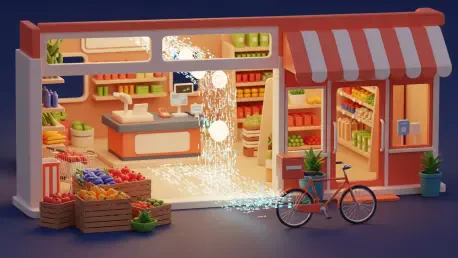

The humble corner bodega or independent liquor store, long considered the backbone of neighborhood commerce, finally has a technological bridge to the massive on-demand economy through a high-profile collaboration between National Retail Solutions and Uber Eats. This strategic partnership is meticulously designed to bridge the digital gap for small-format independent retailers across the United States and Canada by connecting the NRS point-of-sale network directly to the Uber Eats marketplace. For many years, these local businesses have faced steep challenges when attempting to compete with the sophisticated digital infrastructures of massive national retail chains that possess the capital to build proprietary delivery ecosystems. By offering a streamlined technological solution, this integration modernizes neighborhood commerce workflows and prioritizes accessibility and operational efficiency for merchants who have traditionally been left out of the digital-first revolution.
The primary objective of this analysis is to explore the mechanics of this integration and provide a clear understanding of how it transforms the daily operations of independent retailers. Throughout this exploration, readers can expect to learn about the technical synergies that eliminate operational friction, the strategic goals of democratizing retail technology, and the broader market implications for the parent company, IDT Corporation. By addressing key questions regarding the financial and structural impact of this move, this article provides a comprehensive guide for stakeholders and observers interested in the evolving landscape of local retail. The scope covers everything from real-time inventory management to the institutional market sentiment surrounding the financial growth of the participating organizations.
Key Questions
How Does the Direct POS Integration Enhance Operational Efficiency for Merchants?
At the very core of this collaboration is the direct nature of the point-of-sale integration, which fundamentally changes how data flows between a physical store and a digital storefront. Unlike many common industry solutions that rely on middleware—an often cumbersome third-party software that acts as a translator between a merchant’s register and a delivery platform—this connection is seamless and instantaneous. By removing these intermediary layers, National Retail Solutions and Uber Eats have effectively reduced the potential for technical friction, data lag, and the frequent synchronization errors that plague older systems. This lean approach ensures that the digital infrastructure remains robust even during peak operating hours when high transaction volumes could otherwise stress a less integrated system.
For the modern merchant, the most immediate benefit is the automation of complex inventory management tasks that used to require hours of manual oversight. The NRS platform’s inventory system communicates in real time with the Uber Eats marketplace, ensuring that the digital storefront reflects exactly what is sitting on the physical shelves at any given moment. This synchronization prevents the widespread frustration of customers ordering items that are actually out of stock, which in turn protects the retailer’s reputation and reduces the need for refunds or order cancellations. Moreover, order fulfillment is consolidated into a singular, unified workflow where every Uber Eats order flows directly into the NRS order management tool. Small business owners can now manage their entire operation from one screen, eliminating the need for cluttered countertops filled with multiple tablets or the manual re-entry of sales data into their accounting software.
Why Is This Integration Specifically Targeting the Needs of Underserved Independent Retailers?
The leadership teams at both National Retail Solutions and Uber Eats have identified a significant segment of the market that has been consistently underserved by the rapid advancement of digital commerce. Elie Y. Katz, the President and CEO of NRS, has noted that independent retailers like bodegas and specialty grocers often lack the technical resources to keep pace with big-box competitors. The goal of this partnership is to democratize access to the same high-level digital tools utilized by multi-billion-dollar chains, providing them to local owners without the prohibitive costs or technical complexity usually associated with enterprise-grade software. This leveling of the playing field is essential for the long-term survival and growth of local businesses that provide vital goods to their specific communities.
Furthermore, this move aligns with shifting consumer expectations that demand on-demand access to local stores they already know and trust. Hashim Amin, a representative from Uber’s Grocery and Retail division in North America, has pointed out that modern shoppers are increasingly looking for convenience without sacrificing the personal touch of a neighborhood market. By leveraging the NRS network, which stands as one of the largest point-of-sale networks for independent retailers in North America, Uber Eats expands its own catalog of diverse local goods. This allows tens of thousands of merchants to tap into a massive, pre-existing customer base that they might never have reached through traditional foot traffic alone, fostering a more resilient and inclusive local economy.
What Is the Strategic Role of National Retail Solutions Within the IDT Corporation Ecosystem?
To fully grasp the scale and importance of this integration, one must examine the position of National Retail Solutions within its parent company, IDT Corporation. IDT is a global provider of fintech and communications services, and NRS has emerged as one of its most vital and high-growth business engines. The NRS platform offers much more than a simple cash register; it serves as a comprehensive business ecosystem that includes integrated payment processing, the acceptance of government benefits like EBT and eWIC, and merchant business cash advances. This diverse suite of services makes NRS an indispensable partner for retailers who need a one-stop shop for their financial and operational technological needs.
Beyond the success of the retail solutions branch, the broader IDT portfolio includes a variety of services that complement the needs of a globalized and tech-savvy population. For instance, BOSS Money facilitates international remittances, while net2phone provides unified communications and AI-driven workflow solutions for businesses of all sizes. The integration with Uber Eats is a logical extension of IDT’s mission to provide high-tech solutions to diverse and often overlooked markets. By combining the strengths of its various subsidiaries, IDT is able to create a synergistic environment where a retailer using an NRS terminal can also benefit from the global connectivity and financial stability offered by the parent corporation’s extensive network.
How Do Recent Financial Trends and Institutional Activity Influence Market Sentiment Toward IDT?
The announcement of this integration comes at a time of steady financial performance for IDT Corporation, which reported revenues of three hundred fifteen point seven million dollars in the third quarter. This represents a four point fifty-five percent increase compared to the same period in the previous year, suggesting that the company’s focus on retail-centric fintech through NRS is resonating with the broader market. Such growth is a strong indicator that the strategy of empowering small merchants is not just a social good but also a profitable business model. However, a closer look at internal dynamics reveals a trend of divestment among top executives, with twelve insider sales and zero purchases recorded over the last six months.
Market analysts often monitor insider trading activity closely, and the sales by key figures such as the Chief Financial Officer and the Executive Vice President of Strategic and Legal Affairs have sparked discussions regarding the timing of these moves. While insider selling can occur for a variety of personal reasons, the lack of recent insider buying is a detail that contrasts with the active interest shown by institutional investors. During the most recent quarter, over one hundred institutional investors added shares to their portfolios, with BlackRock and State Street Corporation significantly increasing their stakes. This tug-of-war between institutional buyers and insider sellers reflects a complex market sentiment that weighs the undeniable growth potential of the NRS platform against broader economic variables and individual financial planning.
What Are the Long-Term Strategic Benefits and Risks for Participating Neighborhood Businesses?
For the independent retailer, joining a massive platform like Uber Eats via the NRS system offers a clear set of advantages, most notably the expansion of their market reach. Businesses that were once limited by the physical distance customers were willing to walk or drive can now deliver their products across entire cities, likely driving a significant increase in total sales volume. This operational simplicity allows small business owners to focus on providing excellent service rather than troubleshooting fragmented software solutions. By adopting the same technological standards as their larger rivals, these small retailers can protect their market share against the encroachment of delivery-native dark stores and major retail conglomerates that have dominated the digital space for years.
However, such deep integration with a single third-party marketplace is not without its potential vulnerabilities. Retailers may eventually find themselves overly reliant on Uber Eats for a substantial portion of their revenue, which makes them susceptible to any future changes in fee structures, search algorithms, or corporate strategy. There is also the challenge of implementation for very small shops with limited staffing; a sudden influx of digital orders alongside physical foot traffic requires a high degree of organizational discipline to avoid delays. Despite these concerns, the move toward a unified digital and physical presence appears to be the most viable path forward for retailers who wish to remain relevant in a competitive, tech-driven marketplace where consumer behavior is shifting toward instant gratification.
Recap
The integration between National Retail Solutions and Uber Eats marks a definitive shift in the digital transformation of independent retail by synthesizing inventory management and order fulfillment into a single platform. This partnership removes the technical barriers that have long prevented neighborhood bodegas and liquor stores from competing in the on-demand economy. By leveraging a direct point-of-sale connection, merchants are able to automate their workflows, reduce human error, and reach a much broader audience through the Uber Eats marketplace. The success of this initiative is backed by the solid financial performance of IDT Corporation, which continues to see revenue growth as it expands its fintech and communication services to underserved populations.
Moreover, the strategic implications of this collaboration extend beyond mere convenience for the consumer. It provides a blueprint for how large-scale technology platforms can work alongside local businesses to foster mutual growth rather than displacement. While there are inherent risks involving platform dependency and the need for operational adjustments, the potential for increased sales and competitive parity remains a strong incentive for adoption. The market has responded with mixed signals through insider selling and institutional buying, yet the fundamental value of providing enterprise-level tools to small-scale entrepreneurs remains a cornerstone of the NRS mission. This unified vision ensures that local commerce remains a vibrant part of the modern economic landscape.
Final Thoughts
The partnership between National Retail Solutions and Uber Eats provided a clear roadmap for the future of independent retail by prioritizing the technological empowerment of local merchants. It established a new standard for how point-of-sale systems can bridge the gap between physical storefronts and the massive digital marketplaces that define modern shopping behavior. As businesses moved toward this hybrid model of interaction, the traditional boundaries of neighborhood commerce began to dissolve, allowing even the smallest stores to operate with the efficiency and reach of a national chain. This evolution encouraged retailers to reconsider their existing business models and explore how digital tools could enhance their personal connections with the community.
Moving forward, independent retailers should evaluate their current technological capabilities and consider how integrated platforms can solve long-standing operational bottlenecks. Staying informed about shifts in platform fees and data ownership will be crucial as these digital ecosystems continue to mature and expand. Stakeholders would do well to look into additional resources concerning the diversification of digital sales channels to ensure they do not become overly dependent on a single provider. The success of the NRS and Uber Eats collaboration serves as a reminder that the most effective technological advancements are those that preserve the diversity of the local marketplace while equipping it for the challenges of a new era. Through careful adoption and strategic planning, the independent retail sector proved it could not only survive but also thrive in an increasingly automated world.







