
India’s meat sector represents a fifty-five billion dollar opportunity, yet nearly ninety-five percent of this market continues to operate in an unorganized fashion. Traditionally, the industry relied on fragmented wet markets that lacked the consistency and safety protocols modern consumers now demand. In 2026, the focus has pivoted away from rapid physical expansion toward a sophisticated, asset-light model prioritizing efficiency. This shift is particularly evident in hubs like Mumbai and Bengaluru, which drive organized growth through a transition from local vending to diversified protein distribution.
Navigating the Landscape of India’s $55 Billion Fragmented Meat Sector
The transformation of this sector involves a move from simple local vending toward comprehensive distribution networks. Historically, vendors specialized in a single category, but current market forces favor those providing a broad variety of high-quality products. By integrating technology into the backend, the industry is adopting a more formal structure that replaces outdated practices with transparent operations.
Shifting Paradigms in Meat Distribution and Retail Consumption
The Rise of Asset-Light Models and Tech-Enabled Logistics
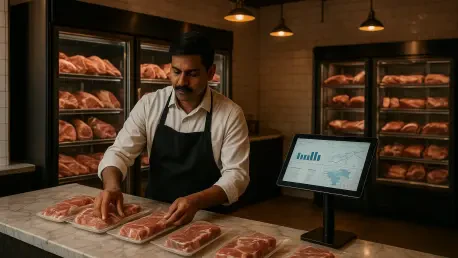
Modern distribution leverages specialized supply-chain partnerships rather than capital-heavy franchising. By providing merchants with digital inventory tools and hygiene protocols, companies empower neighborhood retailers with refrigeration and a catalog of nearly one hundred fifty items. These upgrades allow modest stalls to offer everything from fresh cuts to ready-to-eat meals, ensuring rapid scaling without the burden of maintaining heavy manufacturing facilities.
Evaluating Growth Projections and the Surge in Organized Market Share
Financial indicators suggest robust expansion, with plans to increase the partner-store network from two hundred to five hundred outlets throughout 2026. Individual stores see average monthly revenues reaching five lakh rupees, stabilized by a seventy percent B2B and thirty percent D2C revenue split. This balanced model provides steady cash flow while formalizing the industry for long-term investment.
Overcoming Structural Bottlenecks in the Cold Chain and Logistics
Analysis reveals that the primary challenge is cold-chain inefficiency rather than consumer demand. To mitigate risks, a rigorous vetting process evaluates partners on over thirty parameters, including historical performance and local reputation. Bridging the gap between rural production and urban consumers remains a logistical priority, ensuring that perishable goods reach their destination in peak condition through backend reliability.
Standardizing Hygiene and Compliance in a Traditionally Unregulated Market
Bringing formal food safety standards to local shops is the most significant impact of this modernization. Providing infrastructure support like modern refrigeration helps merchants meet evolving regulatory requirements and transition toward transparent systems. Navigating the complex legal landscape of livestock distribution requires a commitment to compliance that organized players provide, reducing health risks and building trust.
The Evolution Toward a Hybrid Direct-to-Consumer and B2B Ecosystem
The integration of online platforms with physical outlets creates a seamless omnichannel experience for the modern consumer. Technology-driven logistics are gradually disrupting traditional wet markets by offering superior reliability. Expansion strategies are now looking toward emerging urban centers, ensuring that the modernization of the meat industry becomes a scalable nationwide standard.
Final Assessment of Zappfresh’s Role in Formalizing Indian Food Retail
The strategic shift toward a partner-store model successfully empowered small business owners and drove meaningful revenue growth. By prioritizing supply-chain density over capital-heavy expansion, the industry established a more sustainable path forward. This modernization served as a vital blueprint for other perishable goods, proving that technology effectively bridged the gap between traditional markets and modern consumer expectations.