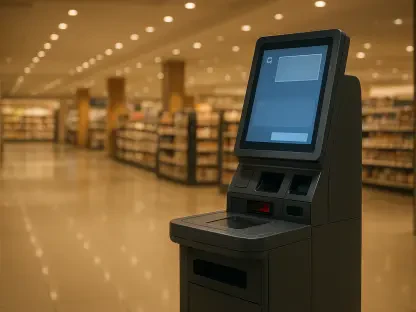

The modern grocery store floor is no longer just a place for transaction; it is a high-speed data laboratory where every second of delay at the checkout terminal translates into lost revenue and frustrated customers. This silent evolution toward edge computing is fundamentally changing how retailers handle the massive quantities of information generated at the point of sale. While traditional computer vision once required expensive external processing, a new wave of decentralized intelligence is proving that the most efficient way to manage data is to ensure it never leaves the store.
London-based technology firm Edgify recently secured $9 million in Series A+ funding, led by Rank Ventures and Mangrove Capital, to address this specific challenge. This capital injection, which brings their total funding to $25 million, highlights a significant strategic shift in the retail landscape. By repurposing their expertise from mobile app analysis to physical commerce, the team has created a way for supermarkets to utilize their existing infrastructure to process complex data without relying on the cloud.
Moving Beyond the Cloud to the Checkout Counter
Retailers are currently navigating a silent crisis where the sheer volume of data produced at the checkout is too heavy and sensitive for distant cloud servers. High-resolution video feeds required for produce recognition or loss prevention often strain traditional bandwidth limits, leading to lag and operational friction. Consequently, the industry is moving away from centralized models that demand constant high-speed connections to maintain basic store functionality.
By transforming every scale and self-checkout kiosk into an independent brain, stores are finally catching up to the speed of real-time commerce. This approach allows machines to make split-second decisions locally, ensuring that a customer’s experience remains seamless even when network conditions are less than ideal. Moreover, this shift eliminates the need for expensive external processing, keeping the intelligence exactly where the transaction occurs.
The Infrastructure Bottleneck Facing Modern Retail Environments
The transition to AI-powered retail has historically been slowed by the high cost of upgrading physical hardware. Most grocery chains and apparel outlets remain tethered to legacy systems that lack the native capacity to support advanced analytics or real-time loss prevention. Replacing this infrastructure is a capital-intensive endeavor that many brick-and-mortar locations find difficult to justify in a low-margin industry.
Furthermore, relying on centralized cloud systems introduces significant security vulnerabilities for sensitive customer data. When raw video or personal information is transmitted over external networks, it becomes a target for intercept or breach. Shifting to localized processing mitigates these risks, as sensitive information remains within the store’s physical boundaries, providing a robust solution for data privacy compliance.
Building a Collaborative Store Fleet Through Local Machine Learning
Edgify’s core innovation is a decentralized platform that utilizes the spare computing power already sitting inside existing hardware. Instead of sending video feeds to a remote server, the software allows point-of-sale terminals and security cameras to process information on the fly. This localized approach turns isolated machines into a unified network capable of high-level reasoning without external help.
These machines participate in a shared learning network where a discovery made by one terminal is instantly distributed to every other unit in the store. For example, if one checkout terminal identifies a new scan-avoidance technique or a specific variety of organic produce, that intelligence is shared across the entire fleet. This creates a constantly evolving intelligence that improves the accuracy of the entire store ecosystem simultaneously.
The Strategic Advantage of Asset-Light Hardware Integration
In a competitive field populated by players like Trigo and AiFi, the asset-light approach provides a clear path to rapid scaling. Rather than requiring retailers to gut their stores for intrusive server installations or ceiling-mounted sensors, this model focuses on retrofitting existing technology. It maximizes the utility of hardware that has already been bought and paid for, lowering the barrier to entry for major grocers.
This hardware-agnostic strategy allows companies to implement advanced AI across thousands of locations without a massive capital expenditure on new infrastructure. By focusing on software that integrates with current kiosks and scales, retailers can achieve modernization at a fraction of the traditional cost. This flexibility makes the technology an attractive option for large-scale operations in both the United States and Europe.
Analyzing the Massive Growth Projections for the Global Physical AI Market
Industry experts view the shift from centralized cloud AI to “Physical AI” as one of the most significant investment trends of the current decade. Market research indicates that the global edge AI sector is positioned for explosive growth, jumping from a $47 billion valuation in 2026 to over $445 billion by 2034. This shift is driven by a cross-industry demand for real-time processing in environments where delay can disrupt vital operations.
Beyond the grocery aisle, this trend is impacting high-traffic logistics and distribution centers. The ability to automate complex tasks directly on the shop floor or in the warehouse is becoming a competitive necessity. As more industries recognize the limitations of cloud dependency, the move toward decentralized systems is expected to accelerate across manufacturing and energy sectors.
Strategies for Scaling Decentralized AI Across Diverse Retail Verticals
Retailers prioritized a phased rollout that targeted high-impact areas like quick-service restaurants and apparel stockrooms. They recognized that starting with localized processing ensured system reliability and bolstered data privacy from the outset. This strategic focus allowed businesses to create a more resilient infrastructure that remained functional even during internet outages, proving the long-term value of the edge-first mentality.
They shifted away from expensive third-party data hosting and instead maximized their existing digital assets. This transition demonstrated that the most effective way to scale was to turn isolated machines into a unified, intelligent system. By adopting these decentralized frameworks, companies successfully reduced operational costs and paved the way for a more autonomous and efficient future in global physical commerce.