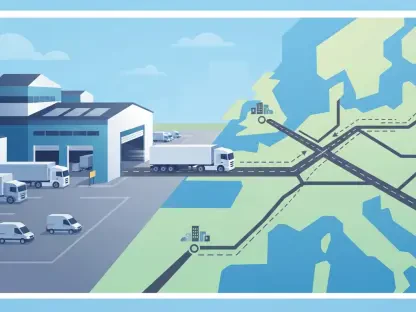

The vast Australian landscape presents a unique logistical challenge that requires a retail infrastructure capable of serving millions of citizens across a massive geographical area every single day. Coles Group has positioned itself at the epicenter of this environment by transforming from a traditional brick-and-mortar grocer into a high-tech data and logistics powerhouse. By focusing on essential services, the organization maintains a level of economic resilience that remains largely immune to the fluctuations of discretionary spending cycles. This stability is not merely a result of selling groceries; it is the outcome of a sophisticated business model that integrates physical stores with digital touchpoints. As consumer expectations for speed and personalization continue to rise, the company has pivoted toward a strategy that prioritizes efficiency and technological integration above all else. This approach ensures that whether a customer is shopping in a rural town or a dense urban center, the experience remains seamless and the shelves remain stocked. The evolution of this retail giant provides a fascinating case study in how heritage brands can reinvent themselves to thrive in a digital-first economy while managing the complexities of a sprawling supply chain.
Diversified Business Structure and Digital Integration
Retail Segments: A Multi-Pronged Strategy
The core engine of the company is its extensive supermarket network, which provides a steady stream of revenue through the sale of fresh produce, meat, and pantry staples. However, the business is far more than just a grocery chain, as it operates a highly successful liquor division that includes prominent brands such as Liquorland, Vintage Cellars, and First Choice Liquor Market. These liquor outlets are often strategically co-located with supermarkets to provide a one-stop-shop experience for customers, maximizing convenience and capturing a larger share of the household wallet. This physical proximity allows for shared logistics and site management, which reduces overhead and improves the overall profitability of the retail footprint. By diversifying into the liquor market, the group protects itself against downturns in specific grocery categories, as alcohol sales often exhibit different consumption patterns compared to essential food items. This balanced portfolio allows for consistent financial performance across various economic climates, ensuring that the organization remains a dominant force in the Australian retail sector regardless of external pressures.
Beyond the traditional storefronts, the company has aggressively expanded its presence in the convenience and fuel sectors, recognizing that modern shoppers often prioritize speed over a comprehensive weekly shop. These smaller-format stores cater to the growing top-up shopping trend, where customers visit multiple times a week to purchase only a few items for immediate consumption. This strategy complements the larger supermarket format by capturing transactions that would otherwise be lost to quick-service competitors or smaller independent grocers. Furthermore, the integration of digital tools within these physical spaces allows for a more cohesive shopping experience, where customers can use mobile apps to check stock levels or pay for fuel without entering the store. This seamless blend of convenience and technology is a key differentiator in a market where time is increasingly viewed as a commodity. By maintaining a presence in diverse shopping contexts, from large-scale weekly shops to quick fuel stops, the company ensures it remains relevant throughout the entire customer journey, regardless of how or where the consumer chooses to engage.
Data Ecosystems: Leveraging the Power of Flybuys
One of the most significant assets in the company’s arsenal is its majority stake in the Flybuys loyalty program, which provides an unparalleled window into the shopping habits of millions of Australians. This program is no longer just a way for customers to collect points; it has evolved into a sophisticated data platform that informs almost every aspect of the business. By analyzing purchase history and frequency, the organization can build detailed profiles of its customers, allowing for highly targeted marketing campaigns and personalized promotions. This data-driven approach ensures that marketing spend is optimized, as offers are sent to the individuals most likely to redeem them. Moreover, these insights are used to tailor the product range in specific stores, ensuring that the stock on the shelves reflects the unique preferences of the local community. This level of localization is difficult for smaller competitors to match and helps to build a deeper sense of loyalty among shoppers who feel that the store understands their specific needs. The ability to turn raw data into actionable business intelligence is a cornerstone of the company’s modern growth strategy.
In addition to improving internal operations, the company has begun to monetize its vast data sets through a dedicated retail media business. This venture allows third-party suppliers to purchase advertising space across digital and physical platforms, using the company’s first-party data to target specific audience segments. For example, a beverage company can use these insights to promote a new product specifically to customers who have previously purchased similar items. This creates a new, high-margin revenue stream that is decoupled from the traditional challenges of selling physical goods, such as spoilage and transport costs. By transforming into a media owner, the group is following a global trend seen in other retail giants, where the value of customer attention and data often rivals the value of the products themselves. This strategic pivot not only diversifies the company’s income but also strengthens its relationship with suppliers, who can now see a direct link between their advertising spend and actual sales performance. As the digital advertising landscape becomes more complex, the ability to offer a closed-loop measurement system remains a powerful competitive advantage.
Technological Advancements in Logistics and Planning
Distribution Centers: The Push for Full Automation
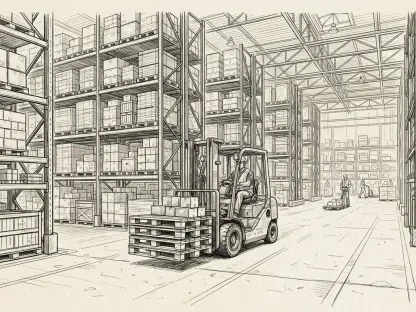
The modernization of the supply chain is most visible in the deployment of massive automated distribution centers that utilize advanced robotics to manage inventory. By partnering with global technology leaders like Witron, the company has replaced older, labor-intensive facilities with high-capacity hubs that can process thousands of cases per hour with minimal human intervention. These centers use sophisticated algorithms to determine the most efficient way to stack pallets, ensuring that goods arrive at stores in an order that makes it easier for staff to restock shelves. This not only reduces the physical strain on employees but also significantly cuts down on the time required to move products from the warehouse to the consumer. The shift toward automation is a direct response to the rising cost of labor and the need for greater precision in a high-volume environment. By centralizing operations in these tech-heavy hubs, the organization has achieved a level of scale and speed that was previously impossible, providing a clear competitive advantage in the race to keep prices low while maintaining high service levels.
Beyond the immediate gains in speed, these automated facilities play a crucial role in enhancing the safety and reliability of the entire logistics network. Manual warehouse work is inherently risky, with high rates of repetitive strain injuries and accidents involving heavy machinery; however, the introduction of robotics has drastically reduced the need for human presence in high-risk zones. This transition has allowed the company to reskill its workforce, moving employees away from manual handling and into more technical roles focused on monitoring and maintaining the robotic systems. Furthermore, the accuracy provided by these automated systems ensures that store orders are fulfilled correctly every time, which minimizes the waste associated with incorrect deliveries or damaged goods. This reliability is particularly important for the fresh food segment, where delays or errors can lead to significant financial losses due to spoilage. As the company continues to refine these processes, the integration of automation will move beyond the warehouse walls and into the broader transportation network, creating a truly end-to-end digital supply chain that is both resilient and cost-effective.
Predictive Modeling: AI in Inventory and Pricing
Artificial intelligence has become the silent architect behind the company’s ability to manage its vast inventory across hundreds of locations simultaneously. By utilizing machine learning algorithms that analyze years of historical sales data, weather patterns, and local events, the organization can predict demand with a high degree of accuracy. This predictive capability allows store managers to order the exact amount of stock needed, reducing the likelihood of empty shelves during peak periods or excessive leftovers that must be sold at a loss. For instance, if a heatwave is forecasted for a specific region, the AI system automatically adjusts the replenishment orders for chilled beverages and barbecue meats before the temperature even begins to rise. This proactive approach to inventory management is essential for protecting profit margins in a low-margin industry where efficiency is the primary driver of success. By removing much of the guesswork from the ordering process, the company has been able to significantly decrease food waste, which aligns with both its financial goals and its commitment to environmental sustainability.
The application of AI also extends into the realm of dynamic pricing and markdown optimization, where digital tools help to move stock before it reaches its expiration date. Instead of relying on store-level staff to manually identify and discount aging products, the company uses centralized algorithms to determine the optimal price point that will ensure a quick sale while maximizing recovery value. This system takes into account real-time inventory levels, competitor pricing, and historical demand to suggest discounts that are tailored to the specific conditions of each store. In the e-commerce space, this technology is further enhanced through the use of dedicated customer-fulfillment centers powered by Ocado’s world-leading robotics. These facilities use hives of robots to pick and pack online orders in a fraction of the time it would take a human shopper, ensuring that the digital business remains profitable even as demand for home delivery skyrockets. The combination of AI-driven demand forecasting and robotic fulfillment creates a powerful synergy that allows the organization to scale its digital operations without sacrificing the speed or quality that customers have come to expect.
Market Positioning and Strategic Outlook
Competitive Dynamics: Private Labels and Market Share
In an environment where shoppers are increasingly price-sensitive, the development and promotion of private-label products have become a central pillar of the group’s competitive strategy. These exclusive brands allow the company to offer high-quality alternatives to national brands at a significantly lower price point, providing a vital value proposition for budget-conscious households. By controlling the entire production process from the factory to the shelf, the organization can capture a larger portion of the profit margin that would otherwise go to third-party manufacturers. This strategy has proven particularly effective in categories like dairy, bakery, and pantry staples, where the brand’s own products often account for a substantial percentage of total sales. To maintain this momentum, the company has invested heavily in product innovation and quality control, ensuring that its own-brand items are seen as a desirable choice rather than just a cheaper substitute. This focus on quality has helped to erode the historical stigma associated with generic products, allowing the retailer to build a brand within a brand that fosters long-term customer loyalty and repeat business.
The strength of this private-label strategy also serves as a powerful defensive moat against the encroachment of international discounters who rely heavily on their own exclusive ranges. By offering a tiered range of products, from entry-level value items to premium gourmet selections, the company can appeal to a wide spectrum of consumers, effectively neutralizing the pricing advantages of its competitors. This multi-tiered approach ensures that the organization can defend its market share across different price points while still providing opportunities for margin expansion through its premium lines. Furthermore, the scale of the company’s purchasing power allows it to negotiate favorable terms with suppliers, which further enhances the profitability of its exclusive brands. This relationship with suppliers is carefully managed to encourage innovation and ensure a consistent supply of unique products that cannot be found at rival supermarkets. As the competitive landscape continues to evolve, the ability to offer a differentiated and cost-effective product range will remain a key factor in the company’s ability to drive traffic into its stores and maintain its position as a market leader in Australia.
Operational Risk: Sustainability and Regulatory Compliance
As a major player in the national economy, the company must navigate a complex regulatory environment that is increasingly focused on the cost of living and the fair treatment of suppliers. This scrutiny requires a proactive approach to risk management, where the organization must balance the need for profitability with the expectations of government bodies and the general public. To address these concerns, the group has implemented rigorous compliance frameworks and ethical sourcing policies designed to ensure transparency throughout its supply chain. This includes regular audits of suppliers and a commitment to fair trading practices that protect the interests of smaller producers. By being seen as a responsible and ethical partner, the company can mitigate the risk of adverse regulatory actions that could impact its operations or reputation. Additionally, the focus on transparency helps to build trust with a consumer base that is increasingly interested in the origins of their food and the ethical standards of the companies they support. Maintaining this social license to operate is essential for long-term stability in an industry that is often at the center of national debate.
The strategic decision to pivot toward a tech-first operational model proved to be a decisive factor in maintaining market dominance during a period of economic volatility. The organization successfully transitioned away from outdated manual systems, embracing a culture of continuous improvement and digital literacy across all levels of the workforce. By prioritizing the development of automated distribution networks and AI-driven inventory controls, the company effectively insulated itself from the most severe impacts of supply chain disruptions. These investments were not merely defensive maneuvers; they laid the groundwork for a more agile and responsive retail ecosystem that prioritized the customer experience above all else. Looking toward the immediate future, the emphasis must remain on the ethical application of data and the continued pursuit of carbon neutrality to satisfy both regulators and a socially conscious public. The integration of advanced robotics and retail media platforms set a new standard for the industry, suggesting that the most successful retailers will be those that function more like technology firms than traditional merchants. This evolution secured a resilient path forward, ensuring the brand remained a fixture of the daily lives of millions.