
Every time a customer walks through the front door of a brick-and-mortar establishment only to find that their intended purchase is missing from the shelf, the retailer suffers a silent but significant financial blow that reverberates across their entire supply chain. In the fast-moving retail landscape of 2026, the gap between what a computer system believes is in stock and what a shopper actually sees has become the primary battleground for profitability. Modernizing these operations is no longer about incremental improvements; it is about building a comprehensive digital nervous system that can see, think, and act on behalf of the store in real-time. This guide provides a strategic roadmap for retailers to transition from archaic manual auditing to a fully automated, AI-driven operating system.
The primary goal of this guide is to empower retail leaders to eliminate operational inefficiencies by implementing a four-step framework for real-time shelf intelligence. By the end of this process, a store should be capable of self-monitoring, allowing human labor to shift from identifying problems to solving them. This transformation not only secures lost revenue but also creates a foundation for a more resilient, event-driven business model that can compete with digital-first giants.
Ending the Revenue Drain of Inaccurate Manual Audits
Manual inventory auditing has long served as a quiet drain on retail profitability, primarily because human-led checks are inherently periodic and prone to error. When an associate walks the aisles to note stockouts, the data they collect is often obsolete by the time they reach the end of the store. This lag creates a perpetual state of misinformation where replenishment cycles are disconnected from actual consumer demand, leading to wasted backroom space and empty shelf slots. By acknowledging this drain as a systemic failure rather than a minor inconvenience, retailers can begin the shift toward a more sophisticated operational intelligence model.
The transition toward a digital nervous system involves moving away from labor-intensive clipboards and toward a continuous stream of shelf data. This approach, championed by innovators like Focal Systems, replaces the guesswork of manual audits with a high-fidelity visual record of every product in the building. Instead of hoping that a worker notices a missing item, the store itself detects the discrepancy the moment it occurs. This level of oversight ensures that profitability is maximized while waste, particularly in perishable departments, is minimized through better-timed restocking.
Focusing on operational intelligence allows a business to treat the physical store like a living organism that responds to stimuli in real-time. This modernization effort is grounded in the reality that physical retail remains a cornerstone of the economy, yet it must evolve to meet the high-speed expectations of modern consumers. By automating the auditing process, leadership can ensure that every square foot of the sales floor is performing at its peak capacity, effectively turning “lost” sales into realized growth through sheer visibility.
The Shift from Stale Inventory Logs to Real-Time Shelf Intelligence
In the current environment, historical data is increasingly insufficient for managing fast-moving consumer goods. Traditional inventory logs rely on “stale” data—records that were accurate at the time of the last shipment or the last transaction but do not account for the chaos of daily shopping behavior. Theft, misplaced items, and damaged packaging create a rift between the digital record and the physical shelf. Consequently, relying on batch-processed reports leads to a reactive management style that is always one step behind the actual needs of the customer.
Data freshness has become the most critical metric for operational success because it defines the window of opportunity for a sale. A feedback loop that connects the physical shelf directly to digital decision-makers ensures that replenishment happens before a stockout impacts the bottom line. This requires a technical shift toward infrastructure that can handle continuous streams of visual information, allowing the system to identify an empty shelf in minutes rather than days. When information is delivered in real-time, it transforms from a passive record into an active tool for revenue generation.
The necessity of moving away from batch processing is driven by the immediate nature of modern sales opportunities. If a popular item sells out during a mid-day rush, a traditional report generated at midnight does nothing to help the shoppers who are currently standing in the aisle. Real-time shelf intelligence bridges this gap by capturing the immediate reality of the store. This ensures that the supply chain is not just a series of planned shipments, but a dynamic response to the actual ebb and flow of consumer traffic.
A Four-Step Framework for Deploying a Retail Operating System
Step 1: Deploying Specialized Computer Vision for Continuous Visual Auditing
The first step in modernizing retail operations involves the installation of specialized computer vision hardware designed to act as the eyes of the store. Unlike standard security cameras that offer a bird’s-eye view, these discrete shelf-mounted sensors are positioned to provide high-resolution, close-up images of every product. These sensors are engineered for extreme efficiency, often running on low power while providing continuous coverage of the entire sales floor throughout the day.
Insight: Achieving Total Store Coverage with Discrete Shelf-Mounted Sensors
Total store coverage is achieved by placing these small, non-intrusive sensors across every aisle, ensuring there are no blind spots in the inventory record. These devices capture granular details that general surveillance could never provide, such as the specific depth of a product on a shelf or the presence of a “plugged” item where an associate has incorrectly pulled a different product forward to fill a gap. This continuous visual auditing provides the raw data necessary for the AI to begin its interpretation of the store health.
Step 2: Interpreting Visual Reality via Proprietary AI Intelligence Engines
Once the visual data is captured, it must be processed by proprietary AI intelligence engines that can distinguish between a myriad of shelf conditions. This step moves the data from simple imagery to actionable intelligence by identifying exactly which products are missing, running low, or misplaced. These AI engines are trained on massive datasets to recognize thousands of stock-keeping units (SKUs) in various lighting conditions and orientations, ensuring that the interpretation of the physical shelf is highly accurate.
Insight: Identifying Discrepancies Between On-Shelf Stock and Corporate Planograms
A vital aspect of this intelligence is the ability to compare the visual reality of the shelf against the corporate planogram, which is the intended blueprint for how products should be arranged. The AI identifies discrepancies where the physical layout has deviated from the corporate strategy, highlighting areas where merchandising compliance is failing. This insight allows management to correct layout errors that might be confusing customers or hindering the performance of high-margin items.
Step 3: Mobilizing the Workforce Through Real-Time Action Tools
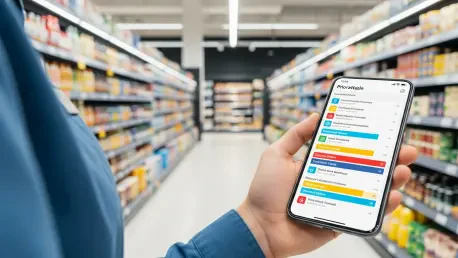
Intelligence is only useful if it results in physical action, which is why the third step involves deploying mobile action tools to store associates. These tools translate complex AI findings into simple, prioritized tasks that appear on a worker’s handheld device. Instead of spending hours walking the store to find out what needs to be done, associates are directed exactly where to go and which products need to be brought from the backroom to the shelf.
Insight: Driving Labor Efficiency by Providing Prioritized Replenishment Tasks
This approach drives labor efficiency by ensuring that the most valuable tasks are completed first. The system prioritizes replenishment based on sales velocity and profit margin, ensuring that the team focuses on the items that have the greatest impact on the bottom line. By removing the “search” phase of the replenishment process, the workforce is empowered to spend their time actually fixing problems, which significantly boosts overall productivity and morale.
Step 4: Utilizing Impact Analytics for Strategic Executive Oversight
The final step is the aggregation of all store-level data into a strategic analytics platform for executive oversight. This dashboard provides a high-level view of performance across multiple locations, allowing leadership to see the direct impact of automation on sales and labor costs. Executives can track real-time metrics and historical trends to determine which regions are excelling and which require additional support or training.
Insight: Revolutionizing Management via Virtual Store Walks and Live Metrics
Management is revolutionized through features like virtual store walks, which allow regional managers to view the current state of any shelf in any store from a remote office. This transparency eliminates the need for constant physical travel while providing a level of detail that was previously impossible to obtain. Live metrics provide a continuous pulse of the entire organization, ensuring that strategic decisions are based on the actual reality of the sales floor rather than outdated reports.
Essential Takeaways for Transitioning to Automated Inventory Control
Transitioning to an automated inventory control system requires a mindset shift that prioritizes the movement of products over the simple recording of their location. One of the most immediate benefits of automated auditing is the significant reduction in the time products spend languishing in the backroom. When the system identifies a shelf gap in real-time, the replenishment process starts immediately, ensuring that stock is always available to the customer. This efficiency directly correlates to increased sales and higher customer satisfaction levels.
Furthermore, real-time data synchronization lowers the persistent gap between digital records and physical reality, which is often the source of friction in e-commerce fulfillment. When a physical store also serves as a hub for online orders, an accurate inventory count is essential to prevent “substituted” or cancelled orders. Managed data streaming platforms like Kafka allow for enterprise-grade scalability, ensuring that as a retail chain grows, the flow of data remains consistent and reliable across thousands of locations.
The most profound change, however, is the redirection of labor from finding problems to fixing problems. In a traditional model, a massive percentage of a worker’s shift is spent on non-productive tasks like manual scanning. Automation flips this ratio, allowing the workforce to focus on merchandising, customer service, and high-value replenishment. This shift not only increases productivity but also modernizes the role of the retail associate, making the position more focused on precision and execution.
The Shift Toward Edge-to-Cloud Intelligence and Event-Driven Retail
The industry is rapidly moving toward a future defined by “self-managing stores” where the infrastructure is capable of identifying and resolving operational issues with minimal human intervention. This trend relies on edge-to-cloud intelligence, where data is processed locally at the store for speed but aggregated in the cloud for deep analysis. By treating every shelf change as an “event” in a larger data stream, retailers can create an architecture that reacts in minutes rather than hours. This event-driven approach is the backbone of the “live metrics” model that characterizes top-tier retail operations in 2026.
However, the technical evolution toward high-speed processing also introduces new challenges, particularly regarding the management of high-cardinality data. Handling billions of unique data points from thousands of cameras across a global footprint requires robust data streaming architectures that can maintain high availability. Additionally, as these systems become more pervasive, maintaining data privacy through advanced masking and secure processing becomes a non-negotiable requirement for maintaining consumer trust and regulatory compliance.
Looking ahead, the focus will shift toward integrating these AI insights even deeper into the supply chain. When a store can tell the warehouse exactly what is being sold in real-time, the entire replenishment cycle becomes more efficient, reducing the need for safety stock and lowering overhead costs. This level of integration is what separates traditional retailers from the next generation of physical stores that are as agile and data-driven as their purely digital counterparts.
Final Verdict: Embracing Automation to Secure the Future of Physical Stores
Modernizing retail operations via AI successfully created a unified understanding of store health that was previously unattainable. The integration of specialized computer vision, intelligence engines, and workforce mobilization tools proved to be the most effective way to eliminate the revenue drain associated with manual auditing. Retailers who prioritized their data infrastructure found themselves better equipped to handle the complexities of modern consumer behavior and the pressures of omnichannel fulfillment.
The successful implementation of these systems demonstrated that the move toward a retail operating system was no longer optional for those seeking to remain relevant. Looking forward, the next logical evolution involved the integration of these AI models with autonomous logistics units that handled stock movement without any human intervention. This shift provided the definitive answer to the problem of inventory inaccuracy, allowing leadership to focus entirely on experiential retail and brand expansion. By reflecting on the long-term benefits of these comprehensive systems, it became clear that automation was the only path toward securing a profitable and competitive future for physical stores.