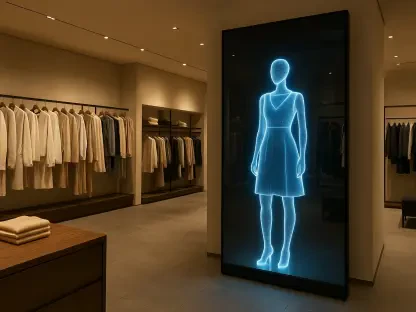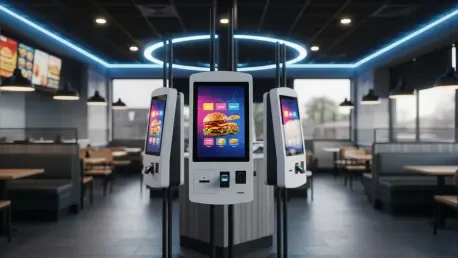

Modern retail floor plans are undergoing a quiet yet profound architectural revolution as the dominance of the traditional checkout counter yields to the ubiquitous glow of interactive kiosks. This structural transition from clerk-assisted models toward hybrid automated environments reflects a significant realignment of global commerce priorities. By decentralizing the point of sale, retailers are effectively transforming their physical spaces into dynamic service hubs where the customer dictates the pace and nature of every interaction.
Quick Service Restaurants and big-box apparel retailers are currently leading this adoption, utilizing modular hardware to maximize high-traffic floor space that was previously underutilized. Hardware innovators have played a critical role in this shift by standardizing interactive touchpoints that feel familiar to smartphone users. Moreover, the strategic placement of digital signage within these systems ensures that marketing remains relevant and localized, allowing brands to communicate with shoppers in real time without human intervention.
Analyzing the Structural Transformation of Global Retail Ecosystems
The integration of automated systems is no longer a peripheral experiment but a fundamental component of modern store design. Large-scale retail chains are redesigning their interiors to accommodate the flow of self-guided shoppers, moving away from centralized queues that often created congestion. This physical restructuring allows for a more efficient use of square footage, as kiosks occupy a much smaller footprint than traditional counters.
Software developers are now focusing on creating unified ecosystems where kiosks act as the primary interface for various services beyond just checking out. This includes product lookups, return processing, and loyalty sign-ups, which traditionally required a trip to a service desk. By consolidating these functions into modular units, businesses are able to provide a more consistent brand experience that bridges the gap between digital convenience and physical presence.
Deciphering the Shift Toward Customer-Led Commerce and Market Growth
The Rise of Shopper Autonomy and Digital-Physical Convergence
Shoppers are increasingly favoring environments where they can exert complete control over their purchasing journey without feeling the pressure of a sales associate. Self-service kiosks facilitate this autonomy by allowing for self-guided exploration, where customers can research product specifications or check sizes at their own leisure. This shift has turned the physical store into an “omnichannel bridge,” where features like click-and-collect and access to an “endless aisle” of online inventory are just a few taps away.
Privacy and transaction control have become key drivers of consumer behavior, particularly for shoppers who prefer a discrete and rapid checkout process. Retailers are leveraging this preference to deliver highly personalized loyalty rewards directly through the kiosk interface. When a shopper logs in to a terminal, the system can instantly surface real-time product availability data and tailored discounts, making the in-store experience feel as customized as a curated online shopping cart.
Benchmarking Growth Trajectories and the Economics of Automation
The global market expansion for retail technology is currently witnessing a rising Compound Annual Growth Rate that is expected to accelerate between 2026 and 2032. Statistical analysis indicates that the reduction in wait times directly correlates with higher customer retention rates and a notable increase in average transaction values. When consumers use kiosks, they often spend more time browsing upsell options that might be overlooked during a hurried human interaction.
Quantifying the return on investment involves looking at optimized labor allocation rather than just cost-cutting. By automating routine transactions, management can redirect the workforce toward high-value roles such as specialized consultations and floor assistance. Forward-looking performance indicators suggest that automated checkout systems will handle the majority of global retail volume within the next decade, as the economics of throughput become impossible for traditional models to ignore.
Overcoming the Friction Points of Digital Self-Service Integration
Despite the rapid adoption, the digital divide remains a significant challenge for retailers attempting to serve diverse demographic groups. Ensuring that user interface and experience designs are intuitive for elderly shoppers and those with varying digital literacy is essential for widespread acceptance. If a system is too complex, it risks alienating the very customers it was designed to attract, turning a convenience into a frustration.
Technical vulnerabilities such as hardware maintenance, connectivity outages, and software glitches also require proactive management. A single malfunctioning kiosk can disrupt the flow of an entire store, necessitating robust on-site support and redundant systems. Furthermore, integrating legacy inventory management systems with modern front-end interfaces remains a complex hurdle that requires significant backend synchronization to ensure that stock levels are accurate across all touchpoints.
Navigating the Complexities of Security Standards and Regulatory Compliance
Data privacy has become a cornerstone of the automated retail experience, with businesses needing to uphold rigorous standards in accordance with evolving local mandates. As kiosks collect more customer information, maintaining compliance with regulations like GDPR and CCPA is non-negotiable. Digital security must be paired with physical accessibility, as retailers are legally required to adhere to ADA mandates to ensure that kiosks are usable by individuals with disabilities.
High-level payment security protocols, including PCI DSS compliance and encrypted biometric entry, are being implemented to protect sensitive financial data. The rise of facial recognition and automated age verification has introduced a new layer of regulatory complexity. Regional government regulations are increasingly scrutinized, forcing retailers to be transparent about how biometric data is stored and used to prevent legal repercussions and maintain public trust.
Anticipating the Next Frontier of Interactive Shopping Environments
The next generation of hardware is expected to incorporate Generative AI and voice-activated interfaces to create a conversational shopping experience. Instead of navigating menus, shoppers will simply speak to a kiosk to find items or receive advice on product pairings. This evolution will be supported by 5G and Edge Computing, which facilitate instantaneous data processing and inventory synchronization, eliminating the latency that often plagues current digital systems.
Computer vision technology is also being explored to eliminate the need for traditional scanning altogether. By combining kiosk interfaces with “just-walk-out” sensors, retailers can create a seamless environment where the terminal serves more as a confirmation point than a manual checkout station. Sustainability is also becoming a priority, with manufacturers focusing on eco-friendly materials and energy-efficient components to meet the growing demand for green technology in the retail sector.
Final Synthesis: Harmonizing Human Service with Digital Efficiency
The strategic necessity of kiosks was clearly established as businesses sought to maintain a competitive edge in an increasingly digital-first economy. It became evident that balancing the speed of automation with the irreplaceable value of personalized human interaction was the only way to ensure long-term customer loyalty. The industry recognized that scaling digital infrastructure effectively required a modular approach that favored user experience over mere technical capability.
Ultimately, the automated retail model proved its resilience by increasing profitability while simultaneously elevating the standard of in-person service. Successful retailers discovered that kiosks were most effective when they acted as facilitators of a larger, cohesive brand journey. The transition toward these systems allowed for a more flexible and responsive retail environment, setting a new benchmark for how technology and people can work together to meet the demands of a modern audience.