
The familiar thud of a heavy cardboard box landing on a doorstep is rapidly being replaced by the soft rustle of a lightweight, flexible mailer as global retail giants overhaul their fulfillment infrastructure to meet modern environmental standards. For decades, the double-walled corrugated box stood as the gold standard of the shipping world, offering unmatched protection at the cost of significant material waste and logistical inefficiency. However, the current landscape of digital commerce has reached a tipping point where the “one-size-fits-all” box strategy is no longer viable due to rising fuel costs, stricter carbon emission mandates, and a growing public intolerance for excessive packaging. This transition represents a sophisticated merger of material science and logistics, where every millimeter of saved space translates directly into reduced environmental impact and higher operational margins. By moving toward flexible substrates, retailers are not just changing the container; they are fundamentally redefining the geometry of the global supply chain to be more agile and less resource-intensive. As of 2026, the shift is no longer a pilot program but a primary operational directive for the world’s largest distributors who seek to balance high-velocity delivery with a drastically reduced physical footprint.
Strategic Advantages: Operational Efficiency and Logistics
The adoption of flexible mailers offers immediate logistical benefits that directly impact a company’s bottom line through the principles of spatial optimization. Because mailers are inherently thinner and more lightweight than rigid boxes, they significantly reduce the total weight of shipments, which lowers fuel consumption and transportation costs across entire carrier networks. This spatial efficiency allows delivery providers to pack a higher density of items into each vehicle, effectively turning every delivery van into a more productive asset by maximizing the utilization of its cubic capacity. In an industry where “last-mile” delivery accounts for a massive portion of total operational expenses, the ability to fit more packages into a single route without increasing the vehicle size is a game-changing development. This reduction in volume also means that fulfillment centers can store more packaging materials in a smaller footprint, freeing up valuable warehouse space for actual product inventory. Consequently, the move to flexibles is as much an economic strategy as it is an environmental one, providing a streamlined path to profitability in a market defined by razor-thin margins and rising logistical complexities.
Beyond mere cost savings, the current push toward fiber-based mailers specifically addresses the urgent need for curbside-recyclable materials that fit into existing consumer habits. Traditional poly-bubble mailers, which utilize a complex mix of plastic films and air-filled padding, have long been a headache for waste management systems because they are notoriously difficult for the average person to recycle properly. By pivoting to mono-material paper solutions, retailers like Amazon and Best Buy are ensuring that the packaging can be discarded directly into standard blue bins without requiring specialized drop-off locations. This commitment to fiber-based substrates supports a more robust circular economy by feeding high-quality paper pulp back into the manufacturing stream, reducing the long-term reliance on virgin forests. The simplicity of a single-material envelope eliminates consumer confusion and significantly lowers the contamination rates at recycling facilities, which has been a major hurdle for municipal waste programs over the last several years. This systemic change reflects a broader understanding that true sustainability must be convenient for the end-user if it is to achieve meaningful scale and long-term viability across the global retail landscape.
Innovative Protection: Engineering Beyond the Flat Envelope
Modern engineering techniques are successfully overcoming the historical limitations of flexible packaging, such as its perceived inability to protect fragile items or accommodate bulky, oddly shaped goods. One of the most significant breakthroughs is the widespread implementation of gusseted mailers, which feature expandable sides and reinforced bottoms that allow these envelopes to hold three-dimensional objects that previously required a box. This innovation effectively bridges the gap between the simplicity of a standard envelope and the protective capacity of a corrugated carton, offering a versatile solution for everything from small electronics to kitchenware. By using high-strength kraft paper and multi-ply construction, manufacturers have created a container that maintains its structural integrity even when subjected to the rigors of automated sorting systems and long-haul transportation. The development of these “box-like” mailers means that retailers no longer have to choose between the efficiency of a bag and the protection of a box; they can now utilize a hybrid format that offers the best of both worlds, ensuring that products arrive in pristine condition while using significantly less material.
To replace the environmental liability of plastic bubble wrap, packaging scientists have developed sophisticated paper-based cushioning that provides exceptional levels of shock absorption without the plastic waste. Utilizing techniques like deep embossing or engineered honeycomb fiber structures, these sustainable alternatives create a protective air barrier that can rival the performance of traditional polymers. For instance, technologies such as TemperPack’s WaveKraft use a proprietary fiber pattern that absorbs impact energy far more effectively than standard flat paper, making it suitable for shipping delicate components and glassware. Additionally, the integration of high percentages of post-consumer recycled content into these cushioned mailers ensures that the entire protective assembly is part of a sustainable lifecycle. This shift toward engineered fiber not only satisfies the regulatory demand for plastic reduction but also appeals to the tactile expectations of the consumer, providing a premium “unboxing” feel that reinforces a brand’s commitment to environmental stewardship. As these materials become more cost-competitive through mass production, the reliance on petroleum-based padding is quickly becoming a relic of the past.
Advanced Automation: The War Against Empty Space
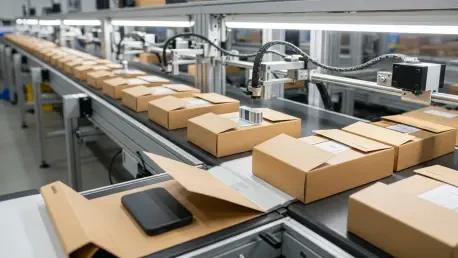
A persistent source of frustration for the modern online shopper is the “small item in a giant box” phenomenon, which wastes massive amounts of material and creates unnecessary “dead air” in shipping containers. To combat this inefficiency, the packaging industry is aggressively deploying advanced automation and “rightsizing” technology that custom-forms a mailer around a specific product in real-time. These automated systems, such as the high-speed PaperPro X, utilize 3D scanning to measure the dimensions of an item and then cut, fold, and seal a fiber-based mailer to those exact specifications. This level of precision eliminates the need for “dunnage” or void-fill materials like plastic air pillows and paper wads, which were previously used to stop items from rattling inside oversized boxes. By removing the air from the equation, companies are able to reduce their material usage by up to 40% per order, while also ensuring that the final package is as compact as possible. This technological leap not only speeds up the fulfillment process but also ensures that every square inch of a delivery vehicle is filled with actual product rather than empty space, directly lowering the carbon intensity of every shipment.
Legislative changes are providing a powerful tailwind for these automated solutions, as governments around the world implement stricter rules regarding packaging waste and empty space ratios. A prime example is the European Union’s Packaging and Packaging Waste Regulation, which mandates that retailers must limit the amount of empty space in any given package to a maximum of 50% by the end of the decade. These mandates are forcing a global shift in fulfillment strategy, as international brands must standardize their operations to meet the toughest regional requirements to avoid significant fines and market exclusion. Consequently, there is a surge in demand for hybrid automated lines that can switch between paper and poly substrates on the fly, allowing retailers to select the most sustainable material for a specific geography or product type. By leveraging AI-driven automation to achieve compliance, brands are finding that they can actually improve their operational velocity and reduce labor costs, effectively turning a regulatory hurdle into a long-term competitive advantage. The era of the “standard box size” is being replaced by a highly dynamic, software-defined packaging environment where every order is a unique, tailor-made container.
Market Trajectory: Investment and the Future of Delivery
The magnitude of the transition from corrugated boxes to flexible mailers is clearly reflected in the massive capital investments currently being made by the world’s leading packaging firms and retailers. Major industry players have committed billions of dollars toward acquiring specialized manufacturers and constructing sprawling new facilities dedicated solely to the production of high-performance fiber mailers. For example, the acquisition of Bell Inc. by Graphic Packaging International and the massive expansion of Mondi’s paper bag operations in North America highlight a strategic bet on a future where the envelope is the dominant shipping format. These firms are not merely reacting to a trend; they are building the industrial capacity required to handle hundreds of millions of flexible shipments annually as e-commerce continues to grow. This shift in capital expenditure signals a permanent change in the manufacturing landscape, as traditional box plants are being supplemented or replaced by high-tech facilities that focus on flexible, recyclable substrates. The scale of these investments ensures that the necessary infrastructure is in place to support the global retail sector’s total departure from the oversized cardboard box model.
While the logistical and corporate shifts are undeniable, the ultimate success of the sustainable mailer hinges on a significant evolution in the consumer mindset regarding product protection and waste. For a long time, many shoppers equated the sturdiness of a thick cardboard box with the safety of their purchase, leading to a psychological preference for rigid packaging despite its environmental cost. However, as mailer technology proved that it could deliver goods safely and efficiently, “packaging rage” over excessive waste began to outweigh the desire for heavy-duty containers. Consumers have increasingly embraced the convenience of easy disposal and the guilt-free nature of curbside recycling, leading to higher brand loyalty for companies that prioritize rightsized, eco-friendly envelopes. Retailers found that by educating their customers on the science behind flexible protection, they could successfully transition even fragile product categories into mailer formats. To ensure a smooth path forward, businesses took the necessary steps to integrate feedback loops that allowed them to refine their material choices based on real-world delivery performance. This proactive approach transformed the unboxing experience from a chore involving bulky waste into a streamlined, sustainable interaction that aligned with the values of a more conscious global public.