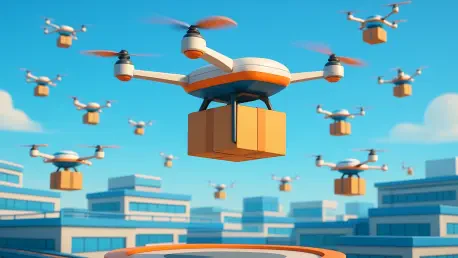

Operational success for Prime Air requires navigating a fragmented landscape of local noise ordinances and community privacy concerns that vary significantly between different municipalities and states. This fundamental challenge arrives as Amazon aggressively moves its drone delivery service from an experimental phase into a massive commercial operation targeting nearly 500 cities and towns by the end of this year. The company is working to make 30-minute delivery a standard expectation for millions of customers, shifting the technology from a niche novelty into a core component of the retail supply chain. By leveraging its existing fulfillment center network, the company is currently attempting to build the first truly national drone delivery infrastructure. This expansion represents a major shift toward a parallel logistics system that operates in the sky, bypassing traditional ground constraints and establishing a new baseline for speed in the modern digital economy.
Scaling Infrastructure: Solving the Last-Mile Delivery Challenge
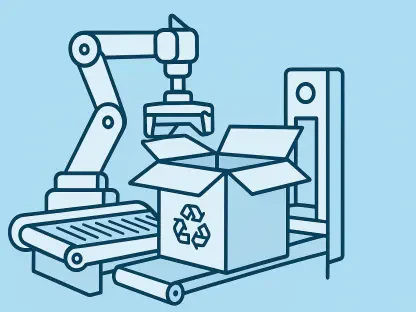
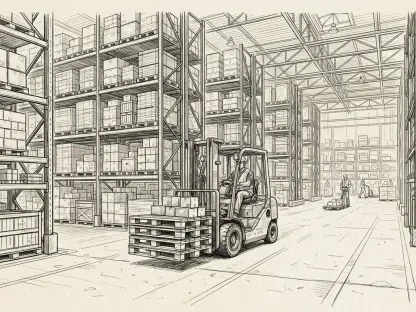
The decision to scale at this unprecedented speed follows years of extensive data collection in test markets like College Station, Texas, and Lockeford, California, where engineers studied everything from wind resistance to avian flight paths. These trials demonstrated that once customers experience the convenience of ultra-fast delivery, the service quickly moves from being an interesting curiosity to a daily necessity. The current rollout utilizes specialized launch platforms integrated into existing sorting facilities, allowing packages to transition from indoor conveyor belts to outdoor flight paths within seconds. This infrastructure is not just an addition to the current system but a complete reimagining of the suburban logistics landscape. By focusing on high-density residential areas, the company is creating an aerial network that functions independently of ground traffic, ensuring that the promise of near-instant fulfillment becomes a reality for a significant portion of the population.
A primary motivation for this shift is the need to solve the perennial last-mile problem, which remains the most expensive and inefficient part of the delivery process. Traditional ground transport is often plagued by rising fuel costs, urban congestion, and the logistical complexity of managing human drivers. By using autonomous drones for lightweight items—which make up a vast majority of its total orders—Amazon can significantly lower its overhead costs while offering speeds that traditional carriers like UPS and FedEx cannot currently match. The removal of the driver from the equation, combined with the efficiency of electric propulsion, creates a cost-per-delivery model that is drastically lower than that of a standard delivery van. This restructuring allows for a more sustainable logistics model that reduces the carbon footprint per package while simultaneously increasing the throughput of the entire network, fundamentally changing the economics of the delivery industry.
Market Evolution: Advanced Technology and Regulatory Compliance
Amazon’s aggressive strategy places immense pressure on rivals such as Walmart and Alphabet’s Wing, who have also been developing their own drone capabilities with varying degrees of success. While many competitors rely on third-party partnerships, Amazon uses a vertically integrated approach, embedding drone delivery directly into its Prime membership ecosystem. This creates a seamless and exclusive user experience designed to secure a market lead. The operational success of Prime Air depends on sophisticated AI and computer vision technology that allows drones to function as autonomous robots. These systems enable beyond-visual-line-of-sight flight, allowing the aircraft to navigate complex environments and avoid obstacles like power lines and pets without human intervention. This technology ensures safe landings in customer yards and feeds into broader research into warehouse robotics, cementing the company’s position as a leader in autonomous logistics.
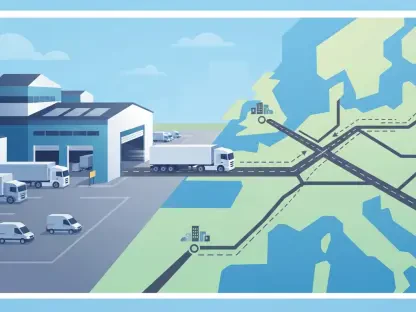
Despite the technological progress, reaching the 500-city goal required navigating a complex landscape of federal regulations and local maintenance needs. The company successfully built out a network of automated battery-swapping stations and regional hubs to ensure continuous operation across diverse climates. Ultimately, the program’s success hinged on whether consumers accepted the presence of drones in their neighborhoods in exchange for unprecedented convenience. To facilitate this, city planners were encouraged to designate specific aerial transit corridors to minimize noise pollution and ensure safety. Retailers also moved to standardize lightweight, aerodynamic packaging to maximize the range of autonomous fleets. These collective efforts moved the concept of aerial delivery from a futuristic vision into a standard utility for urban and suburban life. By prioritizing safety and community transparency, the industry established a clear path for the future expansion of automated logistics networks worldwide.