
Navigating the complexities of modern e-commerce fulfillment requires a sophisticated understanding of how shipping software bridges the gap between digital storefronts and physical delivery. In the current marketplace, where consumer expectations for fast and affordable shipping are at an all-time high, the choice of a logistics platform can determine whether a business thrives or merely survives. No longer is shipping treated as a secondary operational task; it has become a central component of brand identity and financial health. The primary objective for most merchants is to find a system that minimizes manual entry while maximizing access to discounted carrier rates across various regions. This involves analyzing how different platforms handle everything from basic label generation to advanced automation rules and international customs documentation. As global trade continues to expand and supply chains become more intricate, the integration of reliable software and efficient hardware has become the cornerstone of successful retail operations. Understanding the specific strengths of industry leaders allows sellers to build a more resilient and scalable fulfillment strategy that meets the rigorous demands of today’s buyers. Small businesses and enterprise-level corporations alike must weigh the benefits of automation against the costs of implementation to ensure long-term profitability in a volatile economic landscape.
The evolution of shipping technology has led to a tripartite division in the market, where Rollo Ship, ShipStation, and Pirate Ship each cater to distinct operational philosophies. While all three platforms aim to reduce the friction of getting a package from a warehouse to a doorstep, their methods of doing so vary significantly. Some prioritize the depth of carrier relationships and multi-user permissions, while others emphasize cost-effective simplicity and a user-friendly interface. Selecting the right tool involves more than just looking at a feature list; it requires a deep dive into how a business operates on a daily basis and where it intends to grow in the coming years. For many, the decision hinges on the balance between fixed monthly expenses and variable per-label costs, as well as the level of technical support required to maintain a seamless workflow. By examining these platforms through the lens of modern logistics requirements, merchants can identify which solution offers the most sustainable path forward. This comparison highlights the nuances of each system, providing the necessary context for businesses to optimize their fulfillment engines and maintain a competitive edge in the fast-paced world of digital commerce.
Infrastructure for Scale: The Power of ShipStation
ShipStation has long maintained its position as a powerhouse for businesses that require high-level automation and deep integration across a vast array of sales channels. The platform is specifically designed to handle the complexities of multi-channel retailing, allowing merchants to pull orders from hundreds of different marketplaces, including major players like Amazon, eBay, and Walmart, into a single, cohesive dashboard. This centralized approach is essential for large-scale operations where managing inventory and shipping across disparate platforms would otherwise lead to significant human error and inefficiency. The software provides a comprehensive suite of tools that allow for customized packing slips, branded tracking pages, and sophisticated return portals, all of which contribute to a more professional customer experience. For organizations that employ multiple staff members across different warehouse locations, the platform offers robust permission settings and user logs, ensuring that every step of the fulfillment process is tracked and audited. This level of oversight is particularly valuable for brands that have outgrown manual processes and need a stable, enterprise-grade environment to manage thousands of shipments per month.
The core strength of this system lies in its advanced automation rules engine, which enables sellers to create highly specific workflows based on a variety of triggers. For instance, a merchant can set a rule that automatically applies a certain shipping service if an order weight exceeds a specific threshold or if the delivery address is located within a certain geographic zone. These “if-this-then-that” scenarios effectively remove the need for manual decision-making during the label printing process, significantly increasing the speed of output. Furthermore, the platform supports a wide range of global carriers, making it a versatile choice for businesses that have complex international shipping needs or those that utilize specialized freight services. While the interface is feature-rich and can sometimes present a steep learning curve for beginners, the investment in training is often justified by the massive time savings realized at high volumes. The ability to batch-print hundreds of labels simultaneously while automatically updating tracking information across all connected sales channels ensures that the back-end operations remain synchronized with the customer-facing side of the business.
Zero-Cost Logistics: The Strategic Simplicity of Pirate Ship
Pirate Ship has carved out a unique space in the logistics industry by offering a completely free-to-use platform that grants small and mid-sized merchants access to deep carrier discounts. Unlike many of its competitors, this service does not charge a monthly subscription fee or a per-label surcharge, making it an incredibly attractive option for entrepreneurs who are sensitive to fixed overhead costs. The business model relies on the margins provided by carrier partnerships, which means the software itself remains accessible to anyone with a computer and a printer. This “pay-only-for-postage” approach is particularly beneficial for seasonal businesses or startups where shipping volumes may fluctuate significantly from month to month. By eliminating the financial barrier to entry, the platform has democratized professional shipping tools, allowing even the smallest hobbyist to access the same USPS and UPS rates that were once reserved for high-volume corporate accounts. The interface is purposefully streamlined to minimize distractions, focusing on the core task of getting a label from the screen to the package as quickly as possible.
Despite its simplicity, the platform offers a range of powerful features that cater to domestic shipping needs, including the ability to import orders from popular platforms like Etsy and Shopify. It is particularly well-known for its “Secret Ground” and “Priority Mail” rates, which often provide better pricing than what is available through standard retail counters. However, the platform’s focus on ease of use does come with certain trade-offs, primarily in terms of carrier variety and depth of automation. It currently focuses almost exclusively on USPS and UPS, which may be a limiting factor for businesses that require FedEx, DHL, or regional courier services. Additionally, while it supports basic batch processing and address verification, it lacks the complex conditional logic found in more advanced subscription-based tools. For many users, these limitations are a fair price to pay for a tool that is consistently updated and requires no recurring financial commitment. The platform excels at being a straightforward, reliable workhorse for domestic sellers who prioritize bottom-line savings over extensive enterprise-level customizations.
Integrated Ecosystems: Scaling Growth with Rollo Ship
Rollo Ship represents a modern, hybrid approach to fulfillment by combining a versatile software platform with a dedicated line of high-performance hardware. This ecosystem is built around the idea that the physical act of printing a label should be as seamless as the digital act of buying it. While the software is compatible with any thermal printer, it is specifically optimized for the Rollo thermal printer, creating a “plug-and-play” experience that reduces technical troubleshooting and driver conflicts. The software operates on a variable pricing model that is designed to grow alongside the business; the first 200 labels are provided without a software fee, and subsequent labels are charged at a minimal rate that decreases as volume increases. This model provides a middle ground for merchants who have outgrown the basic features of free tools but are not yet ready to commit to the high monthly fees of traditional SaaS platforms. By aligning its costs with the user’s shipping volume, the platform ensures that the software remains an affordable asset rather than a financial burden during slower periods of the year.
The platform distinguishes itself through its mobile-first design philosophy, recognizing that many modern entrepreneurs operate outside of a traditional office or warehouse setting. The mobile application allows users to import orders, compare rates across multiple carriers, and print labels directly from their smartphone or tablet using wireless technology. This mobility is a significant advantage for small business owners who manage fulfillment from their homes or storage units, as it eliminates the need for a dedicated desktop computer. In addition to its hardware synergy and mobile accessibility, the platform offers robust support for both United States and Canadian carriers, making it an ideal choice for North American brands looking to simplify their regional logistics. The unified dashboard allows for easy switching between different carrier accounts, providing a clear overview of shipping expenses and delivery statuses in real-time. By focusing on the intersection of hardware efficiency and software flexibility, the platform provides a scalable solution that meets the needs of “daily driver” sellers who require professional features without unnecessary complexity.
Borderless Commerce: Navigating International Shipping Lanes
The expansion of e-commerce into global markets has made the ability to navigate cross-border logistics a critical requirement for modern shipping software. In 2026, many brands are looking toward international expansion as a primary growth driver, particularly between the United States and Canada. This transition often involves dealing with different carrier networks, varying customs regulations, and the need for accurate documentation to prevent delays at the border. Software that provides a unified view of international shipping options allows merchants to compare the costs of different cross-border services, such as Canada Post, Purolator, and various international consolidators. The goal is to reduce the administrative burden of international trade, which has historically been a significant barrier for smaller companies. Platforms that automate the generation of customs forms and provide landed cost calculations help merchants offer a more transparent and reliable experience to their international customers, reducing the likelihood of abandoned carts or returned packages due to unexpected duties and taxes.
For businesses operating in both the U.S. and Canada, having a single dashboard that can handle carriers from both nations is a major operational advantage. It allows for a more consistent fulfillment process, regardless of where the warehouse is located or where the package is headed. Some platforms require separate accounts or complex integrations for each country, which can lead to fragmented data and increased manual work. A unified approach, however, enables better tracking of overall logistics spend and more accurate reporting on delivery performance across different regions. This is especially important for brands that utilize third-party logistics providers or maintain multiple distribution centers to reduce shipping times. By simplifying the technical aspects of international shipping, these software solutions empower businesses to compete on a global scale, reaching new customer bases without needing a massive internal logistics department. The ability to seamlessly pivot between domestic and international carriers ensures that a company’s fulfillment strategy remains agile and responsive to changing market conditions and consumer locations.
Fiscal Strategy: Comparing SaaS Fees and Variable Costs
The financial structure of a shipping platform is often the deciding factor for many merchants, as it directly impacts the profit margins on every item sold. Subscription-based models provide a sense of predictability, allowing businesses to budget for a fixed monthly expense regardless of how many labels they print. This can be highly advantageous for high-volume shippers who can spread the cost of the subscription across thousands of packages, resulting in a very low per-label software cost. However, for smaller businesses or those with seasonal fluctuations, a fixed fee can become a significant “sunk cost” during months when sales are low. This has led to the rise of variable and tiered pricing models that offer more flexibility. These models ensure that the merchant only pays for what they use, providing a level of financial protection that is essential for maintaining a healthy cash flow. By understanding the break-even point between different pricing structures, a business can select a model that aligns with its current volume while allowing for future growth.
Beyond the initial software fees, merchants must also consider the “hidden” costs associated with shipping, such as the price of ink, toner, and label stock. Some platforms provide significant incentives through carrier discounts that can more than offset the cost of a monthly subscription. For example, a business might save several dollars on every international shipment by using a specific platform’s negotiated rates, making the subscription fee a worthwhile investment. On the other hand, the long-term savings associated with certain hardware choices, such as direct thermal printers, can also play a role in the overall fiscal strategy. These printers do not require expensive ink or toner cartridges, which can lead to hundreds of dollars in savings over the course of a year. When evaluating the total cost of ownership for a logistics setup, it is important to look at the combined impact of software fees, carrier rates, and hardware maintenance. A well-chosen platform should not only save time but also contribute to a more efficient and cost-effective supply chain that supports the business’s broader financial goals.
Technical Innovations: The Shift Toward Mobile Fulfillment
The landscape of order fulfillment is undergoing a significant transformation, moving away from stationary desktop workstations toward more dynamic, mobile-centric environments. This shift is driven by the need for greater flexibility and speed in the warehouse, allowing workers to process orders exactly where the inventory is located. Mobile shipping applications have evolved to offer full-featured functionality, including the ability to scan barcodes, weigh packages, and print labels wirelessly from a handheld device. This “roaming” fulfillment model reduces the amount of walking required within a warehouse, leading to significant gains in productivity and a reduction in employee fatigue. Furthermore, the integration of cloud-based technology ensures that data is synchronized in real-time across all devices, providing a single source of truth for order status and inventory levels. This level of connectivity is particularly important for businesses that operate multiple fulfillment centers or use a mix of in-house and outsourced labor, as it allows for better coordination and oversight.
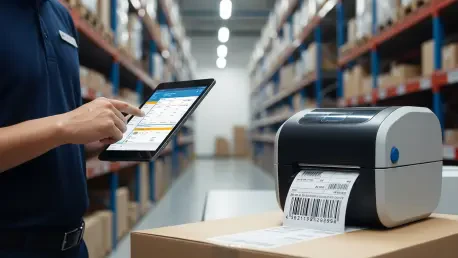
Another key technical trend is the widespread adoption of direct thermal printing technology as the standard for shipping labels. Unlike traditional inkjet or laser printers, direct thermal printers use heat to create an image on specially treated paper, which eliminates the need for ink, toner, and ribbons. This technology is not only more cost-effective but also more reliable in high-volume environments where mechanical failures can lead to costly delays. Thermal labels are also more resistant to the environmental stressors of the shipping process, such as moisture and abrasion, ensuring that barcodes remain scannable from the moment they leave the warehouse until they arrive at the customer’s door. Software that is designed to work natively with these printers allows for more precise control over print settings and label formats, reducing waste and ensuring a professional appearance. As the industry continues to prioritize speed and sustainability, the combination of mobile-first software and efficient thermal hardware will remain at the forefront of technical innovation in the logistics sector, helping merchants stay ahead of the curve.
Final Assessment: Selecting a Long-Term Logistics Partner
Identifying the most suitable shipping platform required a thorough evaluation of how specific features aligned with a business’s operational goals and budget constraints. For organizations that focused on complex, high-volume automation and required a central hub for hundreds of integrations, the subscription-based model of ShipStation proved to be a reliable choice. These users prioritized the robustness of a rules engine and the stability of an industry-standard platform over the simplicity of free alternatives. Conversely, entrepreneurs who operated with slim margins or inconsistent volumes found that the zero-fee structure of Pirate Ship provided the necessary flexibility to scale without the burden of fixed costs. This segment of the market valued the straightforward access to discounted USPS and UPS rates above the need for advanced multi-carrier automation. For those who sought a balanced middle ground, Rollo Ship offered a compelling ecosystem that bridged the gap between professional hardware and mobile-friendly software. This tiered pricing model allowed growing businesses to transition smoothly from basic label printing to more advanced cross-border fulfillment.
The process of choosing a logistics partner was ultimately an exercise in strategic planning, where merchants looked beyond immediate needs to consider the long-term scalability of their fulfillment operations. Those who successfully optimized their shipping workflows did so by selecting tools that integrated seamlessly with their existing marketplaces and hardware setups. They recognized that the right software should act as an invisible engine for the business, handling the heavy lifting of rate comparison and label generation so that the team could focus on product development and customer engagement. As the e-commerce environment continued to evolve, the ability to pivot between different carriers and manage international shipments with ease became a hallmark of a resilient retail brand. By carefully weighing the pros and cons of each platform, business owners were able to build a more efficient, cost-effective, and customer-centric logistics strategy. This methodical approach to selection ensured that the shipping department remained a source of competitive advantage rather than an operational bottleneck, paving the way for sustained success in a demanding marketplace.