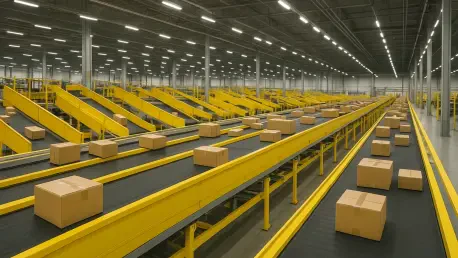

The new Stockton facility represents a core component of a broader trend toward total automation across the North American e-commerce landscape. This 900,000-square-foot hub marks a definitive shift in how the nation’s largest brick-and-mortar retailer approaches digital logistics, especially within the competitive California market. By integrating advanced robotics and high-density storage, the facility serves as a vital anchor for the West Coast, ensuring that inventory is not just stored but managed with precision. The launch of this fifth next-generation fulfillment center signals a departure from traditional warehousing, where massive floor plans often led to inefficiencies in retrieval times. Instead, this site utilizes a vertical-first approach, maximizing every cubic inch of space to house millions of items. As the retail giant continues to expand its digital footprint, the Stockton operation provides the necessary physical infrastructure to challenge online-native competitors directly.
Logistics Innovation: Modern Fulfillment
High-Density Automation: Redefining the Warehouse Floor
Central to the operational success of the Stockton hub is the implementation of high-density automated storage and retrieval systems that fundamentally alter the labor dynamics of fulfillment. In a traditional warehouse setting, associates would spend a significant portion of their shifts walking miles of aisles to pick items for individual orders. The new model reverses this flow by bringing products directly to the workers at specialized stations, effectively reducing the fulfillment sequence from a cumbersome twelve-step process to just five streamlined stages. This change is not merely about speed; it is about creating a safer and more ergonomic environment where technology handles the heavy lifting and repetitive motion. By minimizing the physical toll on the workforce, the company can reassign personnel to complex roles that require human oversight, such as quality control, ensuring a continuous processing cycle that operates far beyond the limits of manual labor.
The technological integration at the Stockton site also facilitates a significant reduction in order processing latency, which is crucial for maintaining a competitive edge. Automated freight systems and sophisticated sorting algorithms work in tandem to ensure that high-velocity items are prioritized and moved through the system with minimal human intervention. This data-driven approach allows for real-time inventory adjustments, ensuring that stock levels are always optimized based on current consumer trends and regional demand. Furthermore, the use of robotics significantly lowers the margin for error in the picking and packing process, resulting in higher customer satisfaction and fewer returns. As these automated systems continue to evolve, they provide a scalable solution that can adapt to seasonal spikes without the need for massive temporary hiring surges. Ultimately, this creates a more stable supply chain that benefits both the retailer and the consumer.
Marketplace Integration: Empowering Third-Party Growth
Beyond its internal inventory management, the Stockton facility plays a pivotal role in bolstering the Walmart Fulfillment Services (WFS) platform for third-party marketplace sellers. By opening up its sophisticated logistics infrastructure to independent merchants, the company is effectively creating a unified ecosystem that mirrors the efficiency of its first-party operations. Merchants who utilize this hub gain access to advanced sorting and shipping capabilities that would otherwise be cost-prohibitive for smaller businesses. Data indicates that participants in the WFS program have seen a 150% increase in same-day or next-day shipping availability, a metric that is increasingly becoming the standard for consumer expectations. This democratized access to high-speed fulfillment allows a wider variety of products to reach the 95% of the U.S. population covered by the next-day shipping network. The hub acts as a force multiplier for the marketplace, driving volume.
The strategic deployment of the Stockton hub ultimately solidified the transition toward a data-driven, robotics-heavy logistics model that prioritized throughput and delivery precision. Industry experts noted that this investment was not just about physical expansion but about redefining the competitive landscape of the Central Valley and beyond. By combining first-party sales and third-party fulfillment under one high-tech roof, the company established a scalable blueprint for industrial development. This move successfully accelerated e-commerce momentum, contributing to growth in online sales through enhanced supply chain predictability. Looking forward, businesses recognized that the integration of automated systems was no longer optional for maintaining market relevance. The Stockton initiative proved that speed and reliability remained the primary drivers of growth, setting a new benchmark for how large-scale retailers managed consumer demand. These lessons provided a clear roadmap for future logistics investments.