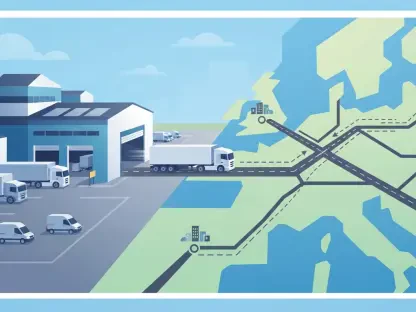

The choice of a fulfillment partner has become a strategic brand decision rather than a purely operational one in the increasingly competitive e-commerce landscape. In this current market of 2026, the American retail sector is witnessing a profound shift in how consumer trust is cultivated and maintained across digital platforms. A recent study by Trustpilot, which analyzed over 4.5 million customer reviews across 16,000 businesses, provides a sobering look at the fragility of brand loyalty. While many organizations are rushing to implement cutting-edge technologies to streamline their operations, the data suggests that these very innovations often create a significant rift between a brand and its audience. Trust has emerged as the most vital currency for retailers, far outweighing traditional price competitions or marketing reach. As shoppers become more discerning, their loyalty is increasingly tied to the reliability of the end-to-end experience, from initial discovery to the resolution of post-purchase issues.
The Technological Paradox in Customer Relations
Artificial Intelligence: The Impact on Support
Retailers frequently view Artificial Intelligence as a definitive tool for reducing operational overhead, yet its integration into customer support has led to substantial consumer frustration. Data indicates that when AI is used to replace human interaction during sensitive post-purchase moments, such as resolving missing refunds or managing delivery failures, the sentiment is overwhelmingly negative. Consumers report feeling trapped in automated loops that lack the flexibility to address specific or complex grievances. This frustration is clearly reflected in review data, where approximately 60 percent of AI-related retail feedback receives only a one-star rating. These automated systems frequently struggle with the emotional nuance required for dispute resolution, leading to a breakdown in communication that alienates even the most loyal shoppers. Consequently, the attempt to save costs through total automation often results in a significant loss of long-term customer equity.
Virtual Solutions: Enhancing the Shopping Experience
Conversely, Artificial Intelligence finds its greatest success when it is applied to the pre-purchase phase of the consumer journey, where it can actually enhance discovery and visualization. Shoppers in 2026 are increasingly responsive to features such as smart search functions and virtual try-on technology, which are frequently described as transformative for the shopping experience. These tools provide a layer of convenience and interactivity that empowers the consumer without stripping away their personal agency or complicating the transaction. However, a credibility gap is emerging in AI-driven personalization; many users are noticing that algorithms often lack the subtle intuition of a human expert, frequently recommending redundant or irrelevant items. The most effective retailers are those who successfully leverage AI to make the browsing process more engaging while ensuring that a human representative is readily accessible for complex problem-solving or high-stakes styling.
Financial Friction and Logistical Hurdles
Return Policies: The Hidden Cost of Fees
The transition toward what industry analysts call the annoyance economy is most visible in the sudden surge of paid returns and restocking fees across the American retail sector. As logistics and transportation costs climb, many brands have implemented these fees to protect their short-term profit margins, but the emotional impact on the consumer has been devastatingly negative. Reviews that mention return fees typically see a drop of nearly 1.7 stars in their overall rating, especially when the return was necessitated by a company error or a misleading product description. Since a significant portion of annual sales is driven by repeat customers, the immediate savings gained from these fees are often overshadowed by the high cost of customer acquisition for new leads. This friction points to a growing disconnect where retailers prioritize logistical efficiency over the perceived fairness and transparency that build long-term brand advocacy and customer lifetime value.
Delivery Logistics: Managing the Final Mile
Logistics remains the ultimate test of brand reliability, with delivery failures representing a critical point of failure in the e-commerce relationship. Data reveals that a lost package is far more damaging to a retailer’s reputation than a simple delay in arrival, often resulting in a permanent loss of trust. When a carrier or an automated system marks an item as delivered but the customer has not received it, a massive hurdle for resolution is created that tests the brand’s commitment to its audience. If a retailer fails to resolve these last-mile disputes, even for those who have invested in shipping insurance, the consumer often feels abandoned by the brand. As the market continues to expand toward nearly $8 trillion by 2027, the ability to manage fulfillment partners and maintain clear, proactive communication during delivery issues has become a non-negotiable standard for maintaining a competitive edge in a crowded digital marketplace.
Strategic Paths to Rebuilding Brand Loyalty
Feedback Analysis: A Blueprint for Improvement
To stabilize a declining reputation in this volatile environment, retailers must begin treating negative feedback as a strategic blueprint for operational improvement. Rather than viewing one-star reviews as mere complaints, successful businesses use this data to identify specific friction points in their supply chain or customer service protocols. This involves a rigorous auditing of fulfillment partners and a commitment to transparency throughout the shipping process. Brands that provide real-time updates and acknowledge delays before the customer has to inquire are much more likely to retain loyalty despite logistical setbacks. By focusing on the “human-in-the-loop” model, companies can ensure that automation handles the mundane tasks while human empathy remains at the core of conflict resolution. This balance allows for a scalable operation that does not sacrifice the personal touch that consumers still crave when financial or emotional stakes are involved.
Relationship Management: A Future-Focused Approach
The study of consumer sentiment demonstrated that rebuilding trust required a shift from reactive problem-solving to proactive relationship management. Retailers who successfully bridged the gap between innovation and empathy focused on using technology to enhance the joy of shopping rather than hiding behind it to avoid responsibility. These organizations identified that flexible return models and transparent logistical communication served as the primary differentiators in a market saturated with automated shortcuts. By prioritizing long-term customer satisfaction over immediate operational savings, brands established a more resilient foundation for the years following 2026. The most effective strategies involved empowering human agents to override rigid algorithmic decisions during delivery disputes or complex refund requests. Ultimately, the industry learned that technology functioned best when it supported the human connection, ensuring that every digital transaction remained rooted in a sense of mutual respect and operational integrity.