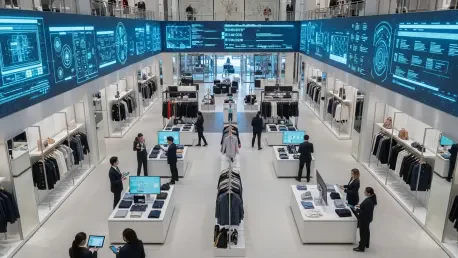

Zainab Hussain is a distinguished e-commerce strategist and operations management expert who has spent years at the intersection of digital innovation and physical storefronts. With a career dedicated to refining customer engagement and streamlining back-end workflows, she has witnessed firsthand how technology can either clutter a retail space or seamlessly elevate it. In this discussion, we explore the seismic shift occurring as artificial intelligence moves from the abstract into the actual aisles of our favorite stores. We look at how brands are replacing clunky communication systems with sleek, purpose-built apps and how interactive digital hubs are transforming “health enthusiasts” into high-tech advisors.
This conversation covers the operational overhaul driven by rapid AI deployment, the psychological shift for retail staff navigating labor shortages, and the emerging challenge of customers entering stores equipped with their own sophisticated AI tools.
Some retailers are moving away from traditional radios in favor of AI-powered internal apps to handle inventory requests. How does removing the manual “back-and-forth” with the stockroom change the sales floor dynamic, and what specific training is required to ensure associates use these tools without losing their personal connection to the customer?
The shift away from the traditional radio model, like we’ve seen with the “Boot Runner” app, fundamentally changes the energy of the sales floor by removing the friction of constant interruptions. When an associate has to step away or fumble with a radio to check the backroom, that vital thread of conversation with the shopper is often snapped. By putting the entire inventory position directly into an associate’s hands, they can stay physically present and emotionally engaged, rather than shouting into a headset. Training now focuses less on technical “button-pushing” and more on maintaining eye contact while using the device to offer immediate, relevant recommendations if a specific size isn’t available. It transforms the employee from a runner into a true consultant who can pivot the sale in real-time without ever leaving the customer’s side.
Interactive digital screens now allow customers and staff to search deep wellness content and product videos directly on the store floor. What are the primary technical challenges in coding these interfaces to ensure the AI logic stays relevant, and how do you measure if these screens are actually driving sales versus just providing information?
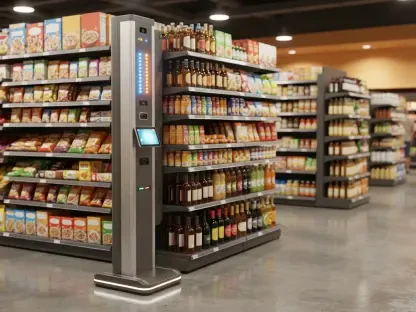
The technical heavy lifting behind a tool like the “Shoppe Advisor” at the Upper East Side innovation center involves teaching the AI to sift through every bit of existing content, from workout videos to energy drink data, and present it intuitively. One of the biggest challenges is ensuring the logic can handle nuanced queries—like a customer asking how to “sleep better” versus “build muscle”—without delivering generic or irrelevant results. To measure success, brands look beyond simple clicks; they track how often employees, or “health enthusiasts,” use the screen as a collaborative teaching tool during a consultation. If the logic is sound, you’ll see a direct correlation between the educational deep dives on the screen and an increase in basket size, as customers feel more confident in the science behind their purchases.
When an AI tool like a custom inventory app is built in a very short timeframe—such as 36 hours—what are the long-term trade-offs regarding system stability? How should a retail brand balance the need for rapid deployment with the necessity of integrating that tool into existing legacy store systems?
Building a platform like “Boot Runner” in just 36 hours is an incredible feat of agility, but it inherently prioritizes speed over the deep architectural integration required for long-term stability. The immediate trade-off is often a “technical debt” where the app might work perfectly as a standalone tool but lacks the robust connection to older, legacy ERP or warehouse management systems. To balance this, a brand should view these 36-hour sprints as a “Proof of Concept” that goes live to solve an immediate pain point, while simultaneously planning a phased rollout to more stable environments. The goal is to capture the productivity gains of AI immediately while iteratively hardening the code so it doesn’t crash during high-traffic events like holiday sales.
As staffing shortages continue to impact the industry, many stores are deploying AI to help employees do more with less. In what ways does this technology shift the “ideal” candidate profile for a retail associate, and what steps should leadership take to ensure AI is viewed as a support tool rather than a replacement?
Staffing shortages have forced a rethink of what makes a great retail associate; the “ideal” candidate is no longer just a friendly face, but someone tech-fluent who can navigate complex data hubs to assist shoppers. AI allows a smaller team to handle a larger volume of inquiries by automating the “manual work” of looking up product specs or inventory levels. Leadership must be transparent in communicating that these tools are designed to remove the drudgery of the job—the endless trips to the stockroom or searching for manuals—not the person. When employees see that the AI is actually making their workday less exhausting and their interactions more successful, they begin to view the technology as a valuable teammate rather than a digital threat.
Shoppers are increasingly bringing their own AI tools, like ChatGPT or product-scanning apps, into physical stores to cross-reference data. How can brands align their in-store AI infrastructure with these external consumer habits, and what are the implications for brands that fail to provide their own digital information hubs?
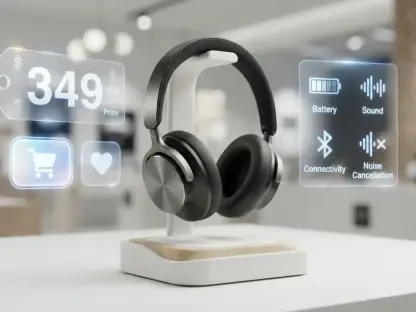
We are seeing a major evolution where consumers use apps like Yuka or ChatGPT to fact-check products right at the shelf, which can be a threat if a brand’s own data isn’t easily accessible. To align with this habit, retailers need to provide their own “digital hubs”—like the interactive touchscreens or iPad-based advisors—that offer even deeper, more verified insights than a general AI might. If a brand fails to provide this, they lose control of the narrative, as the customer might rely on an external app that suggests a competitor’s product based on a quick scan. By hosting the conversation on their own AI infrastructure, brands ensure they remain the ultimate authority on their products while satisfying the customer’s hunger for instant, data-driven answers.
What is your forecast for AI in retail stores?
I believe we are moving toward a “frictionless advisory” model where the distinction between digital and physical shopping completely vanishes. Within the next few years, I expect AI will not just be sitting on a screen in an innovation center, but will be integrated into the very fabric of the store through wearable tech for associates and personalized AR interfaces for shoppers. We will see stores that act more like high-touch showrooms where AI handles all the logistical heavy lifting—like fetching sizes or comparing ingredients—allowing human workers to focus entirely on the emotional and community-building aspects of retail. The brands that win will be the ones that use AI to make the shopping experience feel more human, not less, by giving staff the time to actually talk to the people standing in front of them.