
The traditional restaurant model is currently undergoing a radical transformation as the industry shifts away from reactive spreadsheets toward a sophisticated landscape of automated, high-fidelity intelligence. This evolution represents a departure from the era of manual data entry, where managers spent hours reconciling disparate reports to understand store performance. Today, artificial intelligence serves as a cognitive layer integrated directly into the point-of-sale system, moving the needle from simple transaction processing to proactive business management.
Understanding AI Integration in Modern Restaurant POS Systems
Modern restaurant intelligence relies on the synthesis of disparate data streams to create a cohesive operational picture. At its core, the technology leverages machine learning to analyze patterns that remain invisible to the human eye, such as subtle shifts in labor efficiency or inventory fluctuations. This integration matters because it addresses the historical disconnect between what is happening at the register and what is occurring on the time clock.
The relevance of this technology in the current landscape cannot be overstated, as it marks the definitive end of “gut-feeling” management. By converting raw data into actionable insights, these systems allow operators to transition from being forensic accountants of the past to strategists of the present. The shift toward automated decision-making ensures that every operational adjustment is backed by empirical evidence rather than anecdotal observation.
Primary Components of Next-Generation Restaurant AI
Cross-Platform Data Connectivity: Breaking the Silos
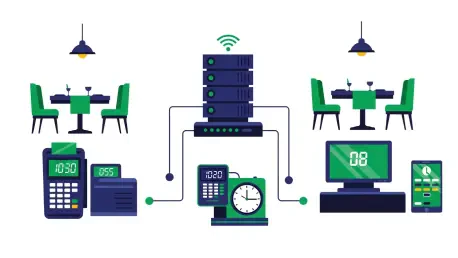
A primary differentiator of high-tier AI systems is their ability to bridge the gap between POS hardware, payroll software, and employee scheduling tools. Competitors often struggle because their intelligence is confined to a single source, but advanced platforms synchronize these systems to eliminate data silos. This connectivity is vital because true operational waste usually occurs at the intersection of two different software platforms.
When these systems speak the same language, the operator gains a holistic view of the business. For instance, comparing real-time sales velocity against active clock-ins allows the system to highlight overstaffing the moment it happens. This unique implementation prevents the “information lag” that typically leads to inflated labor costs and diminished profit margins in high-volume environments.
Automated Profit Leak Detection: Identifying Invisible Losses
Sophisticated algorithms now serve as digital watchdogs, identifying financial discrepancies like clock padding and unapproved overtime before they compound. While basic systems might report that labor costs are high, next-generation AI explains why they are high by pinpointing specific employee behaviors or scheduling errors. This deep analysis transforms the POS from a passive tool into an active financial recovery engine.
By scanning millions of transactions against labor data, these systems surface “invisible” losses that would otherwise go unnoticed in a manual audit. This capability is what makes modern AI unique compared to traditional reporting; it does not just present numbers, but interprets them to protect the bottom line. The result is a significant reduction in operational friction and a measurable increase in net profitability.
Conversational AI and Natural Language Processing: Simplifying Data Queries
The introduction of chat-based assistants allows managers to interact with complex databases using plain English. Instead of navigating through layers of menus and filters, a user can simply ask about the labor-to-sales ratio for a specific shift. This democratization of data ensures that even non-technical staff can leverage the full power of the system’s analytical capabilities.
However, the efficacy of conversational AI is strictly tied to the depth of the underlying data. While many tools can answer basic questions about yesterday’s sales, the most advanced assistants can correlate external factors, such as weather or local events, with historical performance. This provides a more nuanced understanding of store dynamics, allowing for immediate, informed adjustments on the fly.
Emerging Trends and the Evolution of the Intelligence Gap
The industry is currently witnessing a polarization between systems that offer “automatic intelligence” and those that provide mere data collection. This intelligence gap defines the market, as Tier 1 systems move toward proactive briefings that are delivered to an operator’s inbox every morning. This shift moves the burden of analysis from the human to the machine, ensuring that critical issues are addressed without requiring a manual deep dive.
Moreover, the trend toward proactive analysis is changing how multi-unit operators view their portfolios. By categorizing store performance based on depth of system integration, companies are finding that the most profitable locations are those that utilize cross-system insights. The market is increasingly rejecting isolated tools in favor of integrated ecosystems that influence behavior and drive store-level productivity.
Real-World Applications and Industry Implementation
In large-scale franchise environments, AI deployment has become the primary method for bridging productivity gaps across hundreds of locations. Recent data suggests that the discrepancy in revenue-per-labor-hour between top-performing and underperforming stores can be as high as 2.5x within the same brand. AI systems identify these outliers by analyzing variables like unscheduled shifts and peak-hour efficiency.
Implementing these tools across multi-unit operations allows for the standardization of excellence. When a system identifies that one location is generating significantly higher revenue per man-hour than another, it provides the diagnostic data needed to replicate success. This real-world application proves that AI is not just a theoretical luxury but a practical necessity for maintaining competitiveness in a crowded market.
Technical Hurdles and Industry Limitations
Despite rapid advancement, the persistence of data silos remains a significant hurdle for the industry. Many operators are still tethered to “single-platform” AI tools that lack the visibility to see external payroll or inventory discrepancies. This limitation creates a blind spot where financial leaks can thrive, as the AI only sees a portion of the total operational picture.
Furthermore, the “intelligence gap” is often exacerbated by hardware limitations and slow API integrations between different vendors. While the goal is a seamless flow of information, the reality often involves fragmented data that requires manual reconciliation. Ongoing development efforts are focused on creating more open architectures, but the transition to truly universal cross-platform intelligence is still a work in progress for many providers.
The Future Landscape of Integrated Restaurant Intelligence
The trajectory of restaurant technology points toward a future of predictive, multi-source analysis that anticipates problems before they occur. We are moving away from reactive reporting—which only tells us what went wrong—toward systems that forecast labor needs and inventory requirements with pinpoint accuracy. This evolution will likely culminate in fully automated financial recovery systems that adjust schedules and orders in real time.
Breakthroughs in automated productivity management will further redefine the role of the restaurant manager. As AI takes over the mechanical aspects of labor tracking and profit protection, human leaders will be free to focus on guest experience and staff development. This transition represents a fundamental shift in the industry’s value proposition, prioritizing high-level strategy over administrative maintenance.
Summary of the Restaurant POS AI Landscape
The assessment of current restaurant AI capabilities revealed a clear distinction between superficial tools and deep, cross-system intelligence. It was determined that the most significant financial improvements occurred when systems successfully integrated POS, payroll, and scheduling data into a single analytical framework. Isolated data tools, while helpful for basic reporting, failed to address the complex intersections where most profit leaks originated.
The industry moved toward a model of proactive intelligence, where the value of the technology was measured by its ability to influence operator behavior and recover lost revenue. As the intelligence gap narrowed for early adopters, the focus shifted from simple data collection to predictive analysis. Ultimately, the integration of these advanced systems provided a necessary foundation for long-term store productivity and sustained profitability in the global food service sector.