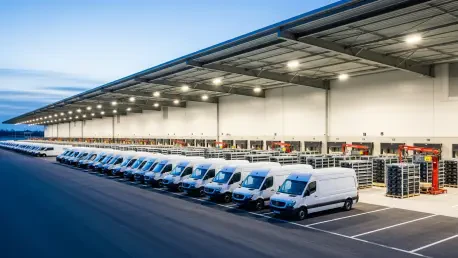

The skyline of a major industrial city is no longer defined by the smokestacks of heavy manufacturing plants but by the sprawling, flat-roofed silhouettes of e-commerce fulfillment centers that power the global economy. In recent years, these monuments to consumerism have undergone a silent metamorphosis, evolving from mere depots for household goods into the clandestine backbone of national defense strategies. As conventional battlefields become increasingly transparent due to satellite surveillance, state actors are forced to conceal their supply chains within the chaotic, high-volume flow of private-sector trade. This blurring of lines between civilian commerce and military utility has fundamentally rewritten the rules of engagement, turning the same infrastructure that delivers a smartphone to a doorstep into a primary target for precision-guided munitions. The strategic logic is simple: if the enemy cannot distinguish a pallet of microchips intended for a missile system from one containing consumer electronics, they are forced to treat the entire network as a legitimate military objective. This shift marks a departure from traditional industrial warfare, placing the global retail apparatus at the very center of modern geopolitical conflict and exposing the inherent fragility of the “just-in-time” economy. It has become clear that the logistics revolution, once celebrated for its efficiency, now serves as a dual-edged sword in the hands of modern military planners.
Strategic Utilization of Commercial Networks
Exploiting Global Trade: The Invisibility of High-Volume Logistics
The primary advantage of integrating military logistics into the established retail network is the unprecedented ability to hide high-value shipments within the sheer volume of global package traffic. Modern fulfillment hubs are marvels of automation, often processing tens of thousands of individual parcels every hour with minimal human intervention. This environment creates a massive amount of “data noise” that serves as a natural cloaking device for sensitive components. When a state actor needs to move restricted microprocessors or drone sensors across borders, burying these items inside a standard shipping container filled with apparel or home appliances is statistically safer than using a dedicated military transport. Intelligence agencies, even with the most advanced artificial intelligence filters, struggle to identify a handful of specific boxes amidst the millions of items moving through the global e-commerce pipeline. This high-velocity routing ensures that by the time an anomaly is flagged, the shipment has often already reached its destination and been integrated into a weapons program, rendering the traditional methods of interdiction and export control largely ineffective in a world of frictionless trade.
Beyond the invisibility afforded by volume, the inherent redundancy of commercial e-commerce networks provides a level of operational resilience that traditional military logistics structures frequently lack. These private-sector systems are designed with sophisticated algorithmic routing that automatically redirects freight if a particular warehouse experiences a bottleneck or a regional transport hub goes offline. For a military apparatus, this decentralized structure creates what can be described as a “liquid” supply chain, one that can effortlessly flow around bureaucratic obstacles, physical blockades, or localized combat zones. If a primary port is closed due to geopolitical tensions, the commercial network simply shifts the cargo to secondary and tertiary entry points that are still operational. This agility allows a nation to maintain a steady flow of dual-use technology and raw materials even under heavy international pressure. The ability to leverage this pre-existing, self-healing infrastructure means that a state does not need to build its own redundant military pathways, as the global retail machine already provides the most efficient and robust delivery system ever conceived.
Tactical Integration: The Role of Civilian Infrastructure in Stealth
Military forces have increasingly begun to leverage civilian delivery fleets to solve the “last-mile” logistics problem, which has traditionally been the most vulnerable part of any supply chain. By integrating military hardware into standard delivery vans and light trucks, states can significantly reduce the thermal and visual signatures typically associated with armored convoys or military-grade logistics vehicles. To an overhead satellite or a ground-based observer, a fleet of white delivery vans looks identical to any other commercial enterprise operating in a suburban environment. This blending of traffic makes it exceedingly difficult for human intelligence or automated reconnaissance systems to identify high-priority targets. The logistical footprint of a modern army is thus effectively camouflaged by the daily routines of a consumer society, forcing adversaries to either risk significant civilian casualties or allow critical military supplies to reach the front lines unmolested. This tactic exploits the ethical and legal hesitation of modern combatants, using the mundane nature of grocery and electronics delivery as a strategic shield for high-stakes military movements.
The utilization of these networks also allows for the rapid dispersal of assets that would otherwise be concentrated in easy-to-hit military depots. Instead of storing ten thousand missile components in a single fortified bunker, a state can distribute those components across five hundred different commercial warehouses scattered throughout a geographic region. This strategy of “micro-warehousing” ensures that no single strike can deal a knockout blow to a nation’s war-making capacity. Furthermore, the integration of military components into consumer-facing systems allows for a more flexible mobilization. In times of heightened tension, a government can commandeer the logistical software of major retailers to prioritize “special shipments” without the public ever realizing that their local delivery hub has been converted into a forward-operating base. This seamless transition from commercial to military utility is made possible by the standardization of pallet sizes, container dimensions, and digital tracking protocols, which have inadvertently created a universal language for both shopping and warfare.
Vulnerabilities in the Modern Warehouse
Structural Frailty: The Impact of High-Efficiency Design
Despite their logistical prowess, modern mega-warehouses are uniquely fragile when subjected to kinetic attacks due to their specific architectural requirements. These facilities are built as vast “big-box” structures with expansive, open floor plans and minimal internal barriers to maximize the speed and efficiency of automated sorting systems. However, this design creates a catastrophic fire risk that is difficult to mitigate during a strike. The high density of cardboard packaging, plastic wrapping, and wooden pallets provides a nearly inexhaustible supply of fuel, while the lack of internal firewalls allows a localized ignition to rapidly spread across hundreds of thousands of square feet. Once a structural fire reaches a certain temperature, the lightweight steel trusses common in such buildings tend to lose their integrity, leading to a total roof collapse that destroys the entire contents of the facility. For an attacker, this means that a single, well-placed precision strike can trigger a chain reaction that obliterates billions of dollars in inventory and specialized machinery, effectively erasing a critical node in the supply chain within a matter of minutes.
The drive toward economic centralization and massive scale also creates a significant asymmetric vulnerability that modern adversaries are quick to exploit. By concentrating a significant percentage of a nation’s regional inventory and highly specialized robotic sorting systems into a single, massive facility, operators inadvertently offer a lucrative and high-impact target. A single, low-cost loitering munition or a small group of precision-guided drones can cause damage that is orders of magnitude more expensive than the weapon itself. These facilities often house proprietary automation technology that is difficult to replace, especially during wartime or under strict trade restrictions. The loss of a single hub doesn’t just result in the loss of goods; it results in the loss of the capacity to process those goods for the entire region. This “all eggs in one basket” approach to logistics, while highly profitable during times of peace and global stability, represents a critical failure point when the global retail infrastructure is drawn into the orbit of state-level kinetic conflict.
Digital Disruption: The Consequences of Synchronized Network Failures
Beyond the physical destruction of walls and inventory, strikes on major logistical hubs cause severe and long-lasting digital disruption that can paralyze an entire military-industrial complex. Modern fulfillment centers rely on complex Warehouse Management Systems to synchronize physical inventory with digital tracking in real-time. These systems are the brains of the operation, coordinating the movement of millions of items across a global network. When a facility is destroyed or its servers are compromised, the data associated with that inventory often becomes useless or irrecoverable, creating a wave of operational friction. The loss of digital synchronization means that even if the physical goods exist elsewhere, the system no longer “knows” where they are or how to route them effectively. Restoring this level of synchronization across a disrupted network is a labor-intensive and technically challenging process that can stall military production and distribution far longer than the time required to simply clear the physical rubble from a blast site.
This digital vulnerability is compounded by the increasing reliance on internet-of-things sensors and autonomous systems within the warehouse environment. Each robotic picker and automated conveyor belt represents a potential entry point for a cyberattack that can coincide with a physical strike. If an adversary can corrupt the data within a logistics network, they can misdirect shipments, create phantom inventory, or cause automated systems to malfunction, leading to physical damage without ever firing a missile. The resulting “fog of logistics” can be just as devastating as the fog of war on a traditional battlefield. In a high-intensity conflict, the ability to maintain the integrity of logistical data is just as important as protecting the physical warehouse. When the digital thread that connects the manufacturer to the end-user is severed, the entire apparatus of modern warfare grinds to a halt, as even the most advanced weapons systems cannot function without a steady and predictable flow of replacement parts and consumables.
Economic and Systemic Consequences
Strategic Imbalance: The Cost-Exchange Ratio of Modern Interdiction
The economics of modern strikes on logistics infrastructure heavily favor the attacker, creating a profound imbalance in the cost-exchange ratio that challenges traditional defense doctrines. A precision-guided drone made from off-the-shelf components or a small-scale sabotage operation may cost only a small fraction of the value of the goods it destroys. When a single warehouse containing advanced sensors or engine components is taken out, the financial and strategic loss to the defender can be millions of times the cost of the attack itself. This reality compels the defender to pull vital air defense units and electronic warfare systems away from the front lines to protect civilian warehouses and distribution hubs. This diversion of resources creates strategic gaps in other critical areas of the theater, allowing the attacker to dictate the pace of the conflict. The necessity of defending “soft targets” like retail centers effectively dilutes a nation’s military strength, forcing it to choose between protecting its economic heart or its territorial borders.
These attacks also trigger a “bullwhip effect” that ripples through the entire industrial base, amplifying the initial disruption as it moves up the supply chain. When a primary logistics node is neutralized, the sudden and unplanned diversion of freight to smaller, ill-equipped regional hubs leads to massive congestion, gridlock, and systemic delays. In the specific context of military manufacturing, where precision and timing are paramount, even a short delay in receiving specialized components can halt an entire production line for weeks. This instability forces the state to abandon efficient “just-in-time” logistics models, which rely on low inventory levels and high-speed delivery, in favor of a much more expensive and sluggish “just-in-case” model. The shift toward stockpiling and regional redundancy increases the overall cost of national defense and reduces the economic efficiency of the nation, effectively using the logistics network as a lever to degrade the state’s long-term economic and military endurance.
Industrial Adaptation: Transitioning to Resilient Supply Chain Models
The human element of the logistics sector introduces a “labor risk premium” that further strains the economic viability of the current model. As warehouses are increasingly recognized as legitimate military targets, the cost of labor in these facilities increases significantly because workers demand higher wages and comprehensive hazard pay to compensate for the physical danger of being on the “logistical front lines.” This increase in labor costs, combined with rising insurance premiums for facilities located in high-risk zones, forces a fundamental reassessment of where and how these hubs are operated. To maintain any semblance of operational continuity, companies and state actors must invest in passive defenses such as blast-resistant walls, reinforced employee shelters, and redundant power systems. This marks a permanent shift away from the cost-optimized, fragile designs of the past decade toward a more survival-focused architecture that prioritizes safety and durability over throughput and speed, fundamentally changing the landscape of commercial development.
To mitigate these systemic risks, stakeholders recognized that the extreme centralization of assets represented a critical failure point in national security. They began to implement a strategy of radical decentralization, moving away from “mega-hubs” in favor of a vast network of smaller, hardened microsites that were much harder to target and destroy simultaneously. This transition was accompanied by the implementation of blockchain-based tracking and decentralized data architectures to ensure that the loss of a single node did not result in a total loss of network visibility. Engineers also developed new protocols for rapid re-synchronization, allowing a logistics network to “re-boot” and re-route its remaining assets within hours of a major disruption. This move toward a doctrine of strategic redundancy and digital hardening represented the most significant shift in industrial planning since the mid-century, as nations realized that in a world of total economic warfare, the warehouse was just as important as the fortress.
The evolution of retail logistics into a theater of conflict necessitated a comprehensive overhaul of how both corporations and governments viewed the safety of their supply lines. They realized that the previous focus on hyper-efficiency and cost-reduction had left them dangerously exposed to the realities of state-level kinetic and digital aggression. In response, the industry adopted new standards for physical hardening and data integrity, essentially militarizing the civilian supply chain to ensure its survival under fire. This process was not without its costs, as it slowed the pace of global trade and increased the price of consumer goods, yet it was deemed a necessary sacrifice to maintain national sovereignty and economic stability. By the time these new protocols were fully integrated, the distinction between a commercial fulfillment center and a military support hub had effectively vanished, creating a unified logistics infrastructure designed specifically to withstand the pressures of a volatile world. This period of adaptation successfully transformed the global supply chain from a fragile web of efficiency into a robust and resilient engine of national power.