
Zainab Hussain has spent years navigating the complex intersection of digital efficiency and human-centric retail operations. As an e-commerce strategist with deep expertise in customer engagement, she understands that the “last mile” of the customer journey often happens face-to-face on the sales floor. Today, we dive into the findings of the 2026 AX Insights study to discuss why the associate experience is the new frontier for retail success. We explore the tension between aggressive physical expansion and the daily realities of the frontline workforce, covering the psychological impact of customer interactions, the shift of the Point of Service into a comprehensive operating system, and the critical need for AI that assists rather than distracts.
With 85% of retailers prioritizing physical stores for growth, how do you reconcile this expansion with the reality that 55% of workers report burnout?
This tension is the most significant hurdle for modern retail leadership as we head toward the latter half of the decade. When 85% of organizations are doubling down on brick-and-mortar as their primary growth engine, they must realize that the “store of the future” cannot run on a depleted, exhausted workforce. We are currently seeing a crisis where 55% of associates feel the weight of repetitive tasks and chronic understaffing, which effectively turns potential brand ambassadors into frustrated task-handlers. Reconciling this requires a fundamental shift in how we view the associate’s role—not as a cost center to be optimized, but as a high-value asset that needs sophisticated technological support to reclaim their time. If we do not address the burnout caused by rising customer demands and the physical toll of the sales floor, the very expansion retailers are banking on will eventually crumble from the inside out.
The study highlights that 72% of frontline workers have been exposed to customer incivility; how can technology actually help mitigate these emotional stressors?
Exposure to incivility is a harsh reality for 72% of the workforce, and it creates a sense of vulnerability that ripples through the entire store environment. Technology serves as a psychological shield when it provides associates with the precise information they need to handle difficult situations with confidence and authority. When a Point of Service tool functions as a full-store service hub, it gives the associate immediate, seamless access to stock levels, loyalty data, and solutions that can de-escalate a frustrated shopper’s experience before it boils over. By reducing the “information gap” that sets up shop on the sales floor, we remove the friction that often leads to customer outbursts in the first place. Feeling competent and credible in front of a customer is a powerful defense mechanism that modern tech must facilitate to protect worker well-being and maintain a positive atmosphere.
In what ways has the Point of Service evolved from a simple checkout tool into what the research describes as the quintessential operating system for associates?
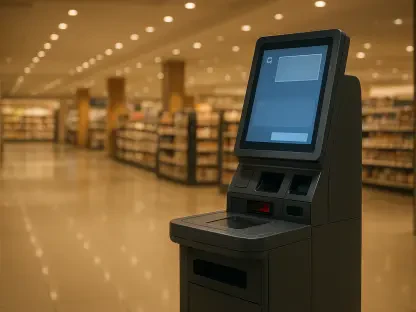
We are witnessing a massive transformation where the POS is no longer just the place where transactions go to die; it is now the literal heartbeat of the sales floor. In the past, associates were tethered to a fixed terminal, but the modern environment demands a mobile, cloud-native platform that travels with the employee like a trusted partner. This “operating system” integrates real-time inventory, personalized customer insights, and cross-channel data into a single, intuitive interface that fits in the palm of a hand. By turning the POS into a comprehensive service hub, we allow associates to act as expert consultants who can close a sale or solve a problem anywhere in the store. This shift is crucial because it finally bridges the gap between what the customer knows from their smartphone and what the associate can see, ensuring the employee remains the most knowledgeable person in the room.
How can retailers implement AI so that it empowers employees rather than becoming another source of “cognitive overwhelm” during a busy shift?
The key to successful AI implementation in a retail setting is making the technology feel entirely invisible rather than intrusive. The 2026 study warns against “ancillary AI annoyance,” which happens when an associate is forced to pause a live, nuanced conversation with a customer just to interact with a clumsy bot. Instead, we need pre-generated, contextual insights that surface naturally at the exact moment of need without requiring extra manual input or screen-taps. If an AI tool demands too much of an associate’s limited cognitive bandwidth, it becomes a distraction that pulls their focus away from the human being standing right in front of them. Effective AI should feel like a helpful whisper in the ear, providing the right data at the right time to make the associate look like a genius without breaking the emotional flow of the service interaction.
Why is it essential to include the “voice of the associate” when designing the tools they are expected to use every day?
For too long, retail technology has been designed in a sterile vacuum by IT departments and C-suite stakeholders who rarely spend eight hours a day on their feet in a crowded store. When you ignore the people who actually use the product, you end up with tools that look great in a boardroom presentation but fail miserably in the heat of a busy Saturday afternoon. Associates want to feel empowered, competent, and credible, but poorly designed tech makes them feel clumsy and frustrated, which the customer can sense immediately. By involving associates, supervisors, and managers in the design process, we can identify the specific psychological dimensions of their roles, such as the need for confidence during complex, high-stakes interactions. Ultimately, the best retail technology is born from the lived experience of the sales floor, ensuring it solves real-world problems rather than creating new digital hurdles.
What is your forecast for the role of the store associate over the next few years?
My forecast is that the store associate will transition from a transactional worker to a highly specialized “experience curator.” As 85% of retailers focus on physical growth, the human element will become the primary differentiator against purely digital, faceless competitors. We will see the “information gap” close completely as mobile technology becomes a seamless extension of the associate’s own knowledge, allowing them to focus entirely on emotional intelligence and consultative selling. The stores that thrive will be those that treat their staff as the ultimate brand ambassadors, supported by “invisible” technology that eliminates burnout and elevates the entire shopping experience to a form of retail theater. This evolution will turn the sales floor into a place of empowerment where technology works for the human, rather than the other way around.