
A courier motorcycle weaving through the humid congestion of Kuala Lumpur represents more than a delivery; it serves as a fragile pulse point for a trillion-ringgit digital economy currently suffocating under its own weight. The Malaysian logistics landscape is presently defined by a profound contradiction that threatens the very stability of national commerce. While e-commerce transaction volumes have reached historic peaks, the companies responsible for moving these goods are grappling with an existential threat. This volatility has moved beyond mere market correction, evolving into a systemic crisis that pits domestic courier firms against aggressive multinational entities in a race to the bottom that few can afford to finish.
The industry stands at a critical crossroads where traditional business models no longer provide a safety net. The primary segments of the sector, ranging from high-speed last-mile delivery services to massive automated processing centers, have become the backbone of the digital economy. However, this backbone is showing signs of severe strain. The delivery of a single parcel involves a complex orchestration of logistics technology, human labor, and transportation infrastructure, yet the financial compensation for this effort has dwindled to levels that barely cover basic operational overhead.
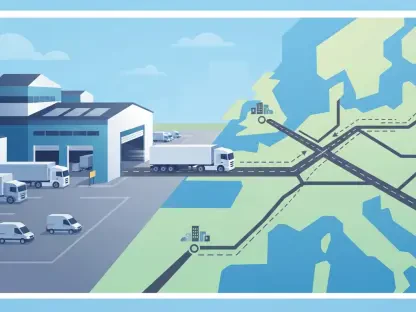
Governing this chaotic ecosystem is a diverse group of over 100 licensed operators, a number that many experts argue is far too high for a market of Malaysia’s size. The market is currently dominated by a handful of multinational giants whose deep capital reserves allow them to absorb losses that would bankrupt local players. Regulatory oversight by the Malaysian Communications and Multimedia Commission remains a focal point of discussion, as the framework designed for a liberalized market now struggles to manage the unintended consequences of that very openness.
The State of Play: Mapping Malaysia’s Volatile Logistics Landscape
The current environment is characterized by a high-stakes struggle for market share where volume no longer equates to financial health. Domestic courier firms, many of which have served the nation for decades, find themselves squeezed by the arrival of regional players who utilize aggressive pricing strategies to capture the market. This landscape is no longer about who can deliver the most parcels, but rather who can survive the longest while operating at a loss. The disparity between the digital economy’s growth and the logistics sector’s profitability has created a fragile foundation for future expansion.
Within this ecosystem, the pillars of the sector have undergone significant shifts to accommodate the demands of a post-pandemic consumer base. Last-mile delivery has moved from being a luxury service to a basic utility, requiring immense investments in fleet management and driver welfare. Meanwhile, automated processing centers have become the only way to handle the sheer scale of modern e-commerce. These facilities represent the high cost of entry into the modern market, a cost that many smaller domestic firms are struggling to meet without significant external investment or government intervention.
Market liberalization was intended to foster innovation and competitive pricing, but it has instead led to a saturation that threatens industry sustainability. With more than 100 operators holding licenses, the competition has moved past healthy rivalry into a territory where predatory practices are common. Multinational giants leverage their global networks to offer rates that domestic firms cannot match, leading to a slow erosion of local logistics sovereignty. The regulatory framework, while robust in its initial design, is now under intense scrutiny to see if it can adapt to protect the national interest without stifling the benefits of a free market.
Technological Transformation and Market Forecasts
Digital Metamorphosis: Trends Redefining the Courier Experience
Local logistics players are currently pivoting toward sophisticated data-driven frameworks to replace manual legacy systems that previously slowed down operations. This shift is characterized by the widespread adoption of Application Programming Interface integrations, which allow for a seamless flow of data between merchants, couriers, and consumers. By utilizing these technologies, companies are providing real-time tracking and predictive delivery windows that were once considered premium features but are now expected as standard. The move toward a digital-first approach is not just an upgrade; it is a fundamental reimagining of how a parcel moves through the supply chain.
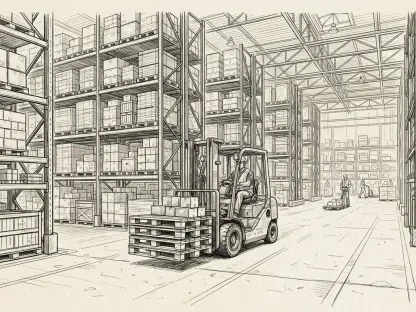
The implementation of automated sorting hubs has become the new entry ticket for any firm hoping to remain relevant in the coming years. These hubs utilize high-speed conveyors and optical recognition technology to process thousands of items per hour with minimal human intervention. This automation reduces the margin for error and significantly lowers the long-term cost per parcel, although the initial capital expenditure remains a hurdle for many. Mobile-centric operations have also empowered delivery personnel with better routing tools, further optimizing the efficiency of the last-mile segment.
Consumer expectations have evolved toward a demand for instant gratification, forcing a change in how delivery windows are managed. Modern shoppers are no longer content with waiting several days for a package; they now expect same-day or next-day fulfillment as a baseline. This shift has driven the need for hyper-efficient operations that can react to orders in real time. For many logistics firms, meeting these expectations requires a total overhaul of their logistics network to place inventory closer to the end consumer, often through a network of urban micro-fulfillment centers.
The Economic Outlook: Performance Indicators and Future Projections
The market is currently facing an RM4 reality where revenue per unit has seen a staggering 50 percent decline over recent periods. This drop in pricing is a direct result of the ongoing price wars, leaving operators with razor-thin margins that leave no room for error. Economic data suggests that while the number of parcels being moved is higher than ever, the actual profitability of the companies moving them is at an all-time low. This financial strain is particularly evident among domestic stalwarts who do not have the luxury of cross-subsidizing their Malaysian operations with profits from other regions.
A clear disconnect exists between volume growth and actual profitability within the e-commerce sector. Projections indicate that while the e-commerce market will continue to expand, the financial performance of many logistics providers will remain stagnant or continue to decline unless pricing structures are corrected. This trend suggests that the current path is unsustainable for many participants. Industry analysts are closely monitoring these performance indicators, as they signal a potential breaking point for several mid-sized operators who are currently burning through their remaining cash reserves.
Market consolidation forecasts point toward a future where only a few large, technologically superior players remain. By the end of the decade, it is predicted that the industry will see a wave of market exits and mergers as companies realize they cannot compete in a low-margin environment. This concentration of the industry could lead to more stable pricing in the long run, but it also raises concerns about reduced competition and the potential for monopolistic behavior. The transition toward this consolidated landscape will likely be painful for many legacy firms that fail to adapt their financial models.
The Price War Crisis: Identifying Obstacles to Sustainability
Predatory pricing has become the defining characteristic of an overcrowded market, preventing critical reinvestment into essential infrastructure. When delivery rates are pushed below the actual cost of service, companies are forced to cut corners, often at the expense of vehicle maintenance or technological upgrades. This cycle of undercutting competitors has created a situation where no one is winning, as even the largest players find their margins squeezed. The saturation of the market ensures that any attempt by a single company to raise prices is met with a loss of volume to a cheaper competitor.
Operational burdens continue to rise as a pincer movement of volatile fuel prices and higher labor costs impacts the bottom line. The implementation of higher minimum wages, while socially necessary, has added a significant layer of expense for companies that rely on thousands of drivers. Furthermore, many domestic firms are bound by the Universal Service Obligation, which requires them to maintain delivery networks in remote and unprofitable areas. This obligation places them at a distinct disadvantage compared to newer, nimbler competitors who only focus on high-density urban routes where delivery is more cost-effective.
The inability to renew fleets or upgrade technology due to a lack of capital reserves has triggered a dangerous stagnation cycle. Without the funds to invest in more fuel-efficient vehicles or better sorting technology, older companies are becoming less efficient over time. This loss of efficiency further erodes their margins, making it even harder to find the capital needed for improvements. This strategic risk is particularly acute for domestic firms that are trying to maintain their market share without the massive backstops of foreign venture capital or international parent companies.
Navigating the Regulatory Minefield and Policy Reforms
The industry has been vocal in its search for a floor price that would prevent the destructive undercutting that currently plagues the sector. While the MCMC has introduced non-binding price guidelines, these have proven largely ineffective as they lack the legal weight to compel compliance. Many industry leaders are calling for legally enforceable rate protections that would ensure a minimum level of compensation for every delivery. Such a move would aim to stabilize the market and ensure that companies have enough revenue to maintain safety and service standards.
Proposed reforms to the Postal Services Act are currently being discussed as a way to raise the barriers to entry for new operators. Instead of simply granting licenses to any company with a minimum amount of capital, the new standards would likely focus on operational fitness and data governance capabilities. By requiring a higher level of technical and financial readiness, the regulator could ensure that only serious, sustainable players enter the market. This shift would help reduce the overcrowding that has led to the current price war while also improving the overall quality of the national logistics network.
Government support mechanisms are also being explored, with the RM50 million Postal Services Fund serving as a primary tool for ensuring national connectivity. This fund is intended to help offset the costs of maintaining delivery services in rural and underserved areas, ensuring that no Malaysian is left behind in the digital economy. While the fund provides a necessary cushion, industry participants argue that more comprehensive support is needed to address the structural issues of the sector. The balance between providing public service and maintaining a competitive market remains a delicate task for policymakers.
Future Horizons: Innovation, Disruptors, and Strategic Resilience
Insights into the Courier Network Sharing Framework suggest a shift toward a more collaborative form of competition, often called co-opetition. By sharing infrastructure such as sorting hubs and delivery vehicles in remote areas, companies could eliminate redundant costs and improve their overall efficiency. This framework would allow competitors to work together on the backend while still competing for customers on the frontend. Such collaboration is seen as a vital step toward making the entire industry more resilient to economic shocks and pricing fluctuations.
Emerging market disruptors such as autonomous delivery drones and green technologies are beginning to shape the long-term outlook for the sector. While still in the early stages of adoption, these technologies offer the potential to significantly reduce the cost of last-mile delivery and lower the environmental footprint of logistics. Furthermore, the development of a National Address Database could solve many of the inefficiencies currently caused by inaccurate or incomplete shipping information. These innovations represent the next frontier of competition, where the winner will be determined by technological prowess rather than just low prices.
The global context will continue to influence local competitive strategies as international economic conditions and foreign capital influx remain unpredictable. Local incumbents must navigate a world where global logistics giants can shift their strategies overnight, often bringing massive resources to bear on the Malaysian market. To survive, domestic firms are looking toward strategic resilience, focusing on niche markets or superior local knowledge that foreign firms cannot easily replicate. The ability to adapt to these global pressures while maintaining a stable domestic presence will be the ultimate test for Malaysia’s logistics leaders.
Charting a Path Forward: Recommendations for a Resilient Ecosystem
The transition of the logistics sector from a high-margin manual service to a low-margin technological race was completed with startling speed. Observations of the market revealed that the old ways of doing business were insufficient to handle the demands of a fully digital society. Domestic firms recognized that their survival depended on embracing automation and data analytics, yet the financial environment made these necessary investments difficult to sustain. The evidence pointed toward a market that had become so efficient at driving down costs that it began to undermine its own long-term viability.
A three-pronged approach was identified as the most effective way to restore health to the industry. First, the introduction of effective regulation became a priority, focusing on creating a fair playing floor that discouraged predatory pricing. Second, the development of collaborative infrastructure allowed companies to reduce their individual overhead by sharing the burden of expensive logistics networks. Finally, a focus on sustainable reinvestment was encouraged to ensure that the sector remained at the cutting edge of global trends. These actions were seen as essential to protecting the nation’s logistics sovereignty in an increasingly interconnected world.
The necessity of structural reform remained a central theme as stakeholders looked toward the future of national connectivity. It was clear that without a fundamental change in how the market was managed, the risk of a domestic collapse remained high. The path forward required a delicate balance of competition and cooperation, supported by a regulatory framework that valued long-term stability over short-term price drops. By addressing these challenges head-on, the industry moved toward a more resilient model that was capable of supporting the continued growth of the digital economy while ensuring the survival of the companies that made it possible.