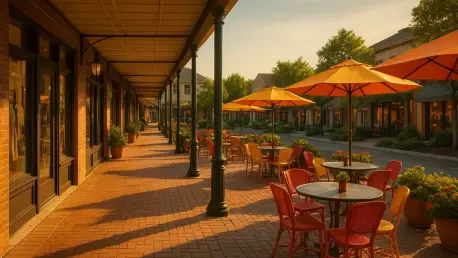

Open-air communal courtyards and intuitive movement patterns define the visitor experience at the upcoming Le Meryeme Liwan commercial destination. As Dubai continues its rapid expansion into suburban residential corridors, the demand for sophisticated, local retail solutions has never been more acute. This new project in Wadi Al Safa 2 represents a significant departure from the enclosed, monolithic shopping malls that have long characterized the city’s skyline. By prioritizing a more porous and integrated approach to commercial space, the development seeks to bridge the gap between high-end convenience and community-centric living. The collaboration between Key Mavens Group and LuLu Retail serves as the catalyst for this transformation, ensuring that the 113,674-square-foot facility becomes more than just a place to shop. It is a functional extension of the home, providing a refined environment where modern residents can fulfill their daily needs while enjoying a distinct architectural ambiance.
Architectural Innovation: Redefining Neighborhood Commerce
Design Dynamics: The Aesthetic Shift Toward Open Environments
The architectural language of this project draws heavily from Spanish-inspired aesthetics, emphasizing a connection between indoor and outdoor spaces that is often lost in traditional retail models. Shaded terraces and lushly landscaped walkways provide a climate-sensitive response to the local environment, allowing visitors to navigate the complex comfortably throughout the year. This design philosophy focuses on the visitor journey, utilizing intuitive pathways that guide individuals through a curated mix of retail, healthcare, and fitness options. Unlike the sterile corridors of older shopping centers, these communal courtyards act as social lungs for the Liwan area, fostering a sense of belonging among residents. By integrating natural light and ventilation, the structure reduces the reliance on heavy artificial cooling, aligning with modern sustainability goals while offering a more organic experience. This shift indicates a growing preference for lifestyle centers that prioritize human-scale interactions.
Commercial Synergy: Integrating Anchor Tenants Into Community Hubs
Central to the operational success of this destination is the strategic inclusion of LuLu Hypermarket as the primary anchor tenant. This partnership is not merely a leasing agreement but a foundational component of the project’s ecosystem, ensuring a consistent flow of foot traffic by catering to the essential daily requirements of the surrounding population. The presence of a high-standard supermarket provides a reliable heartbeat for the center, supporting the smaller boutique shops, cafes, and specialized services that fill out the remaining square footage. For LuLu Retail, this move signifies a calculated expansion into emerging residential nodes where the demand for quality food and consumer goods is surging. By embedding such a major player within a design-led framework, the project achieves a balance between commercial viability and architectural excellence. This synergy allows the development to maintain its premium status while remaining a practical destination for residents of the Liwan area.
Urban Expansion: Strategic Growth and Long-Term Value
Market Impact: Infrastructure and Residential Development
The establishment of such a specialized retail hub in Wadi Al Safa 2 reflects a broader trend in Dubai’s real estate market, where premium services are moving closer to the consumer’s doorstep. As the Liwan area matures into a fully realized residential corridor, the introduction of the Le Meryeme project serves to increase the overall desirability and market value of the surrounding properties. This development addresses a critical gap in the local infrastructure by providing a third space—a location outside of work and home where people can gather, socialize, and complete errands efficiently. The project’s completion in the fourth quarter of 2026 is expected to set a new benchmark for neighborhood-centric developments, proving that smaller, high-quality projects can be just as impactful as mega-malls. Investors and residents alike are watching these developments closely, as they represent the future of urban planning in a city that is increasingly focused on the 20-minute neighborhood concept.
Strategic Foundations: Future Urban Commercial Hubs
The collaboration between Key Mavens Group and LuLu Retail established a clear blueprint for the next generation of suburban retail developments. It moved away from generic commercial boxes toward site-specific, design-led hubs that prioritized the user experience above all else. Stakeholders who analyzed the project’s roll-out recognized that the integration of anchor tenants into boutique environments created a resilient financial model that withstood market fluctuations. Moving forward, urban planners and developers should prioritize the creation of multipurpose spaces that blend essential services with aesthetic appeal to secure community engagement. Future investments in the Wadi Al Safa 2 region must account for this increased expectation for quality and convenience. Decision-makers would do well to adopt similar integrated management structures to ensure that architectural integrity is not sacrificed for short-term gains. This project proved that localized, sophisticated retail was the primary driver for residential satisfaction.