
A New Era of Experience Orchestration Through Strategic Integration
The line between a customer expressing a specific need and a machine actually fulfilling that request has finally dissolved into a seamless stream of digital action. The landscape of customer engagement is undergoing a seismic shift, moving away from simple automated responses toward a more sophisticated model of autonomous action. Genesys, a global leader in cloud-based AI experience orchestration, recently signaled this evolution with the strategic acquisition of Pinkfish, a pioneer in agentic orchestration workflows. This move is not merely a technical upgrade; it represents a fundamental change in how businesses interact with their customers. By integrating the advanced capabilities of Pinkfish into the Genesys Cloud AI suite, the company aims to bridge the long-standing gap between understanding a customer’s intent and actually performing the tasks required to satisfy it. This analysis explores how this merger redefines the industry, transitioning organizations from assisted engagement to a future defined by governed, outcome-driven, and truly autonomous experiences.
The Evolution From Reactive Chatbots to Proactive Agentic Systems
To understand the significance of the Genesys and Pinkfish partnership, one must look at the trajectory of Customer Experience technology. For years, the industry relied on conversational AI—systems designed to simulate human speech and answer basic questions. While these tools improved accessibility, they often hit a glass ceiling where they could identify a problem but lacked the authority or connectivity to fix it. Historically, data silos in CRM, ERP, and HR systems prevented AI from acting as a cohesive unit. The shift toward agentic AI represents the next phase of this journey, where AI is granted the agency to navigate complex enterprise architectures. This historical context is vital because it highlights why the current movement isn’t just about better language models; it is about giving those models the limbs necessary to execute work across a fragmented digital landscape.
Bridging the Gap Between Intent and Enterprise Execution
Harnessing the Power: Model Context Protocol and Massive Tool Integration
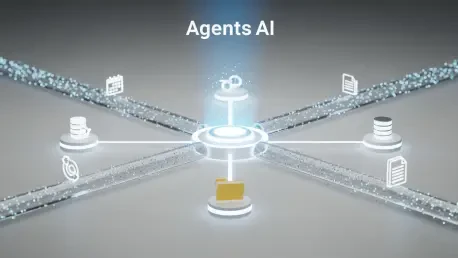
A critical component of this evolution is the integration of the Model Context Protocol, which serves as a universal language for AI tools. Pinkfish brings an expansive ecosystem of over 500 integrations and 25,000 compliant tools to the Genesys platform. This technical depth allows the Genesys Cloud Agentic Virtual Agent to reach into various business applications—such as billing systems or inventory databases—without requiring custom, brittle code for every interaction. By centralizing these tools, Genesys enables its AI to synthesize information from multiple sources in real-time. This eliminates the operational handoffs that typically frustrate customers, allowing the AI to move from a state of knowing what a customer wants to a state of doing what is necessary to resolve the request within a single, unified workflow.
Driving the Autonomous Enterprise: The Role of Governed Workflows
The move toward agentic AI introduces the concept of the autonomous enterprise, where business efficiency is driven by systems that can interpret requests and identify the necessary steps to reach a specific outcome. However, autonomy without oversight is a significant risk for any large organization. This is where governed execution becomes paramount. The Genesys and Pinkfish synergy ensures that as AI agents become more self-sufficient, they operate within strict business guardrails and security protocols. Rather than following a linear, pre-programmed script, these agents use dynamic workflows to navigate complex environments while remaining compliant with organizational policies. This approach offers the benefit of scaling operations without a proportional increase in human headcount, allowing human agents to focus on high-value emotional connections.
Expanding the Scope: High-Complexity Back-Office Operations
The impact of agentic AI extends far beyond the front-end customer service window; it is poised to revolutionize workflow-intensive operations like insurance claims processing, loan servicing, and customer onboarding. In many regions and industries, these processes are bogged down by manual verification and cross-departmental coordination. By combining Pinkfish’s automation with Genesys Cloud Case Management, organizations can now automate the collection and verification of documents or manage the logistics of Return Merchandise Authorizations autonomously. This depth of integration addresses a common misconception that AI is only for simple tasks. Instead, it demonstrates that with the right orchestration, AI can handle high-stakes business processes that require precision, speed, and deep integration into the enterprise back office.
Navigating the Road Ahead: The Future of Agentic Ecosystems
As we look toward the immediate future, the rise of agentic AI will likely trigger a broader shift in how technology is bought and implemented. Market trends suggest a transition toward action-first AI, where the primary metric of success is no longer the accuracy of a response, but the successful completion of a business outcome. We can expect to see more regulatory and economic shifts as governments and industries adapt to autonomous workers. The implementation roadmap provided by Genesys—with Pinkfish capabilities appearing in the AppFoundry Marketplace by mid-2026 and native integration following by early 2027—suggests a phased but deliberate march toward this reality. This evolution will likely democratize sophisticated orchestration, making it accessible to business users and reducing the time to value for organizations looking to modernize their digital infrastructure.
Practical Strategies for Navigating the Agentic Transition
For businesses and professionals looking to stay ahead of this curve, several actionable strategies emerge from the Genesys and Pinkfish model. First, organizations should prioritize breaking down internal data silos; agentic AI is only as effective as the data it can access. Second, there should be a focus on governance by design, ensuring that AI workflows are built with security and compliance at their core. Best practices suggest that companies should start by automating workflow-intensive but low-risk processes to build trust within the organization. By applying these insights, leaders can transition their customer service departments from cost centers into efficient, autonomous engines that drive measurable business outcomes while maintaining the highest standards of governed execution across all digital touchpoints.
The Dawn of Truly Autonomous Experience Orchestration
The acquisition of Pinkfish by Genesys marked a pivotal moment in the advancement of AI. It signified a transition from an era of conversation to an era of execution. By focusing on agentic orchestration and the integration of thousands of enterprise tools, Genesys provided the blueprint for the modern autonomous enterprise. This transformation addressed the core challenges of the digital age: complexity, fragmentation, and the need for speed. As these technologies became natively integrated into the Genesys Cloud platform, the standard for excellence in customer experience shifted. Organizations that embraced this change found themselves better equipped to thrive in an automated world, where customer intent was met with immediate, governed, and successful action. This strategic shift successfully elevated AI from a simple assistant to a vital operational partner.