
The ability to provide seamless access to goods around the clock without the constant overhead of a physical cashier team has transformed from a futuristic dream into an operational necessity for modern storefronts. As customer expectations shift toward immediate gratification and friction-free transactions, the retail industry is witnessing a significant reconfiguration of physical commerce. This guide serves as a comprehensive roadmap for independent retailers ready to transition from traditional manual operations to sophisticated autonomous systems. By following these strategic steps, businesses can enhance efficiency, extend service hours, and meet the demands of a digital-first consumer base in the 2026 market environment.
Modern retail success requires more than just high-quality inventory; it demands a frictionless interface between the shopper and the product. While large corporations paved the way for automated shopping, the democratization of hardware and software has made these tools accessible to a wider array of businesses. Adopting this technology is no longer about novelty but about survival in a landscape where convenience is the primary currency.
Embracing the Autonomous Pivot in Independent Retail
The transition to an autonomous model represents a fundamental shift in how a business interacts with its community and manages its internal resources. Independent retailers often face the challenge of competing with massive e-commerce platforms that offer 24/7 availability and instant updates. By pivoting to an autonomous or semi-autonomous framework, these local businesses can bridge the gap, providing the physical presence of a neighborhood shop with the efficiency of a high-tech platform. This shift is not a mere hardware upgrade but an evolution of the entire service philosophy, moving away from transaction processing and toward high-value customer engagement.
Moreover, the autonomous pivot allows for a significant expansion of operational flexibility that was previously unattainable due to labor costs. Small shops can now remain open during late-night hours or in remote locations where staffing a full shift would be economically unviable. This accessibility creates new revenue streams and strengthens customer loyalty by ensuring that essential goods are available whenever the need arises. Embracing this change requires a willingness to rethink traditional store layouts and workflows, ensuring that the technology serves the human experience rather than complicating it.
The Technological Evolution Behind Frictionless Shopping
Recent advancements in computer vision and artificial intelligence have reached a level of maturity that allows for highly reliable customer tracking and inventory management. Historically, retail relied on physical checkpoints like the checkout counter to verify transactions, which often created bottlenecks and reduced overall satisfaction. In contrast, today’s background technologies work in harmony to identify when a product is removed from a shelf and automatically assign it to a digital cart. This “walk-in, walk-out” experience is powered by sophisticated cloud computing architectures that process massive amounts of data in real-time.
Furthermore, the cost of sensor arrays and high-definition cameras has decreased significantly, allowing smaller market players to implement systems that were once reserved for top-tier tech firms. This technological evolution also includes the integration of robust mobile payment gateways and biometric access controls that secure the premises while maintaining a welcoming atmosphere. Understanding the synergy between these various hardware and software layers is essential for any retailer looking to build a resilient and scalable autonomous environment.
A Step-by-Step Blueprint for Transitioning to Autonomy
1. Determining the Right Automation Scale for Your Business
Identifying the appropriate level of automation is the first critical step in a successful pivot, as the needs of a urban micro-market differ vastly from those of a suburban grocery store. Retailers must evaluate their current operational pain points to decide whether a total overhaul or a modular approach is more appropriate. The goal is to match the technical complexity with the actual demands of the target demographic, ensuring that the investment translates into tangible consumer benefits.
Selecting Between Full-Scale Autonomous Stores and Smart Units
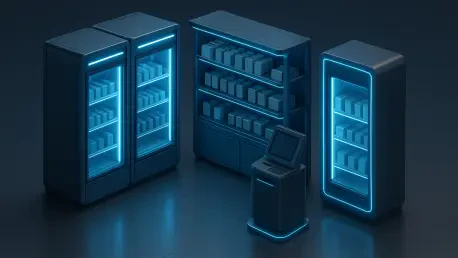
A full-scale autonomous store involves converting an entire footprint into a cashierless environment where every square foot is monitored by sensors and cameras. This model is ideal for high-traffic areas where speed is paramount and the product range is diverse. On the other hand, smart units—such as intelligent coolers or automated vending cabinets—offer a more targeted solution. These units are highly effective for specific product categories like beverages or fresh meals and can be deployed as standalone kiosks within existing spaces or in partnership with other venues.
Leveraging Hybrid Models to Balance Staffing and Automation
Hybrid models offer a pragmatic middle ground, allowing retailers to maintain a human presence during peak hours while switching to fully autonomous mode during off-peak times. This approach is particularly useful for businesses that value face-to-face customer service but want to capture late-night sales without increasing labor expenses. By implementing a hybrid system, a retailer can provide the security and assistance of a traditional store when needed, while still benefiting from the 24/7 availability that automation provides.
2. Architecting a Synchronized Technology Stack
The effectiveness of an autonomous store depends on the seamless communication between various hardware and software components. This “tech stack” must be robust enough to handle high volumes of data without latency, ensuring that the customer’s digital cart always matches their physical actions. Coordination is the key to preventing errors that could lead to inventory shrinkage or customer frustration.
Integrating Computer Vision with Physical Weight Sensors
While computer vision acts as the primary eyes of the store, physical weight sensors on the shelves provide a secondary layer of verification. When a customer picks up an item, the vision system identifies the person and the action, while the weight sensor confirms the specific item based on its mass. Integrating these two data streams reduces the likelihood of misidentification, especially for products with similar packaging or when a customer returns an item to the wrong location on the shelf.
Streamlining Real-Time Digital Payment and Access Controls
Access control is the gatekeeper of the autonomous experience, requiring a smooth interface where customers can check in via a mobile app or a credit card tap. Once inside, the system must be linked to a secure payment gateway that can process transactions the moment the customer exits the premises. Streamlining this process ensures that the exit is as frictionless as the entry, reinforcing the convenience that drives customers to autonomous locations in the first place.
3. Conducting a Use-Case First Site Assessment
A site assessment must be driven by the specific needs of the location rather than the features of the technology. Every physical environment presents unique challenges, from lighting conditions that affect camera performance to the physical dimensions of the shelving units. A thorough evaluation ensures that the chosen technology is compatible with the environment and the shoppers who frequent it.
Mapping Traffic Patterns and Shopping Hours to Technical Needs
Understanding when and how people move through a space is vital for determining where to place sensors and cameras to avoid blind spots. For example, a store located in a transit hub may experience sharp bursts of high traffic, requiring a system with high processing power to track multiple individuals simultaneously. Mapping these patterns allows retailers to optimize the layout for both technical accuracy and shopper flow, minimizing congestion and ensuring a fast experience.
Aligning Product Inventory with Automated Tracking Capabilities
Not all products are equally easy to track; for instance, lightweight or irregularly shaped items can sometimes challenge standard sensors. Retailers must audit their inventory to ensure that packaging is compatible with vision systems and that shelf sensors are calibrated for the specific weights of their goods. Aligning the product mix with the technology’s capabilities prevents operational headaches and ensures that the system maintains high accuracy across all categories, from snacks to household essentials.
4. Evaluating the Total Cost of Ownership and ROI
Financial planning for autonomous retail must look past the initial capital expenditure to consider the ongoing costs of maintaining a high-tech environment. While the reduction in manual labor is a significant driver of return on investment, these savings are often partially offset by new types of expenses. A realistic financial model accounts for both the obvious and the hidden costs associated with high-tech operations.
Accounting for Recurring Software Fees and Maintenance Labor
Modern autonomous systems usually operate on a software-as-a-service model, requiring monthly or annual licensing fees for the AI and cloud processing. Additionally, the hardware requires regular maintenance to ensure that cameras are clean and sensors are functioning correctly. Retailers must factor in these recurring costs to understand the true impact on their bottom line and to ensure they have the budget for long-term technical support.
Balancing Capital Expenditure Against Long-Term Labor Savings
The initial investment in cameras, sensors, and servers can be substantial, but it must be weighed against the cumulative savings in hourly wages over several years. In many cases, the ability to operate 26/7 without additional staffing allows a store to pay for its technological upgrade through increased volume and reduced overhead. By analyzing the break-even point, retailers can make an informed decision about the scale and speed of their rollout.
5. Redefining the Role of Human Labor and Customer Support
Automation does not mean the end of human labor; rather, it shifts the focus of employees toward more impactful tasks. Instead of spending hours behind a cash register, staff members can focus on inventory management, store cleanliness, and high-level customer interactions. This transition improves job quality for employees and enhances the overall shopping environment for the customer.
Transitioning Staff from Transaction Processing to Field Operations
Field operations become the backbone of an autonomous retail network, with staff focusing on replenishing shelves and ensuring the facility remains in top condition. This role requires a shift in mindset, as employees become managers of the technology and the space rather than just processors of payments. Efficient field operations ensure that the autonomous system always has the inventory it needs to be successful and that the physical store remains inviting.
Implementing Remote Support and Digital Service Protocols
Because there may not always be a staff member physically present, retailers must establish robust digital support channels. This could include in-app chat features, video help desks, or clear signage explaining how to resolve issues. Providing a reliable safety net for customers ensures that any technical glitches or questions are handled quickly, maintaining the trust that is essential for a self-service model to thrive.
Essential Checklist for an Autonomous Rollout
- Identify the specific level of autonomy (Full, Hybrid, or Micro) required for the site.
- Audit the security profile and traffic patterns of the proposed location.
- Ensure the product mix is compatible with current sensor and vision technology.
- Calculate the Total Cost of Ownership, including recurring cloud and maintenance fees.
- Establish a field operations plan for restocking and site cleanliness.
Beyond the Checkout: The Future of Fluid Retail Operations
The shift toward autonomous operations in 2026 indicates a broader movement toward fluid retail, where the barriers between physical and digital shopping continue to dissolve. This evolution is already tackling complex challenges, such as the automated verification of age-restricted items and the real-time monitoring of fresh food quality. As these systems become more integrated with the broader supply chain, stores will be able to automatically trigger restocking orders based on real-time shelf data, further reducing the manual burden on owners. The flexibility offered by these systems means that retail is no longer confined to traditional business hours or high-density locations, opening up new opportunities for commerce in places that were previously unreachable.
Executing Your Vision for a Modern Retail Environment
The strategic transition to autonomous retail required a dedicated focus on both the technological infrastructure and the human experience. By following a structured blueprint, retailers successfully navigated the complexities of system integration and site assessment to build a more resilient business model. They recognized that the value of autonomy lay not in the complete removal of human interaction, but in the optimization of the shopping journey. This approach allowed businesses to scale their operations and meet the rising demand for convenience while maintaining the local charm that defined their brand.
The pivot toward these modern environments proved to be a decisive move for those who prioritized operational agility and data-driven decision-making. These retailers utilized the insights gained from automated tracking to refine their inventory and layout, creating a more personalized experience for every visitor. Now was the time to look toward the next horizon of retail innovation, where the lessons learned from early autonomous rollouts served as the foundation for even more sophisticated and responsive consumer environments. Accomplishing this vision required patience and a commitment to continuous improvement, ensuring that the technology evolved alongside the community it served.