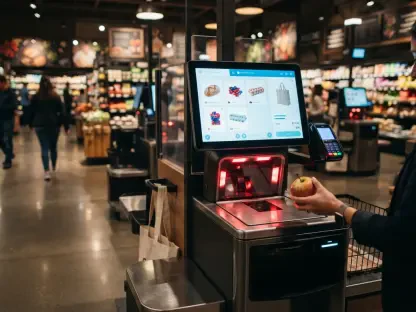

Modern shoppers increasingly favor brands that provide personalized recommendations, with ninety-one percent expressing a preference for tailored in-store experiences. This fundamental shift in consumer behavior has catalyzed a total reimagining of the physical retail space, transforming traditional storefronts into sophisticated, data-driven ecosystems. In this current 2026 landscape, the concept of the intelligent store has moved from a theoretical objective to a standard business requirement, where artificial intelligence is integrated directly into the building’s infrastructure to observe, reason, and act in real-time. By utilizing these advanced technologies, physical retailers are successfully bridging the gap between the tactile, immediate experience of in-person shopping and the data-rich nature of modern e-commerce. This transition represents a significant shift away from static, execution-based models toward a dynamic environment where every customer interaction is quantified and optimized to provide superior service.
Overcoming Infrastructure Hurdles
The Limitations: Why Traditional Cloud Solutions Fail
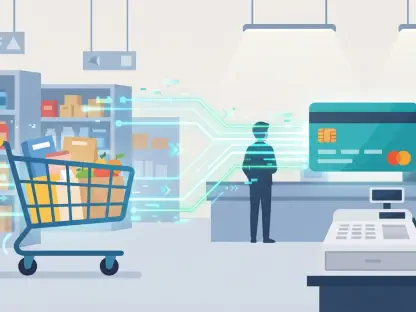
When retailers first began experimenting with artificial intelligence, most deployments relied on centralized cloud-based architectures to handle the heavy computational lifting of data processing. However, as these solutions scaled from small pilot programs to thousands of physical locations, significant operational bottlenecks emerged that threatened the viability of the entire smart store concept. The most pressing challenge involves latency, where the time taken to send high-definition video feeds to distant servers creates delays that are unacceptable in a fast-paced retail environment. For example, if an AI system is tasked with identifying a safety hazard or a long checkout queue, a delay of even a few seconds can render the resulting insight useless. Furthermore, the sheer volume of data generated by modern in-store sensors makes it prohibitively expensive to transmit everything to the cloud, creating a financial barrier that limits the growth of systems across a global retail footprint.
Beyond the financial and temporal costs, heavy reliance on the cloud introduces a critical vulnerability regarding network reliability and consistency. In a retail setting, a stable internet connection is never guaranteed across every single geographic location, and any fluctuations can cause smart features to cease functioning entirely. This fragility is a significant deterrent for brands that need their systems to run without interruption to maintain high standards of customer service and operational security. If a store’s computer vision system for loss prevention or its automated inventory tracking depends solely on an external server, a simple network outage could lead to unmonitored shrinkage or stock inaccuracies that persist for hours. Consequently, the industry has recognized that a centralized model lacks the robustness required for mission-critical retail operations, leading to a massive push for decentralized architectures that can withstand connectivity issues.
The Technical Edge: Advantages of Local Computing
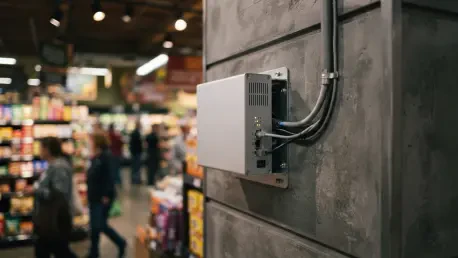
To solve the problems inherent in cloud-only models, the industry has turned toward edge AI, which involves processing data locally on compact, energy-efficient servers located directly on the store premises. This shift allows for near-instant inferencing, enabling the store’s digital brain to react to events as they unfold without waiting for a signal to return from a remote data center. Whether it is identifying a product spill or recognizing a loyal customer as they walk through the door, the speed of local processing ensures that the response is immediate and relevant. By performing the heaviest computational tasks on-site, retailers can transform their physical infrastructure into a responsive entity that behaves more like a living organism than a static building. This technical leap provides the necessary foundation for a wide range of real-time applications that were previously impossible to implement with older, slower networking technologies and centralized processing units.
In addition to speed, the move to local processing provides significant advantages in terms of data privacy and bandwidth management. By keeping the vast majority of raw video and sensor data within the physical walls of the store, retailers can ensure that sensitive information is processed securely without being exposed during transit across the open internet. This approach also results in a dramatic reduction in the amount of data that must be uploaded to the cloud, as the local edge devices only need to transmit summarized insights or consolidated reports to corporate headquarters. This efficiency allows retailers to scale their AI operations from 2026 through the end of the decade without seeing a proportional spike in their telecommunications costs. The resulting architecture is not only faster and more reliable but also significantly more cost-effective for large-scale enterprises that operate across diverse regions with varying levels of internet quality.
Maximizing Operational Impact and Results
Efficiency Gains: Enhancing Speed and Resource Management
The integration of edge intelligence offers a multifaceted boost to operational performance, primarily through the three pillars of speed, efficiency, and hardware practicality. Local processing capabilities enable the system to provide immediate, actionable alerts to store associates, such as notifying an employee the exact moment a shelf becomes empty or a specific item is misplaced. This level of precision prevents lost sales and ensures that the shopping environment remains organized and well-stocked without requiring manual shelf audits. Furthermore, recent innovations in hardware, such as the development of processors with integrated Neural Processing Units, allow these powerful AI models to run on compact devices that fit easily into existing backrooms. Retailers no longer need to build massive data centers at each location; instead, they can deploy sleek hardware that delivers enterprise-grade performance while consuming minimal physical space.
Beyond the technical hardware, the true value of these systems lies in how they empower the human workforce to be more productive and focused on high-value tasks. When an AI system handles the tedious work of monitoring inventory levels and tracking foot traffic patterns, employees are freed from manual data collection and can spend more time engaging directly with customers. This transition creates a proactive work environment where staff members are guided by real-time insights rather than reactive management styles. For instance, instead of waiting for a manager to notice a bottleneck at the pharmacy counter, the system can automatically redirect nearby staff to assist, optimizing labor costs in real-time. This synergy between human labor and machine intelligence ensures that the store operates at peak efficiency, maximizing the return on investment for both technology and personnel while simultaneously elevating the quality of service.
Strategic Scaling: Delivering Tangible Outcomes
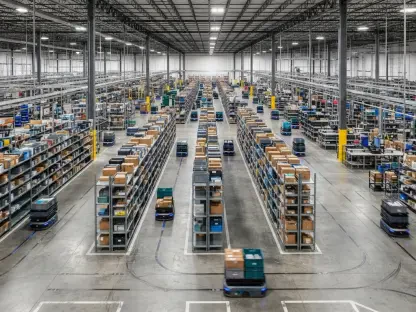
The shift toward the intelligent store is defined by high-impact use cases that offer measurable financial returns, particularly in the critical areas of inventory precision and loss prevention. By combining edge AI with advanced tracking technologies like RFID, retailers can maintain real-time visibility into their product availability across every shelf and storage room. This level of accuracy is transformative, as it can reduce stockouts by more than sixty percent and lower overall inventory carrying costs by as much as forty percent. When a system knows exactly what is in the store and where it is located, it can automatically trigger reorders and ensure that popular items are always available for purchase. This precision not only maximizes sales but also streamlines the entire logistics chain, as stores no longer need to maintain excessive safety stock to compensate for data inaccuracies that plagued traditional systems.
The transition into the era of the intelligent store was ultimately defined by a successful integration of technology and human intuition. Retailers that prioritized edge AI in 2026 established a foundation that allowed them to thrive amidst increasing digital competition. These organizations moved beyond simple transaction models and instead cultivated environments where real-time data informed every operational decision. By implementing a hybrid approach that balanced local responsiveness with global cloud analytics, businesses achieved a level of agility that was previously unattainable. Stakeholders should now focus on scaling hardware that supports multiple AI models simultaneously while ensuring that data security remains a top priority. Moving forward, the focus must shift toward refining these models based on diverse consumer behavior patterns. By 2034, those who have mastered the synergy between the edge and the cloud will likely dominate the global retail landscape.