
Zainab Hussain is a distinguished e-commerce strategist and retail expert with a profound focus on how emerging technologies reshape the secondhand market. With years of experience in customer engagement and operations management, she has witnessed firsthand the transition from manual marketplaces to high-tech resale ecosystems. Today, she shares her insights on the transformative power of agentic AI and how it is revolutionizing everything from automated luxury authentication to hyper-personalized discovery for modern shoppers.
How is agentic AI moving consumers beyond traditional browsing toward automated discovery and negotiation? In what ways can these tools realistically handle the evaluation of market values for buyers while maintaining human-level trust?
Agentic technology is fundamentally reshaping the ecommerce landscape by shifting the burden of search from the human to the machine. Instead of scrolling through endless filters, consumers are now embracing tools that handle the heavy lifting of discovery and negotiation. According to recent research, a significant 66% of shoppers feel comfortable allowing AI to manage their resale activities, which includes both deciding what to sell and evaluating market conditions for buyers. This level of trust is built by providing transparency in valuation, where the AI acts as a digital proxy that understands market fluctuations better than a casual user might. By automating these tasks, we move away from a passive browsing experience toward an active, results-oriented environment where the machine handles the complex logistics of finding the best value.
Given that speed and minimal effort are primary drivers for frequent sellers, how can AI-driven automation significantly accelerate payout processes? What technical steps are required to streamline the intake of items so that creating listings requires almost no manual input from the user?
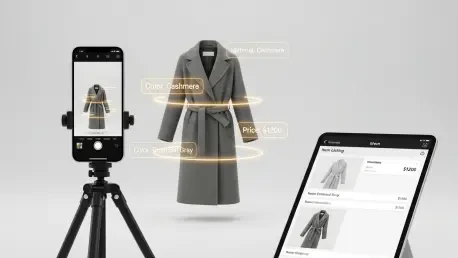
The next phase of resale growth hinges on solving the friction points of speed and convenience, as 36% of consumers explicitly state they would sell more frequently if payout processes were faster. To achieve this, platforms are implementing automated intake systems that handle repetitive, data-driven tasks that used to take humans hours to complete. For instance, the “Athena” tool used by industry leaders optimizes the blend of technology and human expertise to move items to the site with unprecedented velocity. By leveraging image recognition and historical metadata, the system can auto-populate listing details, reducing the user’s manual effort to nearly zero. When the intake is this streamlined, the entire lifecycle from shipping an item to receiving funds is shortened, satisfying the 32% of consumers who only participate in resale when it is effortless.
How do AI algorithms balance historical data with real-time valuation estimates to ensure competitive pricing for used goods? What role does this technology play in automating the authentication of luxury items, and how does it reduce the operational costs typically associated with manual inspections?
Modern AI algorithms, such as those used by Gone.com or The RealReal, analyze vast datasets to provide real-time valuation estimates that reflect current market demand rather than static historical prices. This technology is particularly crucial in the luxury sector, where companies have secured numerous patents for innovations that use AI as an enablement tool for both pricing and authentication. By automating the identification of brand-specific markers and comparing them against known authentic samples, the technology reduces the need for constant, expensive manual inspections. This shift doesn’t just improve accuracy; it significantly lowers operational costs and increases the overall speed to site for high-ticket items. It allows human experts to focus on the most complex edge cases while the algorithm handles the bulk of the verification work.
When using AI for lead scoring to identify high-value supply opportunities, what data points are most critical for the algorithm to analyze? How does this data-led approach change the way sales teams interact with potential consignors and prioritize their daily outreach efforts?
The implementation of “Smart Sales” tools has revolutionized how sales teams approach the market by using AI to automate lead scoring. The algorithm prioritizes high-value supply opportunities by looking at factors like item brand, historical demand, and the current inventory gaps on the platform. This data-led approach ensures that sales representatives are not wasting time on low-margin leads, but are instead mobilized toward the most lucrative consignments. By providing teams with real-time valuation data during their outreach, the interaction with potential consignors becomes much more authoritative and persuasive. This level of insight allows for a more strategic daily workflow, where every call or email is backed by data that predicts the likelihood of a successful and profitable sale.
As shopping moves toward visual and conversational search, how does this shift create a more hyper-personalized experience for the user? What are the practical challenges of implementing these agentic tools, and how do they differ from the standard keyword search bars currently used in ecommerce?
The transition from a standard keyword search bar to conversational and visual search represents a leap toward a hyper-personalized, high-end shopping experience. Unlike traditional search which requires the user to know exactly what terms to type, agentic tools can interpret style preferences, visual cues, and natural language to find the perfect item. This creates a more intuitive journey, mimicking the experience of working with a personal shopper who understands the nuances of a user’s taste. However, the practical challenges are significant, as these systems require massive amounts of processing power and sophisticated algorithms to understand context and intent rather than just matching text. Implementing these tools is a priority through 2026, as brands seek to move away from the rigid, often frustrating limitations of traditional ecommerce interfaces.
What is your forecast for AI’s role in resale growth?
I forecast that AI will become the foundational infrastructure of the resale market by 2026, moving from a “nice-to-have” feature to an absolute necessity for survival. We will see a shift where the majority of the “work” in re-commerce—pricing, listing, and even the initial search—is conducted by autonomous agents rather than humans. As platforms continue to refine their AI-led recommendation engines and visual search capabilities, the barrier between “new” and “pre-owned” will vanish for the consumer. Success will be defined by how well a platform can use data to eliminate the “secondhand friction,” making the act of reselling a coat as simple and fast as buying a new one with a single click.