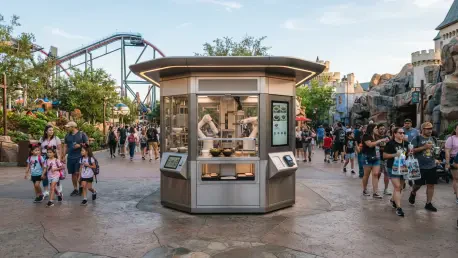

The strategic use of climate-controlled automated machines allows venues to offer a consistent quality of food and merchandise in areas previously underserved by traditional food and beverage services. For years, the prevailing wisdom in destination management dictated that retail and dining should be centralized into high-density zones to maximize operational efficiency and staff utilization. However, this traditional model often placed an undue burden on the visitor, forcing families to navigate complex park layouts just to find a single bottle of water or a necessary health item. As guest expectations for immediacy have reached an all-time high, the entertainment industry transitioned toward a distributed retail strategy. This shift recognizes that the modern traveler values time above almost all other commodities, and the presence of sophisticated, automated touchpoints ensures that their journey is not interrupted by logistical inconveniences. By leveraging advanced robotics and real-time inventory tracking, operators successfully mitigated the frustration associated with long lines and crowded storefronts. This transition signifies more than just a change in hardware; it represents a fundamental rethinking of how physical space is used to serve the guest, turning every square foot of a venue into a potential point of high-quality engagement. The integration of these systems has allowed for a more fluid movement of people, as the need to trek back to a central hub is eliminated, thereby increasing the time guests spend enjoying actual attractions rather than searching for basic amenities.
Bridging the Gap: The Geography of Convenience
A significant disconnect often exists between how a park operator maps a venue and how a guest actually moves through it. While operators tend to think in terms of square footage, leasing zones, and logistical hubs, guests experience needs that are immediate, situational, and often unpredictable. When a visitor realizes they need a poncho during a sudden downpour or sunscreen in a distant corner of a massive theme park, the physical distance to the main gift shop acts as a formidable barrier to the sale. Distance creates a psychological friction that can dampen the overall guest experience, turning a minor inconvenience into a reason to leave the park early. By placing automated solutions at the intersection of predictable guest needs and convenient purchase opportunities, operators provide essential items exactly when and where the demand arises. This proximity-based strategy ensures that the park functions as a responsive environment that anticipates the challenges of the visitor journey. Instead of viewing a remote walkway as empty space, savvy managers now see it as a prime location for a targeted automated unit that serves a specific, local need. This change in perspective has turned previously underutilized corridors into high-margin service points that enhance the guest’s perception of the brand’s thoughtfulness and efficiency.
Specialized automated kiosks function as mini-apothecaries or targeted boutiques that solve problems in real-time without requiring the overhead of a full storefront. For example, placing waterproof phone cases and heavy-duty portable chargers at the exit of a water ride or over-the-counter medications in high-traffic family zones ensures that a guest’s day is not interrupted by a long, exhausting walk to a central store. These machines are not merely vending units but are curated service points designed to address the specific “pain points” of a particular area within the venue. Brands like Pharmabox have paved the way for this by providing essential personal care items in high-demand environments, effectively functioning as a safety net for travelers. This strategic placement transforms the geography of the park from a series of logistical hurdles into a seamless service environment. By reducing the physical effort required to obtain necessities, operators have found that they can capture revenue from guests who would have otherwise chosen to go without the item rather than walk to find it. This captured revenue, while significant on its own, is secondary to the massive boost in guest satisfaction ratings that occurs when a venue proves it can meet needs instantly and locally, fostering a sense of care and modern professionalism that resonates throughout the entire visit.
Interactive Commerce: The Kiosk as an Attraction
In an environment designed specifically for fun and escapism, automated retail does not have to be a utilitarian or hidden metal box. Modern kiosks are increasingly serving as mini-destinations that contribute significantly to the venue’s overall entertainment value. By integrating interactive touchscreens, high-definition displays, and deep customization options, these machines turn a simple purchase into a memorable event that guests want to share. The “gamification” of retail is particularly effective for families and younger demographics, providing a unique sensory experience that traditional staffed storefronts or basic, static vending machines cannot replicate. For instance, the Skittles Remix Digital Kiosk allows guests to use an intuitive interface to create their own custom candy blends, transforming a simple snack purchase into a personalized interactive activity. This engagement bridges the gap between commerce and play, making the transaction feel like an extension of the park’s attractions rather than a break from them. When a guest can interact with a machine to tailor a product to their exact preferences, the perceived value of that product increases, and the machine itself becomes a visual draw that can attract crowds in its own right.
The visual presence of sophisticated automation also serves as a strategic asset for attraction operators who wish to modernize their property’s aesthetic. A kiosk that allows guests to watch a product being prepared—such as an automated pizza station or a robotic ice cream server—adds immense value to underutilized floor space. When the transaction itself becomes a part of the entertainment, the machine does more than just sell a product; it reinforces the innovative and high-energy atmosphere of the venue. This approach is especially powerful in museums and science centers, where the technology behind the automation can be tied into the educational themes of the exhibits. By using transparent casing and lighting that highlights the inner workings of the robotics, operators turn a retail unit into a kinetic sculpture that fascinates passersby. This level of engagement ensures that the retail footprint is no longer a “dead zone” in the guest experience but is a vibrant, productive part of the park’s story. This evolution has led to a new standard where automated units are expected to be as aesthetically pleasing and interactive as the surrounding rides and exhibits, ensuring a cohesive and high-quality environment throughout the entire property.
Food Revolution: Decentralizing the Dining Experience
One of the most impactful shifts in automated retail is currently occurring within food and beverage operations, a sector long plagued by high labor costs and logistical bottlenecks. Traditional food service is often limited by high staffing requirements, fixed kitchen locations, and the frustration of long wait times that pull guests away from the main attractions. Automated hot-food systems are now filling the gaps between flagship restaurants, providing high-quality, chef-standard meals in areas where it would be economically unfeasible or structurally impossible to build a full kitchen. These modern machines are climate-controlled and capable of cooking or heating items on demand using advanced convection or microwave technology, ensuring that food quality remains high even in decentralized locations. This means a guest can enjoy a hot, artisan-style pizza or a gourmet toasted sandwich in a remote corner of a park without having to return to a crowded food court. This decentralization of dining options directly addresses the issue of peak-hour congestion, spreading the guest load more evenly across the property and reducing the strain on central dining facilities during the busiest times of the day.
This technological leap allows major food and beverage brands to scale their presence significantly without the massive capital expenditure of traditional brick-and-mortar restaurants. By deploying automated units in non-traditional environments like sports venues, transit hubs, or remote park sections, brands can separate food availability from their physical footprint. A partnership such as the one between T-ROC and California Pizza Kitchen illustrates this strategy perfectly; by using automated kiosks, a recognized brand can provide a high-quality product in a fraction of the space. This strategy turns the kiosk into a powerful distribution point, allowing parks to offer a wider variety of dining options across their entire property while significantly reducing the labor burden on the operator. These units require minimal staffing—primarily for restocking and basic cleaning—allowing the venue to focus its human talent on high-touch guest service areas. As a result, the “food desert” zones of large parks have been eliminated, replaced by high-tech dining hubs that offer consistency, speed, and quality, ensuring that no guest has to settle for a cold snack simply because they are too far from a restaurant.
Strategic Analysis: Mapping Intent over Traffic
Successful automated retail requires a sophisticated site selection strategy that prioritizes guest “intent” over simple foot traffic numbers. Simply increasing the number of points of sale does not guarantee higher profits if the products offered do not match the mental state of the guests in that specific location. Instead, operators must analyze the guest journey to identify “pause points” where visitors naturally slow down, such as waiting areas for shows or exits of major attractions. By understanding which rides create a desire for specific souvenirs—like a photo-printing kiosk at the end of a high-thrill coaster—or how needs change throughout the day, operators can place the right machine in the right spot to maximize its utility. For example, a kiosk offering premium coffee and breakfast pastries is most effective near the entrance during the morning rush, whereas a machine selling glowing accessories or warm snacks should be strategically positioned near the exit paths of evening shows. This disciplined approach to placement ensures that every kiosk serves a specific purpose within the park’s ecosystem, rather than just filling empty space.
By mapping out high-friction zones and post-attraction opportunities, venue managers ensure that their automated retail network is responsive to the actual behavior of their guests. This data-driven methodology involves tracking guest flow and analyzing the “dwell time” in different parts of the park. A hot-food kiosk has a vastly different requirement profile than a machine selling emergency personal care items or high-end collectibles. Placing a high-end merchandise kiosk in a high-traffic but fast-moving corridor may result in low conversions, whereas placing that same kiosk near a line where guests are looking for a distraction can yield significant results. The goal is to align the product offering with the guest’s immediate mindset, whether that is the need for a quick hunger fix, a desire for a commemorative gift, or the urgent requirement for a practical item. This level of strategic precision has allowed operators to optimize their inventory and placement, ensuring that each machine contributes to the bottom line while also serving as a valuable resource that enhances the convenience and enjoyment of the visitor’s overall journey through the property.
Operational Excellence: Managing the Invisible Infrastructure
While automated technology appears “hands-off” to the guest, it represents a significant operating responsibility for the venue owner that must be managed with absolute precision. Every machine added to a property requires a dedicated, robust plan for inventory replenishment, hardware maintenance, and software uptime. If a machine cannot process a payment or runs out of its core product, it immediately transitions from an asset to a liability that frustrates guests and reflects poorly on the venue’s brand. For food-based automation, the stakes are even higher, requiring strict adherence to temperature controls, sanitation protocols, and product rotation to ensure food safety and quality. Operators must avoid the “vending trap” of deploying too many machines without a robust support structure that can handle the logistical load. It is far more effective to manage a smaller number of high-performing, well-maintained kiosks than a vast network of units plagued by technical failures or empty shelves. Success in this field requires a background infrastructure of sensors and real-time alerts that allow maintenance teams to fix issues before a guest even notices a problem.
Operational excellence in this field means building an invisible logistical network that supports the decentralized hardware, ensuring that the technology remains a reliable asset that enhances the visitor’s experience. This involves integrating the kiosks into the park’s broader inventory management system, allowing for seamless restocking from central warehouses or kitchens. Connectivity is another critical pillar; machines must have stable, high-speed data links to process transactions instantly and transmit performance data to the management team. Furthermore, the staff tasked with maintaining these machines must be trained in both the mechanical aspects of the hardware and the software interfaces that drive the guest experience. By treating the automated retail network as a core operational department rather than a side project, venues ensure that the technology delivers on its promise of convenience. This proactive approach to maintenance and logistics allows the automation to function as a seamless part of the park’s service staff, working quietly in the background to ensure that every guest need is met without a single hitch, thereby maintaining the illusion of a perfectly managed and effortless environment.
Moving Forward: Implementing a Distributed Network
The most successful entertainment venues adopted a comprehensive approach by treating kiosks as a coordinated web of touchpoints rather than isolated units. To achieve this, operators prioritized high-speed connectivity and unified inventory systems, which allowed them to monitor stock levels across the entire property from a single dashboard. This integration ensured that no machine remained empty for long, as automated alerts notified logistics teams the moment a specific threshold was reached. Furthermore, these organizations invested in predictive maintenance software that utilized sensor data to identify potential hardware failures before they occurred, significantly reducing machine downtime and protecting the guest experience. By aligning the product assortment in each kiosk with the specific demographics and behaviors of the surrounding zone, managers were able to maximize the return on every square foot of the retail footprint. The lesson for the future is clear: the most effective strategy involved putting the guest’s convenience at the center of every logistical decision, ensuring that the technology served the person, not the other way around.
Moving beyond simple placement, the industry successfully transitioned to a model where the automated network functioned as a resilient extension of the park’s brand. Actionable steps for future growth now focus on the further personalization of these machines through loyalty program integration and mobile app connectivity. By allowing guests to pre-order food or reserve merchandise through their smartphones for pickup at a specific automated kiosk, venues have further reduced the friction of the transaction process. Operators also found success by rotating the “interactive” content on their screens to match seasonal themes or special events, keeping the experience fresh for repeat visitors. These next steps require a continued commitment to technological investment and a willingness to iterate based on guest feedback and purchasing data. Ultimately, the successful implementation of a distributed retail network proved that the future of attraction management lies in the ability to provide high-quality service regardless of where the guest is on the property. By creating a seamless, automated, and highly responsive environment, venues have set a new benchmark for excellence that will define the guest experience for years to come.