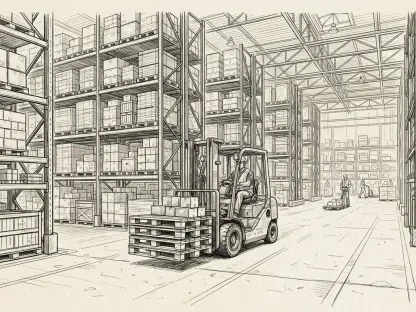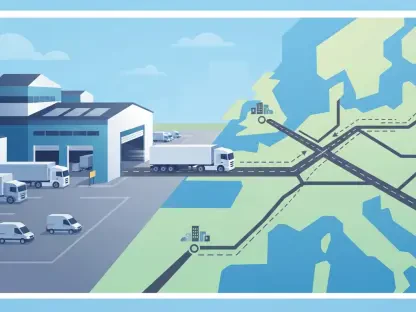

The retail industry has finally stepped away from the glittering promises of superficial digital storefronts to embrace a more profound, invisible transformation within the foundational layers of its operational architecture. While the previous era of digital experimentation prioritized the “front-of-house” experience, the current focus has pivoted toward a silent revolution occurring deep within the back-end infrastructure. This shift marks a transition from aesthetic digital facades to a period of operational excellence where utility outweighs novelty. The primary engine of modern business profitability no longer resides in how a brand looks to the consumer, but in how efficiently its internal machinery functions under pressure.
This bifurcation of retail technology distinguishes between the high-visibility tools that capture headlines and the “back-of-house” systems that ensure business resilience. Chatbots and virtual assistants served as the entry point for many organizations, yet these tools often lacked the depth to solve systemic inefficiencies. In contrast, the integration of robust back-end AI has become the economic significance of the current decade, acting as a buffer against market instability. Global retailers are increasingly moving away from ornamental features to prioritize the internal optimization of supply chains, logistics, and labor management, recognizing that true value is generated through stability and precision rather than mere engagement metrics.
The Silent Revolution: From Digital Facades to Operational Excellence
The transition from visible to valuable AI represents a maturation of the retail sector. Early adopters frequently fell into the trap of implementing technology for the sake of innovation, resulting in a landscape of fragmented tools that rarely communicated with one another. Today, the focus has shifted to building a cohesive back-end ecosystem that supports the entire enterprise. This evolution reflects a broader understanding that a seamless customer interface is worthless if the underlying supply chain cannot deliver the promised product. By strengthening the core infrastructure, businesses are moving toward a model where technology serves as a reliable backbone rather than a temporary fix.
Modern retail leaders now distinguish between front-of-house novelty and the back-of-house utility that drives long-term success. While a voice assistant might help a customer place an order, it is the operational AI that ensures the inventory is available, the staff is scheduled correctly, and the logistics network is optimized for speed. This operational AI provides a level of resilience that consumer-facing tools cannot match. As global markets face increasing pressure from economic fluctuations and shifting consumer demands, the ability to maintain internal efficiency has become the primary differentiator between industry leaders and those struggling to keep pace.
Navigating a Volatile Landscape: Market Dynamics and Emerging Trends
Predictive Power: The Rise of Anticipatory Retail
The movement toward “anticipatory retail” signifies a departure from traditional, reactive management styles. By utilizing agentic AI, retailers now simulate complex “what-if” scenarios to prepare for potential disruptions like port closures or shipping delays. This proactive stance allows organizations to identify vulnerabilities in their logistics network before they result in empty shelves. Instead of waiting for a crisis to occur, businesses use these simulations to build contingency plans that can be activated instantly. This level of foresight is no longer a luxury but a necessity for maintaining a competitive edge in a globalized economy.
Integrating supplier performance data and regional behavior trends into a real-time ecosystem synthesis has become a standard practice for top-tier retailers. This approach allows for the identification of micro-trends and supply chain bottlenecks before they manifest in the broader market. When operational efficiency meets the modern demand for reliability and instant product availability, the consumer experience is naturally enhanced. Reliability has become the new benchmark for loyalty, as shoppers increasingly prioritize brands that can consistently deliver on their promises regardless of external market conditions.
Quantifying the AI Shift: Market Growth and Investment Projections
Investment patterns clearly indicate that the industry has reached a consensus on the value of operational AI. Currently, approximately 75% of retailers are prioritizing their spending on supply chain AI through 2028, reflecting a massive shift in capital allocation. This trend is driven by a direct correlation between high-performing retail leaders and the early adoption of predictive modeling. Those who invested in back-end systems early are now seeing significant returns in the form of reduced overhead and improved inventory turnover rates, providing them with the capital to further innovate while others are still playing catch-up.
Future projections suggest a transition from semi-autonomous rerouting to fully autonomous logistical adjustments. As these systems become more sophisticated, the need for human intervention in routine logistical tasks will diminish, allowing staff to focus on more complex, strategic decision-making. The goal is to create a self-correcting supply chain that can respond to real-world variables in real-time. This progression toward total logistical autonomy represents the next frontier of retail efficiency, where the speed of data processing directly dictates the speed of business growth.
Overcoming the Data Gap: Challenges and Strategic Solutions
Despite the rapid advancement of AI tools, a significant hurdle remains in the form of the “data quality paradox.” Recent industry data suggests that 39% of retailers still operate with limited or incomplete internal data sets, which severely hampers the effectiveness of AI implementations. An AI model is only as reliable as the information it processes; therefore, poor data hygiene leads to untrustworthy outputs. Organizations are now forced to confront years of neglected data management to ensure that their new technological investments can actually perform as intended.
Breaking down silos between sales, logistics, and external supply partners is the most effective strategy for overcoming these informational gaps. When data is trapped within individual departments, the AI cannot form a holistic view of the business, leading to localized optimizations that may unintentionally harm other areas of the operation. By creating a unified data environment, retailers ensure that every part of the organization is working from the same “source of truth.” This integration is essential for managing labor hurdles, such as automated scheduling and recipe recall, which empower human staff by removing the mental burden of administrative tasks.
The Regulatory and Ethical Framework: Sustainability and Compliance
Precision forecasting has emerged as a vital tool in the sustainability mandate, particularly as retailers face pressure to reduce environmental waste. In the United Kingdom alone, the industry accounts for 1.1 million tonnes of annual retail waste, a figure that is increasingly unacceptable to both regulators and consumers. AI-driven operations offer a path forward by minimizing overproduction and optimizing delivery routes to reduce carbon emissions. This shift toward environmental stewardship is not just about ethics; it is about the transition to a circular economy where efficiency and responsibility are inextricably linked.
Compliance and transparency are also taking center stage as new standards for data privacy and algorithmic accountability emerge. Retailers must navigate a complex web of regulations to ensure that their AI systems are fair, transparent, and secure. Aligning corporate responsibility with profit protection through waste reduction has become a key policy driver. By proving that sustainability leads to economic efficiency, businesses can satisfy regulatory requirements while simultaneously improving their bottom line. This alignment ensures that ethical practices are built into the core of the business model rather than treated as an afterthought.
The Roadmap Ahead: Emerging Disruptors and Future Growth
The “Starbucks model” serves as a benchmark for scaling back-end AI to assist internal staff with inventory management and labor rotas. By focusing on how technology can support the workforce rather than replace it, the company has demonstrated that AI can enhance the human element of retail. This approach is being mirrored by other global leaders who are moving toward “invisible” systems that sense hyper-local demand and automate inventory rebalancing. These systems operate quietly in the background, ensuring that the right products are in the right place at the right time without requiring constant manual oversight.
Global economic influences, including geopolitical shifts and tariff fluctuations, will continue to accelerate the need for AI-driven agility. The ability to pivot operations in response to a sudden change in international trade policy will define the winners of the next decade. In this environment, the capacity to manage complex logistics will far outweigh the importance of flashy digital marketing interfaces. Competitive advantage will be found in the strength of the back-end, where the fusion of data and physical operations creates a barrier to entry that smaller, less integrated competitors cannot overcome.
Strategic Outlook: Building Resilience Through Intelligent Operations
The synthesis of operational dominance established that internal efficiency provided the only true foundation for long-term growth. Retailers that prioritized data integrity and infrastructure over experimental front-end tools positioned themselves as the most resilient entities in the market. It was observed that the most successful organizations were those that treated AI not as a marketing gimmick, but as a fundamental component of their logistical and labor strategies. This period of transformation proved that the “back-end” was actually the most critical point of contact between a business and its success.
The path forward required a commitment to resolving the data hygiene crisis and integrating disparate systems into a unified intelligence network. Leaders who successfully navigated these hurdles moved beyond reactive management into a state of continuous, proactive optimization. They utilized precision forecasting to align their environmental goals with financial performance, effectively turning sustainability into a competitive asset. Ultimately, the transformation of retail operations through AI redefined the industry’s standards, ensuring that the next decade of success was built on the solid ground of intelligent, automated, and highly transparent internal systems.