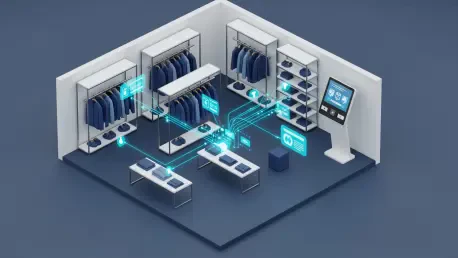

The rapid integration of sophisticated artificial intelligence into the retail floor has fundamentally altered the traditional relationship between management and staff, turning simple oversight into a complex, data-driven science. In the current marketplace, the shift from reactive, incident-based surveillance to a proactive, predictive environment has become a necessity for staying competitive. Retailers in the grocery and big-box segments are increasingly moving away from traditional closed-circuit systems that merely record events for later review. Instead, they are adopting intelligent ecosystems where sensors and algorithms monitor shelf levels, analyze foot traffic patterns, and predict staffing needs before a bottleneck occurs. This shift empowers department managers to reallocate resources on the fly, ensuring that employee efforts are directed where they provide the most value to the customer. Technology providers have played a pivotal role in this evolution by offering unified platforms that bridge the gap between back-room logistics and front-of-house service. By integrating these disparate data streams, retailers can now view their workforce not just as a labor cost, but as a dynamic asset that can be optimized through real-time intelligence.
The Modern Landscape of AI-Driven Workforce Management in Retail
This transition from static to intelligent oversight is most visible in how store managers interact with their daily data dashboards. Modern AI-driven platforms provide a granular view of store operations that was previously impossible to achieve without constant physical presence. In high-volume environments like supermarkets, AI monitors the flow of products and the speed of checkouts, alerting supervisors to open new registers or assist a struggling clerk. This proactive approach reduces the stress of management by automating the detection of operational gaps, allowing human leaders to focus on mentorship and customer service rather than policing minor infractions.
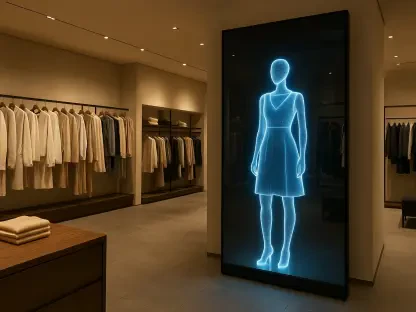
Furthermore, the influence of these systems extends into the specialized world of fashion and luxury retail, where staff performance is often measured by qualitative engagement. AI tools now analyze customer dwell times and staff interaction frequency to identify which sales techniques are driving conversions. These insights allow for a more nuanced form of workforce management that prioritizes quality over sheer presence. Technology providers are responding to this demand by creating increasingly invisible sensors that respect the high-end aesthetic of boutique environments while still providing the deep analytics necessary to refine the modern shopping experience.
Analyzing Market Dynamics and the Shift Toward Intelligent Oversight
Emerging Technological Drivers Reshaping Daily Store Operations
The evolution of store operations is currently being pushed forward by three core technologies: advanced video analytics, intelligent point-of-sale systems, and automated logistics trackers. Video analytics have moved beyond security, now serving as the primary source for heat-mapping and operational alerts. These systems identify when a customer is lingering in an aisle without assistance or when a hazardous spill requires immediate cleanup. By removing the lag time between an event and the response, retailers are creating a safer and more responsive environment for both employees and shoppers.
Moreover, the rise in organized retail crime has forced a more aggressive adoption of real-time monitoring. Intelligent point-of-sale systems now flag suspicious transactions, such as excessive returns or manual price overrides, as they happen. This shift toward real-time operational intelligence ensures that honest staff members are protected from unfair suspicion while identifying specific areas where security training may be lacking. Automated logistics trackers round out this ecosystem by providing visibility into warehouse activities, ensuring that stockers and pickers are working in tandem with front-of-store demand.
Evaluating Economic Performance and Future Growth Projections
From an economic perspective, the market for retail monitoring software is entering a period of significant expansion. Projections for the 2026 to 2030 period indicate a steady increase in capital investment as the return on investment becomes more quantifiable. Retailers implementing these systems have reported a measurable reduction in labor costs, often through the elimination of redundant tasks and the optimization of shift scheduling. By aligning labor hours with actual foot traffic data, businesses are minimizing the “dead time” where staff members are present but unproductive.
Inventory accuracy is another critical performance indicator driving this growth. AI systems that monitor stock levels in real-time help reduce shrinkage and prevent out-of-stock scenarios that frustrate customers. This level of precision allows for leaner inventory management and higher turnover rates. As technology becomes more affordable for mid-sized retailers, the competitive gap between small boutiques and massive chains is expected to narrow for those who adopt these management tools early. Future investments are likely to focus on integrating these tools into a single, cohesive operating system for the entire enterprise.
Navigating the Operational and Ethical Obstacles of AI Implementation
Implementing such invasive technology is not without its hurdles, particularly regarding the high initial costs and the complexity of legacy systems. Many retailers still operate on aging infrastructure that requires significant upgrades before AI software can function effectively. This technical barrier often leads to a tiered industry where only the most well-capitalized firms can leverage the latest innovations. To mitigate these costs, some organizations are opting for modular upgrades, focusing first on high-risk areas like the pharmacy or high-value electronics sections before scaling the technology store-wide.
Beyond the technical challenges, the risk of employee burnout and diminished morale is a significant concern. The sensation of being under constant surveillance can lead to a culture of fear if management uses data solely for disciplinary actions. To avoid this, successful retailers are adopting strategies of transparency, clearly communicating how the data helps improve safety and reduces the physical burden of certain tasks. Utilizing data for personalized training and gamification rather than punishment helps maintain a positive work environment, ensuring that technology serves as a support mechanism rather than a source of anxiety.
The Regulatory Environment and Data Protection Standards
The legal landscape is rapidly evolving to keep pace with the capabilities of AI monitoring, with a heavy focus on data privacy and the rights of the worker. In many regions, new legislation requires retailers to obtain explicit consent for certain types of data collection, particularly those involving biometric or facial recognition technology. Corporate governance must now include robust security measures to protect employee information from external breaches or internal misuse. Compliance with these regional standards is no longer an optional check-box but a fundamental requirement for operational continuity.
Furthermore, labor rights organizations are increasingly scrutinizing how AI-driven data affects wage calculations and performance reviews. Retailers must ensure that their algorithms are free from bias and that monitoring does not infringe upon the reasonable expectation of privacy in non-work areas. Establishing a clear ethical framework for surveillance helps businesses avoid costly litigation and reputational damage. By prioritizing data protection, companies can build a foundation of trust with their workforce, proving that high-tech oversight and employee dignity can coexist within the same operational framework.
Anticipating the Next Frontier of Integrated Retail Intelligence
Looking ahead, the industry is preparing for the introduction of edge computing and wearable workforce technology that will further refine human capital management. Edge computing allows for data to be processed locally on store cameras and sensors, significantly reducing latency and enhancing privacy by keeping sensitive information on-site. This allows for near-instantaneous feedback loops where a worker might receive a haptic alert on a wearable device the moment a stockout is detected. This seamless integration of machine and human effort will likely become the new standard for high-efficiency environments.
Global economic shifts and continuous innovation in machine learning will also lead to more sophisticated predictive modeling. Future systems will likely account for external factors like weather patterns or local events to automatically adjust staffing levels and inventory orders weeks in advance. As these tools become more intuitive, they will require less human oversight to maintain, shifting the role of the manager toward strategic planning and long-term business development. The continuous evolution of these technologies ensures that the retail store of the future will be a highly synchronized entity, capable of adapting to change in a matter of seconds.
Final Strategic Insights and the Future of Collaborative Management
The analysis of AI integration within the retail sector demonstrated that the most successful implementations were those that balanced technical precision with a human-centric approach. It was observed that when retailers utilized data to empower their staff rather than simply track them, overall store productivity increased. The study identified a clear correlation between transparent communication policies and higher levels of employee engagement. Management teams that viewed the technology as a collaborative tool found that it reduced the friction of daily operations and allowed for a more harmonious workplace culture.
Strategic recommendations for the coming years involved a shift toward using AI for specialized training and real-time support. It was concluded that the industry’s trajectory favored a unified view of store health, where security, inventory, and labor data were no longer managed in isolation. Future progress relied on the ability of leaders to foster trust by demonstrating the tangible benefits of monitoring, such as increased safety and more equitable workloads. Ultimately, the transition to intelligent oversight was most effective when it served as the foundation for a culture of accountability and continuous improvement.