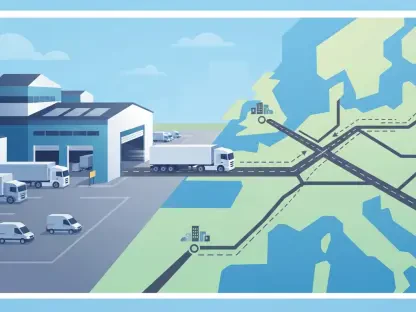

The global financial landscape underwent a seismic shift when Global Payments executed a $24 billion acquisition of Worldpay, creating a processing behemoth capable of managing over $3.7 trillion in annual transaction volume. At the center of this massive consolidation lies the Genius POS solution, a proprietary technology stack designed to serve as the connective tissue between disparate merchant networks and advanced financial services. This review examines how Genius has transitioned from a supporting hardware component into the primary engine for market penetration and revenue yield across the international fintech sector.
Evolution and Core Principles of the Genius POS Ecosystem
The Genius POS architecture represents a transition away from fragmented third-party hardware toward a “pure-play” processing model. By integrating hardware, software, and payment processing into a single proprietary unit, Global Payments effectively controls the entire payment lifecycle. This vertical integration allows for a seamless data flow that legacy systems, which often rely on a patchwork of different vendors, simply cannot replicate. The strategy is built on the principle of reducing merchant attrition by providing a “sticky” ecosystem where financial services are inseparable from the physical point of sale.
Following the Worldpay merger, Genius was strategically deployed to fill critical product gaps within the legacy merchant portfolio. While Worldpay possessed a vast network of financial institution partnerships, it lacked a unified, high-performance hardware solution that could compete with modern fintech disruptors. Genius addressed this by providing a standardized platform that drives high “attachment rates.” In this context, the technology acts as a gateway, ensuring that every merchant using the hardware is also utilizing the company’s high-margin processing and insurance services.
Key Technical Components and Functional Features
Integrated Software Verticals: Kitchen Management
One of the most impactful technical components of the Genius suite is its specialized software modules, most notably the kitchen management system. Unlike generic POS systems that merely record a sale, this vertical-specific tool manages the operational flow of a commercial kitchen in real time. For major enterprises like Subway, which has deployed the technology across 2,500 locations, this means that the POS interface serves as a centralized hub for order prioritization, inventory tracking, and employee scheduling.
The integration of scheduling and invoicing within the POS interface eliminates the need for manual data entry between different business management tools. This technical synergy reduces administrative overhead and minimizes the risk of human error in high-volume environments. By moving beyond simple payment collection, the Genius system becomes an essential operational utility, making it significantly harder for businesses to switch to a competitor without disrupting their entire back-end workflow.
Genius Mobile: Hardware Scalability
The launch of “Genius Mobile” signals a shift toward general-purpose and on-the-go scalability, designed to meet the demands of a more mobile workforce. This hardware is engineered to maintain high performance even during peak transaction periods, a critical requirement for small and medium-sized businesses that cannot afford downtime. The all-in-one design integrates biometric security and encrypted NFC readers, reducing technical friction for merchants who require professional-grade security in a portable form factor.
Strategic Innovations and Emerging Industry Trends
Technological modernization within the Genius ecosystem is increasingly driven by the integration of artificial intelligence. Global Payments is currently embedding AI-driven predictive modeling into its restaurant-focused products to help owners anticipate demand spikes and optimize staffing. This move toward “intelligent” hardware distinguishes Genius from passive payment terminals, positioning it as a proactive business consultant. Furthermore, the expansion of the sales force by 300 employees has accelerated the adoption of these tools, proving that technical innovation must be paired with aggressive distribution to capture market share.
Real-World Applications and Global Market Deployment
The enterprise-level rollout at Subway demonstrates the platform’s capacity for massive scale, yet its recent entry into Mexico, Austria, and Germany showcases its adaptability to diverse regulatory environments. In these international markets, Genius replaces fragmented legacy systems by offering integrated invoicing that complies with local tax laws automatically. This capability is particularly valuable for service-based businesses that rely on the system to manage complex scheduling and recurring billing cycles without needing additional third-party software.
Operational Challenges and Market Limitations
Despite its technical prowess, the platform is not immune to external volatility. Geopolitical instability in regions like the Middle East has previously suppressed transaction volumes in the travel and airline sectors, impacting the aggregate data processed by the Genius network. Additionally, the system remains sensitive to domestic regulatory shifts, such as fluctuations in IRS payment volumes tied to tax law updates. Maintaining hardware compatibility across a growing list of international territories also requires constant development cycles to meet varied encryption and privacy standards.
Future Trajectory and Technological Outlook
The roadmap for Genius suggests a deeper dive into AI-driven analytics, which will likely offer merchants granular insights into consumer behavior and spending patterns. As Global Payments continues its international rollout into untapped markets, the focus will shift from simple adoption to maximizing the data yield from every transaction. The goal is to evolve the POS terminal from a cost center into a profit-generating tool that provides merchants with the same level of data sophistication previously reserved for large-scale e-commerce giants.
Final Assessment and Industry Impact
The synergy between proprietary hardware and the expansive Worldpay network successfully redefined the standard for integrated payment solutions. By focusing on high attachment rates and vertical-specific software, the technology managed to secure a dominant position in the global merchant landscape. The strategic deployment of Genius not only closed existing product gaps but also established a framework for future digital commerce that prioritizes ecosystem lock-in through operational utility. Ultimately, the platform proved that modern payment processing is no longer just about moving money, but about managing the entire business environment.