
South Africa’s fresh supply depends on a cold chain that is only as strong as its thinnest link, and the DHL-Vital integration lands precisely where scale, reliability, and reach can fix the weakest points across fragmented retail and export flows. The deal folds Vital Distribution Solutions, Staffing Logistics, and Vital Fleet into DHL Supply Chain, combining national footprint, coordinated fleets, and workforce depth to move perishables faster, colder, and with fewer gaps.
South Africa’s Cold-Chain Engine: Scope, Structure, and Strategic Importance
Perishables logistics underpins food security, export competitiveness, and jobs by synchronizing farm pickups, aggregation, cold storage, line-haul, cross-docking, last mile, and reverse logistics for crates and pallets. Demand stretches from formal retail and wholesalers to independent traders, spaza networks, e‑commerce, foodservice, and export corridors.
Core capabilities center on multi-temperature control, time-definite delivery, order orchestration, and exception management, supported by TMS, WMS, telematics, data loggers, dynamic routing, visibility platforms, and predictive maintenance. The DHL-Vital combination delivers immediate national scale and staffing continuity across diverse retail tiers.
Why Integration Matters Now: Forces Reshaping Perishables Logistics
Consolidation, Smart Networks, and Lower Emissions: The Shifts Behind the Strategy
Consolidation counters fragmentation by unifying standards, lifting route density, and opening township and independent channels that were costly to serve. AI scheduling, telematics-driven utilization, and IoT temperature assurance strengthen control-tower visibility.
Consumers want fresher products with tighter windows across omnichannel paths, while urbanization and stricter service levels raise cold-storage demand and resilience needs. DHL-Vital reduces empty miles, standardizes SOPs nationwide, and integrates staffing for peak agility.
By the Numbers: Network Performance, Growth Projections, and Investment Outlook
Network health hinges on on-time delivery, temperature compliance, spoilage, stockouts, fill rates, and route utilization. Throughput expands with retail and export demand, while denser township routing widens access and improves predictability.
The merged network targets shorter transit times, higher asset turns, and lower variability, cutting CO2e per drop and enabling a pathway to EVs and biofuels. Investment aligns with DHL Group’s approximately €300 million Sub-Saharan program over five years, with base, accelerated, and conservative scenarios tied to infrastructure and policy.
Cracks in the Cold Chain: Fragmentation, Infrastructure Strain, and Service Variability
Mixed standards across formal and informal channels translate into uneven freshness and availability. Congestion, port delays, and power instability raise risks at cross-docks and cold stores.
Operationally, empty backhauls, suboptimal load planning, temperature excursions, and skills gaps persist amid data silos and weak escalation. DHL-Vital responds with a unified control tower, pooled fleets and drivers, densified routes, and continuous improvement loops.
Compliance as a Competitive Edge: Food Safety, Transport, and Trade Rules in Play
Meeting HACCP, ISO 22000, and South African cold-chain rules requires auditable temperature and traceability. Fleet licensing, driver hours, and reefer standards pair with emissions measures and incentives for lower-emission assets.
Cross-border SADC protocols and data protection for sensor and chain-of-custody records demand disciplined governance. Technology-enabled monitoring and rolling certification institutionalize compliance at scale.
Where the Cold Chain Is Heading: Platformization, Fleet Transition, and Gateway Growth
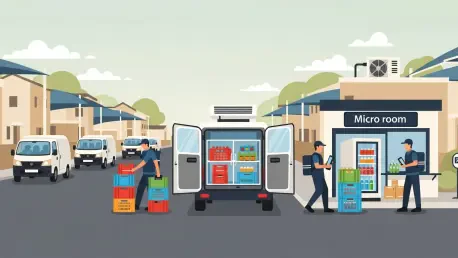
End-to-end orchestration harmonizes SLAs from supplier to shelf, using predictive ETA, demand sensing, and dynamic slotting to cut spoilage and stockouts. Temperature-controlled micro-fulfillment and township-ready last mile improve refusals and returns handling.
Fleet transition phases in cleaner vehicles and energy-efficient reefers while depots migrate to renewable power. South Africa strengthens its role as a gateway for Sub-Saharan fresh and pharma as partners pool data and assets under performance-based contracts.
Bottom Line and Action Steps: Turning Scale and Consistency into Sustainable Advantage
The integration delivered immediate coverage, higher reliability for perishables, and efficiency-led emissions cuts while reinforcing South Africa as a regional hub. Producers aligned orders with dynamic routing and standardized packaging; retailers consolidated SLAs and co-invested in last mile; logistics providers ran control-tower governance and continuous temperature monitoring; policymakers backed grid resilience, smoother borders, and cleaner fleets.
Capital flowed to data platforms, resilient energy, multi-temperature assets, and workforce upskilling, measured by on-time-in-full at temperature, spoilage reduction, emissions per delivery, route density, and tier-wide service consistency. The next phase leaned on platform depth, cleaner fleets, and broader township participation to unlock durable growth.