
The once-impenetrable fortress of the high-interest revolving credit card is currently facing its most significant structural challenge as a massive influx of consumers migrates toward flexible installment payment models. For decades, the primary revenue engine for commercial banks relied on the compounding interest of credit card balances, a model that assumed consumers would always prioritize the convenience of plastic over the clarity of fixed payments. However, the rise of financial technology firms has disrupted this equilibrium by introducing “Buy Now, Pay Later” (BNPL) services that offer transparent, short-term lending at the point of sale. This shift was not merely a technological update but a fundamental reassessment of how modern shoppers perceive debt and financial responsibility. As these fintech upstarts began capturing billions of dollars in transaction volume, traditional banks were forced to acknowledge that their historical dominance was no longer guaranteed. The current environment is defined by an aggressive counter-offensive as legacy institutions attempt to reclaim their lost territory by integrating installment lending directly into their core service offerings.
The Strategic Pivot of Legacy Institutions
Consumer Psychology: The Shift Away From Revolving Credit
The rapid adoption of installment lending is deeply rooted in a generational rejection of the traditional credit card model, which many younger borrowers view as an opaque and potentially predatory financial instrument. Consumers in the Gen Z and Millennial cohorts often prefer the “pay-in-four” structure because it provides a definitive end date for their debt and eliminates the anxiety associated with fluctuating interest rates and minimum payment traps. This psychological preference has created a significant hurdle for traditional banks that historically relied on revolving balances to drive profitability. To address this, legacy institutions are now rebranding their lending products to mirror the simplicity and transparency that fintech companies originally pioneered. By offering fixed-payment options, banks are attempting to de-stigmatize borrowing and position themselves as partners in a customer’s financial health rather than just facilitators of high-interest debt. This rebranding is essential for capturing the loyalty of a demographic that values predictable budgeting over the open-ended flexibility of a standard credit line.
Furthermore, the move into the installment space is a calculated effort by banks to secure the lifetime value of younger customers who might otherwise never open a traditional bank account. When a user chooses a fintech BNPL provider at checkout, they are essentially bypassing the traditional banking ecosystem for their most frequent transactions. Banks recognized that if they did not provide a competitive alternative, they risked becoming “dumb pipes”—utilities that merely move money without owning the customer relationship or the associated data. Consequently, the integration of BNPL is a defensive maneuver designed to keep younger users within the bank’s digital walls. By providing these tools, banks can build a history of successful repayments with new borrowers, which serves as a foundation for more complex financial products like auto loans or mortgages later in the customer’s life. This long-term strategy focuses on building trust through transparent lending before the consumer reaches their peak earning years, ensuring the bank remains the primary hub for all their future financial needs.
Merchant Dynamics: Meeting the Demand for Seamless Checkout
Retailers and service providers have become the primary battleground for the installment revolution, as they increasingly demand payment solutions that reduce cart abandonment and increase average order values. For a merchant, the choice of payment provider is often dictated by which service can convert a browser into a buyer most effectively. Statistics have consistently shown that shoppers are more likely to complete a high-value purchase if they can spread the cost over several interest-free installments. Recognizing this, traditional banks have had to pivot their merchant services to include BNPL capabilities to prevent their payment processing partners from defecting to fintech rivals. The pressure from the merchant side is relentless; businesses are no longer satisfied with simple credit card processing and instead seek integrated financial tools that can be embedded directly into their e-commerce platforms. If a bank cannot provide these features, it loses not only the transaction fee but also the valuable data generated by those retail interactions.
In addition to protecting existing merchant relationships, banks are using installment lending to capture a larger share of the overall transaction volume, which is critical for maintaining healthy interchange revenue. As fintech companies grew their merchant networks, they began to intercept a significant portion of the “swipe” fees that used to belong exclusively to traditional card issuers. To counter this, banks are now offering white-label installment products that retailers can brand as their own, powered by the bank’s underlying financial infrastructure. This approach allows the merchant to maintain a direct relationship with their customer while the bank handles the regulatory compliance, funding, and risk management in the background. By acting as the “invisible engine” of retail finance, legacy institutions can scale their BNPL offerings across thousands of merchants simultaneously. This strategy effectively turns the bank into a versatile platform provider, ensuring that regardless of how a consumer chooses to pay, the underlying financial rail remains firmly under the control of a traditional banking giant.
The Structural Advantages of Banking Giants
Capital Efficiency: The Power of Low-Cost Deposits
One of the most formidable advantages that traditional banks hold over fintech competitors is their access to vast pools of low-cost capital in the form of consumer deposits. While fintech firms must often rely on expensive venture capital, warehouse credit lines, or the securitization of their loan portfolios to fund their operations, banks can leverage the trillions of dollars sitting in checking and savings accounts. In a climate where interest rates remain a significant factor in corporate strategy, the ability to fund zero-interest installment loans at a minimal cost provides a massive competitive edge. Fintech companies are often forced to charge merchants high fees or find creative ways to monetize their user base just to cover their own borrowing costs. Conversely, a commercial bank can offer highly competitive terms to both consumers and retailers because its internal cost of funds is significantly lower than that of any non-bank startup. This allows legacy institutions to endure periods of economic volatility that might otherwise cripple a fintech firm with a thinner balance sheet.
Beyond simple cost advantages, the sheer scale of a bank’s balance sheet provides a level of stability and resilience that is difficult for smaller tech-driven lenders to replicate. During economic downturns, the risk of default on short-term installment loans can rise sharply, putting immense pressure on companies that lack diverse revenue streams. Banks, however, operate across multiple sectors, including commercial lending, wealth management, and treasury services, which allows them to absorb losses in one area while remaining profitable overall. This financial diversity means that banks can afford to be patient and take a long-term view of the installment market, whereas fintechs are often under pressure to deliver immediate growth to satisfy investors. This structural durability is a key selling point for merchants who want to ensure that their payment partner will still be operational and solvent five or ten years down the line. By positioning themselves as the “safe” choice in the installment space, traditional banks are leveraging their institutional heritage to win over conservative corporate partners who may be wary of the volatile nature of the fintech sector.
Underwriting Precision: Leveraging Comprehensive Financial Data
Traditional banks possess a unique data advantage that allows them to perform highly sophisticated risk assessments, a capability that most fintech providers simply cannot match. While a fintech company might only see a customer’s basic identity and a narrow slice of their recent transaction history, a bank has access to years of comprehensive financial behavior, including salary deposits, recurring bill payments, and existing debt obligations. This 360-degree view of a consumer’s financial life enables banks to make more accurate lending decisions, often approving customers who might be rejected by a fintech’s algorithm due to a lack of traditional credit history. Conversely, the bank can identify “hidden” risks, such as a borrower who is taking out multiple installment loans across different platforms, a practice known as debt stacking. By utilizing this deep internal data, banks can offer higher credit limits and more favorable terms to reliable borrowers while maintaining much lower default rates than their tech-heavy counterparts.
Furthermore, the bank’s ability to use BNPL as a gateway for cross-selling creates a virtuous cycle of data and revenue that fintechs struggle to emulate. When a customer successfully completes an installment plan, the bank gains a new data point that enhances that individual’s internal credit score. This improved risk profile then justifies the bank offering the customer a more profitable product, such as a high-limit credit card or a competitive mortgage rate. This integrated ecosystem allows the bank to monetize the customer relationship across multiple touchpoints over several decades, whereas a pure-play BNPL provider is often limited to the small margins found in point-of-sale transactions. This ability to “on-ramp” customers into a full suite of financial services makes every installment loan more valuable to a bank than it is to a fintech company. As a result, banks can afford to be more aggressive in their marketing and customer acquisition efforts, knowing that the long-term profitability of the relationship will far outweigh the initial costs of providing a short-term, interest-free loan.
Market Implementation and Systemic Realities
Execution Strategies: Integration and Post-Purchase Flexibility
The current implementation of installment lending by traditional banks typically follows two distinct paths: seamless point-of-sale integration and post-purchase credit card splitting. Many major banks have updated their mobile applications to allow users to take a transaction that has already been cleared and convert it into a fixed installment plan with just a few taps. This feature is particularly powerful because it does not require the bank to establish a direct partnership with every individual merchant; instead, it leverages the existing credit card infrastructure to provide flexibility after the fact. For the consumer, this offers the best of both worlds: the universal acceptance of a standard credit card and the structured repayment schedule of a BNPL plan. This “retroactive” installment model has proven to be a significant threat to fintechs because it captures the consumer’s business at the moment of peak convenience, often bypassing the need for a separate BNPL application during the checkout process.
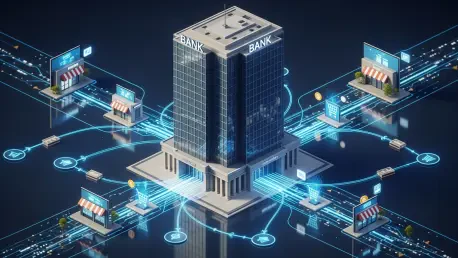
In addition to post-purchase options, banks are aggressively pursuing embedded finance partnerships where their lending capabilities are integrated directly into the digital storefronts of major global retailers. By providing the underlying capital and regulatory framework for store-branded financing, banks are able to reach millions of customers at the exact moment of purchase without the need for expensive direct-to-consumer marketing. These partnerships often involve the creation of sophisticated APIs that allow the merchant’s website to communicate in real-time with the bank’s underwriting engine. This ensures that the credit decision is made in seconds, maintaining the low-friction experience that consumers have come to expect from modern e-commerce. As banks continue to refine these technical integrations, they are effectively turning every retail website into a branch of their institution. This pervasive presence in the digital economy ensures that banks remain at the center of the consumer transaction flow, regardless of whether the shopper is using a physical card or a digital wallet.
Regulatory Evolution: Establishing a Standardized Financial Framework
The rapid expansion of the installment lending market eventually necessitated a more robust regulatory response to ensure consumer protection and financial stability. As the volume of these loans grew, concerns about “credit blindness” became more prominent, as many early BNPL transactions were not fully reported to the major credit bureaus. This lack of transparency made it difficult for lenders to assess a borrower’s total debt load, potentially leading to systemic risks if a large number of consumers became overextended simultaneously. In response, regulators began to treat digital installment accounts with the same level of scrutiny as traditional credit cards, requiring clearer disclosures regarding late fees, dispute resolution procedures, and reporting standards. This shift toward a more regulated environment actually benefited traditional banks, as they already possessed the extensive legal and compliance infrastructure needed to navigate complex federal and state financial laws. While fintech startups struggled to adapt to these new requirements, legacy institutions were able to leverage their existing expertise to stay ahead of the curve.
Looking back at the trajectory of the industry, it became clear that the competition between fintech innovation and banking stability resulted in a more mature and resilient financial ecosystem. The industry successfully moved toward a hybrid model where the user-centric design of the fintech world was paired with the capital strength and regulatory oversight of the banking sector. Consumers ultimately gained access to a more diverse array of payment options that were both flexible and safe, while the financial system as a whole became more transparent as installment data was integrated into standard credit reporting. For organizations moving forward, the focus has shifted toward the ethical use of data and the prevention of predatory lending practices in the digital age. Financial institutions have increasingly prioritized the development of tools that help consumers manage their total debt across all platforms, ensuring that the convenience of installment lending does not lead to long-term financial distress. This evolution has solidified “pay-later” options as a permanent and regulated pillar of modern commerce, providing a clear blueprint for future innovations in the intersection of technology and finance.