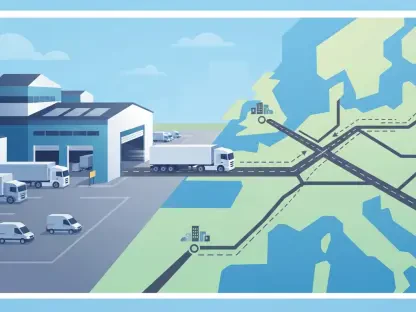

The days of manually logging into multiple carrier portals just to compare international shipping rates are rapidly coming to an end as artificial intelligence transitions from simple chatbots to fully autonomous operational agents. This evolution represents a fundamental shift in how commerce functions, moving away from fragmented dashboards and toward a unified, conversational interface. While payments and storefronts have already integrated deeply into the artificial intelligence ecosystem, logistics has remained a significant hurdle due to the sheer complexity of global carrier networks and customs regulations. The recent introduction of the Easyship Model Context Protocol (MCP) Server effectively bridges this gap, providing the necessary infrastructure to handle complex shipping workflows within a single chat window.
By introducing this specialized server, the shipping industry is finally catching up to the advancements seen in other sectors of the digital economy. The objective of this exploration is to understand how this technology allows merchants and developers to manage logistics through natural language, rather than manual data entry. Readers will learn about the mechanics of the MCP standard, the specific capabilities of the new shipping server, and how these tools are being used to automate everything from rate comparison to customs documentation. This development signifies the completion of the “agentic commerce stack,” where every stage of a transaction, from the initial sale to the final delivery, can be overseen by an intelligent digital assistant.
The scope of this transition covers a global network of over 550 courier services and more than 200 countries and territories. It is no longer enough for an AI to simply answer questions; it must now execute tasks with precision. As the technology matures, the ability to generate shipping labels, calculate real-time taxes, and monitor delivery statuses through a simple prompt will become the standard expectation for modern businesses. This article details the technical and operational implications of this shift, providing a roadmap for those looking to modernize their fulfillment processes in this new era of automated commerce.
Key Questions Regarding Agentic Shipping and Logistics
What Is the Model Context Protocol and Why Is It Necessary for Logistics?
For years, the primary challenge in software integration was the lack of a universal standard that allowed disparate systems to communicate fluidly without custom-built APIs for every single interaction. Merchants often found themselves trapped between their sales platforms and their shipping software, requiring manual exports and imports of data to keep operations running. The Model Context Protocol, or MCP, emerged as an open standard developed to solve this exact problem by acting as a universal adapter between AI models and external data sources.
By implementing this protocol, logistics providers can now plug their entire infrastructure directly into various AI platforms, such as Claude or ChatGPT. This means that the AI model no longer needs to guess or rely on outdated training data; instead, it has a secure, real-time pipeline to current shipping rates, carrier availability, and customs rules. This integration is vital because shipping technology is notoriously complex, involving dynamic pricing and unique carrier logic that does not easily fit into traditional, static formats. The MCP ensures that the intelligence of the AI is paired with the actual data required to print a valid shipping label.
How Does the New Shipping Server Transform the Fulfillment Process?
The traditional fulfillment workflow often involves a tedious sequence of comparing rates, checking address validity, and manually filling out customs forms. This process is prone to human error and consumes a significant amount of time that could be spent on business growth. With the launch of the new shipping server, these tasks are condensed into natural language prompts. A merchant can simply ask the AI to find the cheapest way to send a package from New York to Toronto, and the system will instantly analyze hundreds of courier options to provide the best result.
Beyond simple rate comparison, the technology allows for the immediate generation of shipping labels and commercial invoices without leaving the chat interface. It leverages a vast network of 550 courier services and offers discounts of up to 91% off retail prices, making high-level logistics accessible to small and medium enterprises. This shift from a dashboard-centric model to a prompt-driven model means that tasks like scheduling carrier pickups or tracking domestic and cross-border shipments occur within a single context window, greatly reducing the cognitive load on the user.
Can AI Agents Accurately Manage International Customs and Taxes?
One of the most intimidating aspects of global expansion for any business is the complexity of international trade regulations. Navigating the varied tariffs, import duties, and tax requirements of over 200 different countries is a monumental task that often requires specialized knowledge or expensive consultants. The integration of logistics into AI agents addresses this by providing real-time calculations of these costs at the moment of shipment. This ensures that merchants are never surprised by hidden fees and that customers have transparency regarding the total cost of their international orders.
The shipping server validates addresses and calculates duties with a high degree of precision, drawing from the same enterprise-grade API infrastructure that powers millions of packages globally. This level of accuracy is essential for maintaining compliance with international laws and preventing packages from being held at customs. By automating the creation of commercial invoices and the calculation of tariffs, the AI agent removes the friction typically associated with cross-border growth. This allows businesses to operate globally with the same ease as they do locally, leveraging automated systems to handle the bureaucratic nuances of international shipping.
Which Platforms Support the Integration of AI and Shipping?
Compatibility is a major factor in the adoption of any new technology, and the current landscape of AI tools is highly diverse. To be effective, a shipping server must work across the platforms that developers and merchants already use. The current ecosystem supports a wide range of MCP-compatible environments, including desktop and code versions of Claude, Cursor, and ChatGPT. Furthermore, it extends to specialized tools like Gemini, Windsurf, and various developer-focused command-line interfaces.
Moreover, the connectivity of these systems is bolstered by integrations with workflow automation platforms like Zapier, Make, and n8n. This means that a shipping event can trigger a series of actions across other business tools automatically. For example, once a label is generated through an AI prompt, the tracking number can be instantly sent to the customer via an automated email or updated in a Shopify store. This interconnectedness ensures that the shipping layer is not an isolated feature but a core component of a broader, automated business strategy that spans multiple software environments.
Summary: The Arrival of Integrated Logistics
The integration of global logistics into the AI agent ecosystem marks a significant milestone in the journey toward fully autonomous commerce. By providing a bridge between advanced language models and complex shipping infrastructure, the new server allows for the execution of sophisticated tasks through simple conversation. Merchants now have the ability to compare rates across 550 courier services, generate labels, and handle international customs without ever leaving their preferred AI interface. This transition reduces the need for manual data entry and multiple logins, streamlining the fulfillment process and allowing business owners to focus on higher-level strategy.
Furthermore, the technological foundation of this advancement, the Model Context Protocol, ensures that the system remains flexible and compatible with a growing number of AI platforms and automation tools. The ability to pull shipping analytics and manage billing summaries through natural language further enhances the utility of these agents for operational leads and founders alike. This development effectively closes the gap in the commerce stack, providing the missing layer of logistics that was previously absent from the world of agentic business operations. As more businesses adopt these tools, the standard for speed and efficiency in the shipping industry will likely undergo a permanent transformation.
Final Thoughts: Navigating the Future of Automated Commerce
The transition toward agentic shipping signaled a departure from the labor-intensive practices that defined early eCommerce logistics. Merchants who embraced these tools found that they could operate with a level of agility that was previously reserved for large corporations with massive logistics departments. By removing the barriers to cross-border trade and simplifying the complexities of multi-carrier shipping, the technology leveled the playing field for businesses of all sizes. It became clear that the future of commerce was not just about better software, but about more intelligent integration.
Developers and merchants recognized that the ability to turn informational bots into transactional agents was a necessary evolution. The implementation of the shipping server proved that even the most complex, data-heavy industries could be distilled into accessible, conversational workflows. As the ecosystem continued to expand, the focus shifted from simply building tools to creating seamless experiences where the technology worked quietly in the background. The ultimate success of these AI agents lay in their ability to handle the heavy lifting of logistics, allowing humans to direct their energy toward innovation and connection.