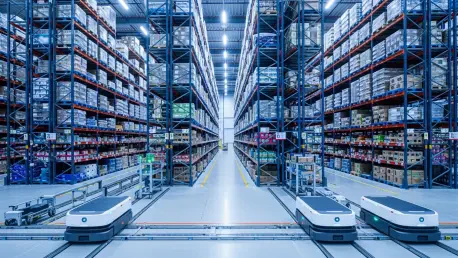

The relentless pressure on global supply chains has reached a tipping point where traditional manual labor can no longer keep pace with the volatile demands of modern consumer expectations. Associated Wholesale Grocers, known as the largest cooperative food wholesaler for independent supermarkets in the United States, is addressing this reality by fundamentally transforming its Gulf Coast Division Support Center. Located in Pearl River, Louisiana, this facility currently handles a staggering 22 million cases of dry groceries every year, relying heavily on conventional methods that are becoming increasingly unsustainable in the current economic climate. The transition toward a more automated framework is not merely a choice but a necessity driven by the rising costs of operation and the urgent need for higher throughput. By integrating sophisticated robotics into their existing infrastructure, the cooperative aims to stabilize its logistical output while providing its member retailers with a more reliable stream of inventory. This shift represents a significant milestone in how regional distribution centers manage large-scale volume under duress.
Strategic Modernization of Grocery Logistics
Overcoming Operational Hurdles: Addressing Labor and Climate
The primary catalyst for this overhaul is a collection of systemic challenges that have plagued the Pearl River facility, ranging from labor scarcity to the rising costs of maintaining aging hardware. Recruiting and retaining staff for physically demanding manual warehouse roles has become a primary bottleneck, leading to higher turnover rates and a reliance on expensive temporary staffing solutions. Furthermore, the financial burden of constant equipment repairs in a high-volume environment has created a cycle of diminishing returns for the cooperative. By shifting to an automated system, the organization anticipates a significant reduction in these variable costs, allowing for a more predictable expenditure model. Beyond the immediate economic factors, the geographic location in Louisiana introduces unique logistical threats, particularly from severe weather-related disruptions that can paralyve manual operations. A more resilient, robotics-driven approach ensures that the supply chain remains functional even when local conditions make traditional labor difficult or dangerous to coordinate effectively.
Building on the need for resilience, the implementation of Symbotic’s AI-enabled platform provides a buffer against the unpredictability of the regional labor market. When manual processes fail due to staffing shortages, the entire distribution network suffers, impacting thousands of independent grocery locations that rely on timely deliveries. The automated solution offers a level of consistency that is impossible to achieve with human labor alone, especially when dealing with the physical toll of moving millions of cases annually. This technological intervention allows existing staff to transition into higher-value roles, focusing on system oversight and technical management rather than repetitive manual lifting. Consequently, the warehouse becomes a more attractive workplace, potentially solving the long-term retention issues that have historically hampered operational efficiency. This strategic shift is designed to create a stabilized environment where the cooperative can predict its output with high precision, regardless of the external pressures that often fluctuate within the broader regional economy.
Optimizing Existing Infrastructure: High-Density Automation
One of the most compelling aspects of this partnership is the ability to maximize the utility of the current Pearl River footprint through high-density automation. Rather than investing in the massive capital expenditure required for a new building, the cooperative is repurposing approximately 114,000 square feet of its existing facility to house the new system. This ultra-high-density configuration allows for a much more efficient use of vertical and horizontal space, effectively packing more inventory into a smaller area. Once the system becomes fully operational, it is expected to manage nearly 19 million cases per year, representing the vast majority of the facility’s total volume. This approach demonstrates a commitment to sustainable growth, proving that technological advancement does not always require a larger physical footprint. By leveraging sophisticated algorithms and robotic precision, the facility will be able to store and retrieve goods with a speed that manual forklifts and pallet jacks simply cannot match, leading to a much higher inventory turnover rate.
The transition to high-density robotics also brings a profound improvement in the quality of the outgoing product and the safety of the work environment. In traditional manual environments, the risk of product damage is significantly higher due to the frequent handling and movement of heavy cases. The automated platform minimizes these touchpoints, ensuring that items arrive at independent grocery stores in pristine condition, which in turn reduces waste and increases retailer satisfaction. Additionally, the system vastly improves workplace safety by removing workers from high-traffic zones where heavy machinery and manual lifting often lead to injuries. Order accuracy also sees a substantial boost, as machine learning models and computer vision systems identify and sort products with nearly perfect reliability. This level of precision eliminates the costly errors associated with mis-picked orders, which often result in expensive returns and inventory discrepancies. By refining these internal processes, the cooperative strengthens its competitive position against national retail giants.
Technological Integration and Future Scalability
AI-Enabled Platforms: Transforming Warehouses into Strategic Assets
At the heart of this transformation is an AI-powered platform that redefines the role of a warehouse from a simple storage site to a strategic logistical asset. For a cooperative that reported consolidated sales of $12.2$ billion in 2025, maintaining a competitive edge requires more than just moving boxes; it requires intelligent decision-making at every stage of the distribution process. The machine learning capabilities provided by Symbotic allow the system to learn from patterns in order volume and SKU velocity, optimizing the layout of the warehouse in real-time. This “intelligent automation” ensures that the most frequently requested items are always the most accessible, reducing latency in the fulfillment cycle. As the system continues to gather data from the Pearl River operations, it will become increasingly efficient, providing the cooperative with insights that were previously hidden in manual logs. This shift toward data-driven logistics enables the organization to respond more rapidly to shifts in consumer demand across its 3,500 supported locations.
Furthermore, the deployment of this technology serves as a defensive strategy against the rising distribution costs that threaten the margins of independent grocers. In an era where efficiency is the primary differentiator, the ability to lower the cost per case delivered is a major advantage. The AI platform acts as a stabilizer, shielding the cooperative and its members from the economic volatility of the broader supply chain. This collaboration also validates the scalability of high-density robotics in older facilities, proving that even legacy infrastructure can be modernized to meet modern standards. By turning the Pearl River center into a high-tech hub, the cooperative is setting a precedent for its other divisions to follow, creating a blueprint for future technological adoption. This holistic integration of artificial intelligence and robotics ensures that the supply chain is not just a cost center but a source of long-term value. The focus remains on building a robust ecosystem where independent retailers can thrive despite the presence of larger, more centralized competitors.
Implementation Roadmap: Strategic Insights and Future Considerations
The timeline for the Pearl River project is meticulously planned to ensure a smooth transition without interrupting the current flow of goods to retailers. Construction and facility modifications are scheduled to begin in early 2027, with the technical integration of the automated systems following shortly thereafter. This phased approach allows the team to troubleshoot potential issues in a controlled manner before the system goes live in the fourth quarter of 2027. This period of preparation was essential for the cooperative to align its internal processes with the new robotic workflows. Moving forward, wholesalers should prioritize the integration of modular automation that can be retrofitted into existing spaces, as this reduces the risk and cost associated with new construction. The success of this implementation will likely serve as a case study for other regional distributors looking to modernize their operations. Businesses must also consider the long-term implications of AI on their workforce, investing in training programs that bridge the gap between manual labor and technical system management.
The partnership ultimately highlighted the critical need for regional wholesalers to adopt sophisticated technology to remain viable in a rapidly consolidating market. By committing to this automation, the organization took a decisive step toward stabilizing its supply chain economics and improving the service levels for its member retailers. The transition demonstrated that even large-scale, manual operations could be successfully migrated to digital-first frameworks when the strategic goals were clearly defined. Future considerations should include the expansion of these systems to include perishable goods and cold storage, as the benefits of precision and density are equally applicable to refrigerated logistics. Wholesalers were encouraged to view automation as a multi-year journey rather than a one-time purchase, requiring continuous investment in software updates and hardware maintenance to keep pace with technological evolution. This proactive stance ensured that the cooperative remained a pillar of the independent grocery industry, ready to face the complexities of the next decade with a modernized and resilient infrastructure.