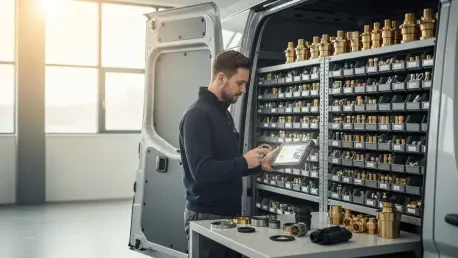

The difference between a profitable shift and a thousand-dollar loss in a commercial kitchen often hinges on whether a technician has a single two-dollar gasket sitting in the back of their van. In the high-stakes world of industrial maintenance, the traditional “search and hope” model of parts procurement has long been the primary source of operational friction. Predictive commerce, exemplified by recent advancements in AI-driven distribution, is shifting the burden of knowledge from the individual technician to a centralized, intelligent system. This transition represents a fundamental move away from reactive logistics toward a future where diagnostics and procurement happen simultaneously.
Evolution of Predictive Commerce in Industrial Distribution
Industrial distribution has historically lagged behind consumer retail in terms of digital sophistication, often relying on massive, clunky paper catalogs or basic keyword-based search engines. This legacy approach required technicians to be part-investigator, often spending hours cross-referencing serial numbers and exploded view diagrams. The emergence of predictive commerce marks the end of this manual era. By integrating machine learning into the very start of the repair journey, distributors are transforming their platforms into diagnostic partners that understand the relationship between a symptom and a solution.
This shift is not merely about adding a better search bar; it is about changing the context of the B2B transaction. While traditional e-commerce platforms wait for a specific part number, predictive systems analyze the context of the equipment failure. This evolution from reactive searching to AI-backed diagnostic journeys allows for a “first-time fix” culture that was previously impossible. The technology now anticipates the needs of the service team, ensuring that the supply chain moves at the speed of the breakdown rather than the speed of the paperwork.
Core Pillars of the PartPredictor Platform
AI-Driven Data Loops and Historical Analysis
The technical foundation of this predictive shift relies on sophisticated data loops that consume millions of real-world repair records. These loops function as a collective memory for the industry, identifying patterns that a single technician might only see once in a career. When a model number is entered, the system doesn’t just look for a part; it calculates the statistical probability of failure for every component in that unit based on historical performance. This provides a ranking of likely culprits, allowing for preemptive ordering that drastically reduces the need for multiple site visits.
Natural Language Processing and Symptom-Based Search
Perhaps the most significant technical hurdle overcome by these platforms is the move toward natural language diagnostics. By utilizing Natural Language Processing (NLP), the system can interpret vague descriptions like “oven not heating” or “leaking from the base” and map those symptoms to specific hardware solutions. This simplifies the procurement process by translating the technician’s on-site observations into actionable data. It bridges the gap between the physical reality of a broken machine and the digital complexity of an inventory database containing hundreds of thousands of individual SKUs.
Recent Innovations in B2B Predictive Logistics
The latest developments in this sector focus on the integration of massive OEM datasets, creating a competitive moat that is nearly impossible for smaller players to replicate. By housing data for over 18,000 equipment models and 120 brands, these platforms provide a level of accuracy that goes beyond simple pattern recognition. The automation of the diagnostic journey means that the system can now proactively suggest “companion parts”—those small washers, bolts, or seals that are often forgotten but are essential for completing a specific repair.
Real-World Applications and Industry Impact
In the food service and HVAC sectors, the impact of this technology is measured in the elimination of downtime. Multi-unit operators, who can lose substantial revenue for every hour a walk-in cooler is down, have seen a dramatic shift in efficiency. Reports indicate a 54% increase in conversion rates, meaning users are finding the correct part faster and with more confidence than ever before. This efficiency translates into a 400% year-over-year growth in AI-integrated transactions, proving that the market values certainty over mere variety.
Current Challenges and Technical Hurdles
Despite these gains, the technology faces the persistent challenge of data quality. Maintaining accuracy across thousands of brands requires a constant stream of clean, standardized data from manufacturers who may use different naming conventions. Furthermore, the “on-site guesswork” that leads to incorrect orders still presents a friction point. If the initial symptom reported by the human operator is wrong, even the best AI can only provide an accurate answer to the wrong question. Overcoming this requires even deeper integration between the AI and the actual sensors within the equipment.
The Future of Predictive Procurement
Looking ahead, the industry is moving toward fully autonomous inventory management. We are approaching a point where service trucks will be automatically stocked based on local failure trends and the specific equipment density in a technician’s territory. This level of foresight will turn the service van into a mobile warehouse that is always prepared for the next likely call. As these systems become standard, the role of the technician will shift from part-identifier to expert-installer, significantly increasing the productivity of a workforce that is already stretched thin.
Summary of the Predictive Commerce Landscape
The integration of AI into B2B commerce successfully reduced the operational drama that previously defined the maintenance industry. By leveraging massive historical datasets and natural language processing, these platforms proved that the value of a distributor now lies in their ability to provide answers, not just products. Organizations that adopted these predictive tools moved toward a model of near-zero downtime, securing a massive competitive advantage in an increasingly digital landscape. The transition showed that the future of logistics was never about faster shipping alone, but about knowing exactly what to ship before the customer even realized there was a problem.