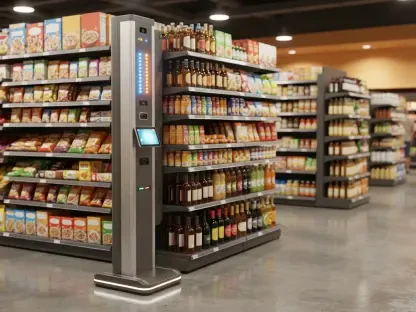

The traditional retail model has long suffered from a persistent information gap that separates the initial moment a customer crosses the physical threshold from the final digital transaction recorded at the point-of-sale terminal. While e-commerce platforms have provided granular data on user journeys for years, physical storefronts remained relatively opaque, relying on manual counts or anecdotal evidence to understand visitor intent. However, the current integration of high-resolution computer vision and edge computing has fundamentally changed this landscape by allowing retailers to see beyond simple sales totals. By capturing every movement from the entrance to the checkout line, businesses can finally map the entire customer experience in real time, transforming the floor from a passive space into an active data source. This shift represents a move toward radical transparency where store owners no longer have to guess why a shopper left without purchasing, as the technology provides the specific behavioral evidence needed to diagnose operational friction points.
The Evolution of Retail Metrics
Overcoming the Limitations of Sales Figures and Legacy Sensors
Relying exclusively on sales volume as a primary performance indicator has historically led many managers to misinterpret why their retail locations were underperforming or succeeding in specific markets. When revenue dipped, the immediate assumption was often a failure of the sales staff or a lack of appealing inventory, yet the underlying cause frequently resided in a “top-of-funnel” deficiency that had nothing to do with internal operations. By tracking foot traffic independently of transaction counts, modern analytics platforms allow management to distinguish between a failure to attract visitors to the store and a failure to convert those visitors once they are inside the building. This distinction is vital for strategic planning, as a store with high traffic but low conversion requires different interventions than a location that simply lacks sufficient visitor volume to meet its targets. This data-centric approach ensures that marketing efforts and operational adjustments are based on empirical reality.
Filtering the Noise: The Superiority of AI Over Legacy Hardware
The push for higher accuracy has simultaneously exposed the significant technical shortcomings of legacy sensing hardware, such as basic infrared beam sensors and ultrasonic counters that dominated the industry for years. These older systems frequently struggled with “data noise” because they were unable to differentiate between a high-value customer, a delivery person, or an employee stepping outside for a brief break. With error rates often exceeding twenty percent in high-traffic environments, these sensors provided an unreliable foundation for high-stakes business decisions, leading to staffing shortages or over-scheduling based on faulty information. The inherent limitations of hardware-only solutions have made it increasingly clear that the industry must prioritize software-driven logic to filter out non-shopper movements. Moving toward artificial intelligence allows for a more nuanced understanding of spatial dynamics, where the system can identify groups as single purchasing units and exclude staff from the total count.
The Software-Driven Revolution
Gaining Precision Through Advanced Logic and Mapping
To overcome the inaccuracies of mechanical counting, modern retail platforms have adopted sophisticated computer vision algorithms that apply custom logic to every individual movement detected within the store. These systems utilize unique visitor tagging to ensure that a shopper moving between different zones or departing and returning within a specific window is not counted as multiple separate entries. This level of precision creates a single, reliable source of truth that allows managers to calculate the true capture rate of their storefronts with unprecedented confidence. By filtering out the repetitive movements of on-site staff, the analytics engine provides a purified data set that reflects actual consumer interest rather than environmental clutter. This transition from simple motion detection to intelligent behavioral analysis has set a new standard for operational integrity, ensuring that executive teams are making decisions based on the most accurate representations of visitor flow available in the current market.
Operational Optimization: Aligning Staffing and Floor Plans With Data
This granular precision enables retail managers to conduct deep behavioral mapping that goes far beyond simple headcounts to analyze how customers interact with specific product displays and floor layouts. By segmenting foot traffic by the hour, day, or season, organizations can align their staffing levels with actual visitor surges, ensuring that customer service remains high during peak periods without wasting resources during lulls. Furthermore, understanding precise movement patterns helps managers identify “dead zones” within the store and refine layouts to place high-margin products in areas that naturally receive the most engagement. This data-driven spatial optimization allows every square foot of the building to be evaluated for its contribution to the overall business goals, effectively turning the physical store into an A/B testing environment. Consequently, the ability to track dwell time and pathing has become a cornerstone of modern merchandising strategies, leading to higher conversion rates and increased average transaction values.
Strategic Implementation and Scaling
Cross-Industry Utility and Practical Case Studies
While traditional retail was the primary driver of this technological development, the utility of AI-powered spatial analytics has rapidly expanded into diverse sectors such as museums, galleries, and large-scale commercial offices. In these environments, the goal shifted toward measuring how physical space was actually utilized to optimize exhibition schedules or manage the occupancy of elevators and common areas. In massive shopping centers and mixed-use developments, these analytics were even utilized to determine rental values by providing empirical evidence of a specific location’s worth based on its proven traffic flow and visitor engagement levels. This cross-industry adoption highlighted the universal need for objective data regarding human movement, as landlords and facility managers sought to maximize the efficiency of their real estate assets. By providing a clear picture of how people moved through large-scale facilities, these systems allowed for more informed decisions regarding safety protocols, lighting, and HVAC usage based on real-time occupancy levels.
Data Integration: The Impact of Unified Behavioral Monitoring
Success stories from European supermarket chains demonstrated the power of linking AI sensors directly to point-of-sale systems to create a unified view of the entire commercial operation. By using cloud-based platforms to synchronize visitor flow with transaction records in the 2026 to 2028 period, these organizations established live dashboards that provided immediate visibility into real-time conversion rates across hundreds of locations. Retailers that adopted these systems discovered that the synergy between foot traffic and sales data provided an unprecedented level of operational clarity. These enterprises moved away from reactive management styles and instead prioritized the visitor experience at every touchpoint. The most effective strategy involved the implementation of privacy-compliant data governance that protected shopper anonymity while extracting actionable insights. Managers were encouraged to audit their existing infrastructure and prioritize the transition to AI-driven software to ensure their physical locations remained competitive.