
The relentless convergence of consumer expectations and technological innovation has fundamentally altered the way commerce functions, turning every transaction into a data-rich touchpoint rather than a simple exchange of currency. Retailers are currently moving away from isolated card readers toward integrated payment ecosystems that handle everything from the initial swipe to backend inventory management. This evolution is driven by the need for extreme adaptability in a market where a few seconds of lag can result in a lost customer. Speed and reliability are no longer just technical metrics; they are the primary pillars of the modern consumer experience.
Modern retail environments require a seamless flow between the physical storefront and the digital backend. High uptime is the baseline requirement for any operator hoping to remain competitive, as even minor disruptions can lead to significant revenue leakage and long-term brand damage. The integration of payment processing with telemetry and automated reporting has turned the point of sale into a center of intelligence. This shift allows businesses to respond to trends in real time, adjusting their strategy based on hard data rather than intuition or outdated reports.
The market now encompasses a wide variety of segments, ranging from traditional small business storefronts to the rapidly expanding world of unattended retail. In this new landscape, the ability to manage diverse hardware across multiple locations through a single cloud interface is a game changer. Whether it is a boutique clothing store or a self-service micro-market in a corporate office, the underlying technology must be robust enough to handle high volumes while remaining flexible enough to adopt new payment methods as they emerge.
The Transformation of Transactions: Navigating the Modern Retail Payment Landscape
The transition from legacy hardware to integrated ecosystems marks a departure from the days when a merchant only worried about whether a card would swipe. Today, a payment terminal is just the visible tip of a massive iceberg of software that connects to inventory databases and customer loyalty programs. This interconnectedness ensures that every time a product is sold, the system automatically updates stock levels and prepares a restock alert if necessary. Consequently, the boundary between the “payment” and “management” of a business has virtually disappeared.
In the fast-paced retail sector, adaptability is the currency of survival. Consumers expect a variety of payment options, from biometric authentication to traditional credit cards, and they expect them to work instantly. When a system provides high uptime and rapid processing, it creates a silent but powerful sense of satisfaction that encourages repeat visits. In contrast, businesses that cling to fragmented, older systems often find themselves bogged down by manual reconciliations and technical glitches that frustrate both staff and patrons.
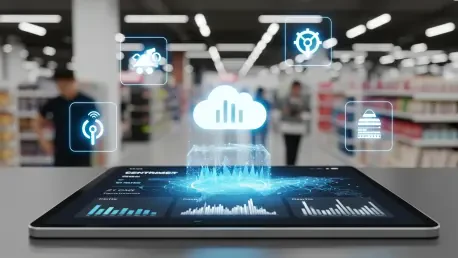
Furthermore, the convergence of telemetry with automated reporting has redefined what it means to be an efficient operator. By leveraging real-time data, business owners can see exactly what is happening across their entire fleet of machines or storefronts from any location. This high-level visibility allows for proactive maintenance and smarter inventory allocation, ensuring that high-demand items are always available. The result is a more streamlined operation that maximizes every square foot of retail space.
Industry Momentum: Emerging Trends and Market Projections
Pivotal Shifts in Consumer Behavior and Payment Technology
The rise of the unattended retail economy has been one of the most significant shifts in the landscape over the last few years. Vending machines, micro-markets, and self-service kiosks have moved from being niche conveniences to mainstream retail solutions. This trend is driven by a consumer base that prioritizes speed and autonomy, preferring to interact with a screen rather than wait in a line. As a result, the technology supporting these unattended environments has become increasingly sophisticated, incorporating advanced sensors and intuitive user interfaces.
Society is also moving rapidly toward a completely cashless and contactless existence. Mobile wallets and tap-to-pay functionality are no longer luxury features; they are the universal standard for almost every demographic. This shift reduces the friction of physical cash handling and speeds up the checkout process significantly. For the operator, this means less time spent on manual counting and more time focusing on scaling the business and improving product offerings.
Leveraging operational intelligence has become the primary method for reducing manual labor and optimizing the supply chain. Modern systems provide real-time telemetry that tells an operator exactly when a machine needs restocking or if a specific component is starting to fail. This move toward “full-stack” solutions, where the hardware and the cloud-based software are inextricably linked, ensures that the physical and digital aspects of the business are always in sync. This synergy allows for a level of operational efficiency that was previously impossible to achieve.
Market Growth and the Economic Outlook for Integrated Payments
Current growth projections for self-service retail and automated checkout environments suggest a robust expansion through 2028. The economic appeal of these systems lies in their ability to operate twenty-four hours a day without the overhead of a large workforce. Investors and retail operators are increasingly looking at these automated environments as the future of high-margin retail. As the technology becomes more affordable and easier to deploy, we are seeing a proliferation of smart kiosks in places where traditional retail was never viable.
Performance indicators consistently show that integrated platforms drive higher average basket sizes and foster repeat customer loyalty. When a payment system is linked to a loyalty program, it can offer personalized discounts or rewards at the exact moment of purchase. This immediate gratification encourages consumers to add more items to their carts and return to the same brand in the future. Moreover, the data collected from these transactions allows businesses to refine their marketing strategies with surgical precision.
The global expansion of digital payment infrastructure is also paving the way for cross-border retail opportunities. Modern providers are making it easier for businesses to accept multiple currencies and local payment methods, removing the barriers to entry in international markets. This expansion is supported by a growing network of secure, high-speed data connections that ensure a transaction in one part of the world can be processed and verified in milliseconds by a server on the other side of the globe.
Navigating Complexity: Operational and Technological Challenges
Despite the benefits, navigating the complexity of modern retail payments involves significant hurdles, most notably the risk of system downtime. When a payment gateway goes offline, the financial impact is immediate and often catastrophic for high-volume retailers. Beyond the lost sales, there is a lingering effect on consumer trust; a customer who experiences a failed transaction is significantly less likely to return. Therefore, operators must prioritize platforms that offer redundancy and reliable technical support.
Hardware fragmentation remains another major obstacle for businesses trying to scale their operations. Using a mix of different card readers and kiosks from various manufacturers often leads to a “Frankenstein” system that is difficult to manage and prone to errors. Adopting a unified payment interface that works across all devices is the only way to ensure a consistent experience for both the customer and the management team. This unification simplifies training for staff and makes it much easier to roll out updates across the entire organization.
Scaling operations across multiple regions or thousands of locations requires a strategy that does not linearly increase management complexity. Without a centralized dashboard, keeping track of inventory and sales performance becomes a logistical nightmare as the business grows. The challenge lies in finding a balance between a user-friendly interface for the customer and a highly technical backend that can synchronize massive amounts of data in real time. Successful leaders in this space are those who can hide the complexity of the technology behind a simple and elegant user experience.
Trust and Compliance: The Regulatory and Security Framework
Maintaining PCI compliance and utilizing secure encryption are non-negotiable requirements in the modern era of data breaches. Protecting sensitive consumer data is not just about following the law; it is about protecting the very foundation of the business. Secure systems use advanced tokenization to ensure that even if a transaction is intercepted, the actual payment details remain unreadable to unauthorized parties. This layer of security is essential for maintaining a positive reputation in an increasingly skeptical market.
Navigating the evolving landscape of global payment standards requires a partner that stays ahead of regulatory changes. As governments introduce new rules regarding data privacy and digital transactions, businesses must be able to update their systems quickly to remain compliant. Multi-currency support adds another layer of regulatory complexity, as different regions have different requirements for tax reporting and transaction verification. A robust payment platform handles these details automatically, allowing the business owner to focus on growth.
Secure cloud dashboards play a vital role in monitoring machine health and preventing fraudulent activity. By analyzing patterns in transaction data, these systems can flag suspicious behavior before it results in a significant loss. Additionally, they provide a secure environment for monitoring the physical health of hardware, such as detecting if a card reader has been tampered with. These rigorous security measures do more than just protect the bottom line; they enhance consumer trust, which is the most valuable asset in frictionless retail.
The Horizon of Retail: Innovation and Future Disruption
The move toward frictionless smart stores represents the next major leap in the automation of the shopping experience. These environments use a combination of computer vision, sensors, and AI to allow customers to walk in, grab what they need, and walk out without ever standing in a checkout line. This level of total automation removes the final barriers to a truly seamless shopping trip. While the technology is currently being perfected in high-traffic urban areas, its expansion into broader retail sectors is inevitable.
Emerging technologies like AI-driven predictive analytics are set to revolutionize inventory and sales forecasting. Instead of reacting to past sales data, these systems will be able to predict future demand based on weather patterns, local events, and historical trends. This allows operators to optimize their stock levels before a surge in demand even happens, ensuring they never miss a sale due to an empty shelf. The integration of these analytics directly into the payment platform makes the entire supply chain more responsive and efficient.
We are also seeing the expansion of retail payment technology into entirely new sectors, such as electric vehicle charging and institutional micro-markets. As EV adoption grows, the need for reliable, easy-to-use payment systems at charging stations becomes paramount. Similarly, hospitals and universities are replacing traditional cafeterias with automated micro-markets that offer a wider variety of healthy food options around the clock. These new environments require the same level of security and reliability as traditional retail but with unique physical constraints.
Strategic Perspectives: Summarizing the Future of Retail Leadership
Identifying the right technological partner has become the most critical decision for any retail operator looking to thrive. Niche leaders like Nayax and Cantaloupe have carved out a significant presence by focusing on the specific needs of the unattended retail and vending sectors, offering deep telemetry that general providers often lack. On the other hand, omnichannel giants like Square provide a massive ecosystem that is perfect for businesses needing to bridge the gap between physical storefronts and digital marketplaces. Each of these leaders has redefined what is possible by prioritizing different aspects of the transaction lifecycle.
Sophisticated payment systems were ultimately recognized as a fundamental requirement for business viability rather than a optional luxury. The data showed that businesses investing in scalability and high-level data intelligence were far better equipped to handle economic shifts and changing consumer habits. The transition to integrated platforms allowed operators to move away from mundane administrative tasks and focus on customer-centric innovation. This shift in focus was the primary driver behind the success of the most prominent retail brands in the current market.
Retail operators were advised to prioritize systems that offered a clear path for expansion and a high degree of interoperability. Investing in the right infrastructure today meant that a business could easily adopt the technologies of tomorrow without needing a complete overhaul. The focus remained on creating a frictionless environment that valued the customer’s time as much as their money. By embracing these advanced tools, the industry leaders of the current era proved that the future of retail belongs to those who can turn a simple transaction into a meaningful and efficient experience.