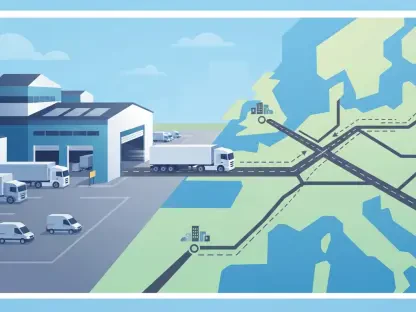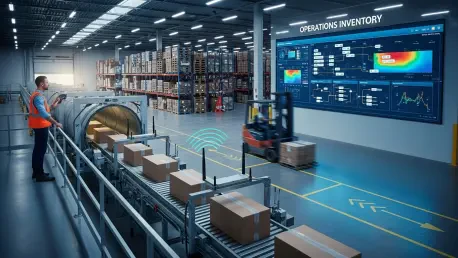

Shoppers clicked buy with confidence only when a product’s online promise matched the shelf, the stockroom, and the DC in real time, and that simple expectation turned inventory accuracy from a back-office chore into a front-line determinant of loyalty and growth.
Retail’s Shift to Unified Commerce and Item-Level Visibility
Unified commerce compresses channels into a single experience, and its linchpin is one trustworthy inventory view. When the cart, the counter, and the contact center refer to the same item-level truth, retailers unlock dependable BOPIS, ship-from-store, and rapid returns—services that hinge on location-level accuracy, not averages.
Value emerges at every step from source to store. Item-level signals inform vendor allocations, DC wave planning, store replenishment, and last-mile promise dates. RFID remains the most scalable capture method, complemented by computer vision, IoT readers, and edge filtering that feed cloud platforms via open APIs. Around this stack sit ecosystems led by Nedap, Avery Dennison, Zebra, Impinj, and SML for tagging and hardware, while Blue Yonder and Manhattan translate data into planning and fulfillment actions. For VF’s multi-brand footprint across regions, the mandate is clear: synchronize availability everywhere.
Standards reduce friction as scale rises. GS1 EPC identifiers—primarily SGTIN—and Serialized Shipping Container Codes tie items to cases and pallets, while EPCIS event sharing carries the provenance. Interoperability depends on adhering to these norms so handhelds, tunnels, portals, and overhead readers can speak the same language into OMS, ERP, WMS, POS, ecommerce, and vendor portals.
Momentum Behind RFID-Driven Inventory Intelligence
Converging Trends: Consumer Expectations, Omnichannel Services, and Data-First Operations
Consumers punished out-of-stocks and abandoned carts when promises slipped, especially for BOPIS and same-day windows. Retail teams, in turn, demanded real-time visibility that pinned each SKU to a location with confidence, closing the gap between theoretical and sellable stock.
As RFID moved beyond stores into DCs and supplier networks, traceability created both speed and protection. Early reads at factory and inbound points smoothed allocations; serialized identity deterred gray-market diversion. Platform decisions increasingly hinged on scalability, global support, and retailer communities that de-risked rollouts. VF’s reassessment reflected this pragmatism: after piloting a different approach, the company selected Nedap for its architecture, rollout pedigree, and active user base.
The business case also ran through brand protection. Serialization enabled warranty checks, return authentication, and targeted recalls. For VF’s portfolio—The North Face, Vans, Timberland, and others—unified signals promised fewer surprises, faster turns, and cleaner governance across channels that served different demand patterns.
Market Signals and Forward View: Adoption Rates, Performance Metrics, and Growth Projections
Benchmarks showed item-level accuracy rising from typical sub-70 percent baselines to 95 percent-plus, while cycle-count time dropped by multiples when RFID replaced manual scans. The knock-on effects touched core KPIs: higher sell-through, lower stockouts, faster inventory turns, more accurate fulfillment promises, and shrink reduction through better exception detection.
Market sizing pointed to sustained growth for item-level RFID in retail, with platforms absorbing more events and integrating predictive logic. Scenarios varied: store-only deployments captured quick wins, but end-to-end programs that spanned DCs and vendors amplified returns through earlier signal capture. VF anchored the timeline with The North Face beginning in Q2 2026, setting a template for phased brand expansion once KPIs validated.
Performance management framed the rollout. Control groups, A/B store clusters, and DC pilots established causality, while API-first integrations funneled clean events into planning and order management. The reward was a credible, latency-aware availability service that commerce teams could trust at the moment of promise.
Execution Hurdles on the Path to a Single Source of Truth
Data quality sat at the center. Reads from handhelds, portals, tunnels, and overhead arrays needed normalization to one item identity and one business truth despite different noise profiles. Edge filtering, confidence scoring, and event reconciliation protected this foundation.
Integration complexity followed. OMS, ERP, WMS, POS, ecommerce platforms, and vendor portals each required real-time hooks and business rules that reconciled sellable stock with safety buffers, reservations, and returns. Change management matched the technical lift: store teams reset counting rhythms, DCs embedded read points into waves, and vendors onboarded source tagging and QA.
Operational edge cases tested resilience. Mixed-SKU cases, damages, returns without tags, and timing conflicts between reads and transactions created exceptions that demanded playbooks. Network readiness and reader density shaped latency and coverage; global scale added governance, localization, and follow-the-sun support. Phased rollouts with clear playbooks and iterative tuning proved the safest path.
Compliance, Standards, and Security Guardrails for RFID at Scale
RF spectrum rules varied by region, with FCC and ETSI frameworks setting the guardrails for reader power, channels, and duty cycles. Planning across countries required careful site surveys and configuration management to stay compliant without sacrificing performance.
Data stewardship mattered as much as RF compliance. Systems separated PII from operational events, applied tokenization where consumer data intersected with serialized items, and enforced access control rooted in least privilege. Secure tag encoding, anti-tamper features, and authentication closed gaps that could be exploited for counterfeiting or theft.
Global standards kept the ecosystem coherent. GS1 EPC and SGTIN formed the identity backbone; SSCC bridged logistics; EPCIS structured event sharing across partners. Supplier compliance—ticketing specifications, source tagging mandates, and QA sampling—ensured items arrived readable, accurate, and audit-ready. Loss prevention teams leveraged chain-of-custody histories and exception reporting to detect fraud.
Where Unified Inventory Is Headed Next
Upstream expansion promised earlier certainty. Factory-level serialization and advance reads supported pre-allocations driven by live demand signals, allowing planners to shift units before they became problems. As data density grew, AI sharpened replenishment, allocation, and promise-date optimization by learning from read patterns and exception histories.
Blending data sources created redundancy and richer truth. RFID paired with computer vision and handheld scanning improved coverage in dense environments and validated anomalies. Stores evolved into micro-fulfillment nodes and, in some zones, dark-store operations with labor-light inventory processes. Serialization extended brand protection through warranty validation, anti-diversion analytics, and faster, more surgical recalls.
Macro pressures kept urgency high. Supply chain variability, sustainability reporting, and cost-to-serve scrutiny rewarded precise, low-latency signals. For VF, shared services, cross-brand playbooks, and continuous improvement loops positioned the enterprise to compound gains as each brand entered the platform.
Strategic Takeaways and Recommendations
Unified inventory served as the operating system for omnichannel reliability and DTC expansion. The first priority was establishing a single source of truth, codified through GS1 standards and enforced via source tagging. The roadmap began with The North Face in Q2 2026, validated KPIs in control cohorts, then progressed brand by brand as integrations matured and playbooks hardened.
An operating model built around a center of excellence, vendor enablement, and redesigned store/DC processes concentrated expertise while scaling repeatability. Investment flowed to reader infrastructure, API-first integration layers, and security-by-design from tag to cloud. Success metrics stayed plain: sustained 95 percent-plus item accuracy, double-digit out-of-stock reduction, reliable BOPIS fulfillment rates, measurable shrink improvement, and better sell-through.
Taken together, these choices had positioned VF to convert item-level data into dependable promises, accelerate turns while protecting brands, and extend control upstream without adding friction; the path forward emphasized disciplined scaling, richer signal fusion, and governance that kept the single source of truth intact as the network evolved.