
Walking through a modern supermarket today often feels less like a traditional service experience and more like an informal internship in barcode logistics and inventory management. The retail self-checkout system represents a significant advancement in the modern retail sector, evolving from a niche convenience into a ubiquitous operational standard. This review explores the technological trajectory of these systems, evaluating how they balance the demands of automation with the inherent unpredictability of the human consumer. In the current landscape of 2026, these kiosks serve as the primary interface between physical goods and digital financial systems, acting as a critical bridge toward a future of entirely frictionless commerce. The purpose of this analysis is to provide a thorough understanding of current capabilities while examining the performance metrics that separate high-utility systems from those that merely add to the technical debt of a retail environment.
The Evolution of Self-Service Retail Technology
Self-checkout technology emerged as a response to the retail industry’s urgent need for operational efficiency and more strategic labor cost management. The core principles of the technology rely on a combination of consumer empowerment and automated verification. In the early stages of implementation, the focus remained narrow, primarily aiming to reduce the number of staffed lanes during off-peak hours. However, as the digital age progressed, the systems became more integrated, linking directly with complex inventory databases and real-time payment gateways.
In the broader technological landscape, the shift toward self-service reflects a changing social contract between the retailer and the shopper. By delegating the labor of scanning and bagging to the customer, retailers have transformed the checkout process into a self-directed digital transaction. This evolution has moved beyond simple kiosks to include sophisticated ecosystems that synchronize with mobile applications and cloud-based loyalty profiles. This transition suggests that the physical act of buying is increasingly being treated as a data-entry task that the consumer is expected to perform with high accuracy.
Core Components and Performance Metrics
Scanning and Interface Reliability: The User Front End
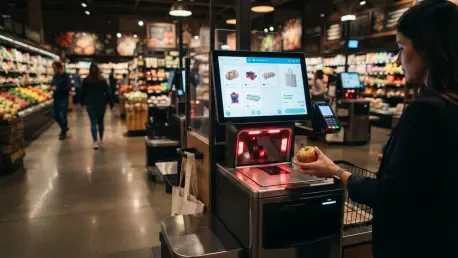
The primary user interface of a self-checkout kiosk relies on high-speed laser scanners and intuitive touchscreens that guide the user through the transaction flow. Performance in this area is measured by the “first-pass” success rate, which refers to the ability of the system to identify an item immediately upon its first presentation to the scanner. High-quality systems utilize multi-angled scanning arrays that can read barcodes even when they are crumpled or partially obscured. This reliability is vital because any lag in software or failure in identification creates an immediate psychological barrier for the shopper, leading to perceived inefficiency.
Furthermore, the design of the touchscreen interface plays a decisive role in reducing cognitive load. Effective systems prioritize clean navigation and clear visual prompts, particularly when the user must search for non-barcoded items such as loose produce or bakery goods. The effectiveness of this component is ultimately judged by the frequency of human intervention; a system that requires a staff member to clear an error every three transactions is fundamentally failing its primary mission of automation.
The Weighing and Security Matrix: Balancing Loss and Flow
A critical functional element is the bagging area scale, a high-precision load cell designed to verify that the weight of the scanned item matches the pre-recorded weight in the master database. While intended to prevent shrinkage and inventory loss, this component is often the most significant source of operational friction. The sensitivity settings of these scales must be perfectly calibrated to allow for the weight of various bagging materials while detecting unauthorized additions. When these settings are too rigid, the shopper is met with the frustrating “unexpected bagging area” alert, which halts the entire process.
The significance of this security matrix lies in its dual role as a loss-prevention tool and a potential bottleneck. Retailers must decide whether to prioritize absolute security or a smooth user experience. Modern systems are increasingly utilizing artificial intelligence to learn the typical weight variances of items, reducing the number of false alerts. However, the balance remains precarious, as a system that is too lenient risks significant financial loss, while one that is too strict alienates the customer base.
Emerging Trends and Industry Shifts
Current developments are shifting away from pure automation toward utility technology that prioritizes long-term reliability over short-term novelty. There is a growing trend toward assisted self-checkout, where the physical layout is designed to allow staff to provide proactive help rather than reacting to blinking error lights. This shift acknowledges that technology cannot entirely replace the nuance of human service, especially in complex retail environments. Retailers are now evaluating their investments based on a net efficiency gain framework, which looks at the total health of store operations rather than just a reduction in cashier hours.
Moreover, the industry behavior is moving toward a more holistic view of the customer journey. This means that the self-checkout kiosk is no longer viewed as an isolated island but as part of a larger digital strategy that includes scan-and-go mobile technology and predictive inventory management. The goal is to create a seamless transition from the aisle to the exit, where the kiosk serves as a fast-track option rather than a mandatory obstacle. This shift toward functional utility suggests that the most successful systems are those that fade into the background of the shopping experience.
Real-World Market Applications
High-Integration Environments in the UAE and Saudi Arabia
In the Middle East, particularly the UAE and Saudi Arabia, self-checkout systems are being deployed as part of a premium digital ecosystem that caters to a highly connected demographic. These implementations focus on a high degree of integration with mobile loyalty programs and instant promotion redemption at the point of sale. In these markets, the technology is often a lifestyle statement as much as a tool for efficiency. The kiosks are designed with high-end aesthetic finishes and advanced biometric payment options, reflecting the region’s push toward a fully modernized, tech-driven economy.
These notable use cases demonstrate how the technology must be adapted to cater to shoppers who expect the kiosk to function as a sophisticated extension of their digital identities. In these regions, if a system requires a separate step to apply a digital coupon or fails to recognize a loyalty QR code, it is viewed as an outdated implementation. Consequently, retailers in the UAE and Saudi Arabia are leading the way in testing the limits of how much data can be synchronized in the few seconds it takes to scan a basket of goods.
Pragmatic Throughput Models in South Africa
In contrast, the South African retail sector applies self-checkout technology with a heavy focus on practical throughput and robust loss prevention. Due to unique local labor dynamics and heightened security requirements, implementations often lean toward hybrid models where the kiosks are overseen by dedicated security personnel. These systems are optimized for high-volume environments where the speed of the transaction is secondary to the accuracy of the inventory count. The focus here is on durability and the prevention of both accidental and intentional scanning errors.
The South African model highlights the importance of economic and social context in technology deployment. Retailers have found that a fully unattended model is often less effective than one that incorporates a layer of human oversight. This pragmatic approach ensures that the technology remains a viable tool for managing large crowds without compromising the financial security of the store. It serves as a reminder that the global retail landscape is not a monolith and that automation must be tailored to local realities to remain effective.
Operational Challenges and Limitations
The most significant hurdle remains the paradox of friction, where the effort of the checkout process is transferred from the employee to the customer, often leading to a sense of frustration. Technical hurdles such as the inability to process non-barcoded produce or the complexity of age verification for restricted items continue to impede widespread satisfaction. Despite years of refinement, the user experience still relies on the customer acting with the precision of a trained cashier, which is a problematic assumption in a high-stress retail environment.
Additionally, retailers face the massive challenge of shrinkage, which refers to the loss of inventory through theft or error. Studies have shown that inventory loss can increase by as much as 22% following the implementation of self-service lanes. This loss occurs through a variety of methods, from the “banana trick”—where expensive items are weighed as cheaper produce—to simple non-scanning errors by distracted shoppers. The high cost of mitigating these losses, through either advanced AI cameras or increased security staffing, often eats into the very labor savings the technology was supposed to provide.
Future Horizons of Autonomous Retail
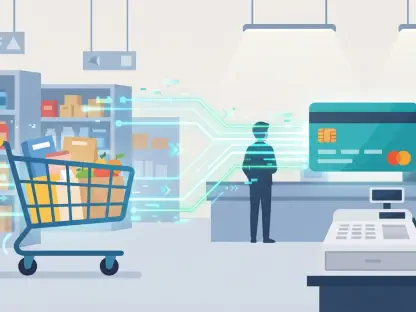
The technology is steadily moving toward a post-barcode era, with Radio Frequency Identification and computer vision leading the way toward a more fluid experience. These breakthroughs allow for the simultaneous identification of multiple items without the need for individual scanning, potentially eliminating the stop-start nature of current kiosks. Long-term, the industry is heading toward just-walk-out environments, though the high cost of the necessary infrastructure currently limits these to specific high-margin product categories. As the cost of these sensors and processors decreases, we can expect to see them integrated into standard grocery formats over the period from 2026 to 2029.
Computer vision, in particular, offers a promising solution to the produce identification problem. By using overhead cameras to recognize the shape and color of items placed on the scale, the system can automatically suggest the correct item, removing the need for the customer to navigate complex menus. While these technologies are still being perfected, they represent the next logical step in removing the friction that currently plagues the self-checkout experience. The ultimate goal is a retail environment where the transaction is a background process that requires zero active input from the consumer.
Final Assessment of Self-Checkout Systems
The investigation into self-checkout technology revealed a landscape defined by a delicate balance between machine efficiency and human behavior. Retailers discovered that while the hardware was capable of high speeds, the true bottleneck remained the interface between the digital system and the untrained user. The most successful implementations were those that moved away from the pursuit of total automation in favor of a hybrid approach that valued reliability and staff accessibility. These systems proved that technology is most effective when it serves as a tool for convenience rather than a barrier to completion.
Ultimately, the global retail industry acknowledged that the success of self-checkout was not measured by the number of machines installed, but by the reduction in total transaction friction. Decisions were made to prioritize utility technology that offered a net efficiency gain across the entire store ecosystem. Moving forward, retailers should focus on integrating artificial intelligence to handle the nuances of produce identification and age verification, which previously required constant human intervention. By refining these pain points and adopting a context-specific strategy, the industry ensured that self-service remained a sustainable and valued part of the modern shopping journey.