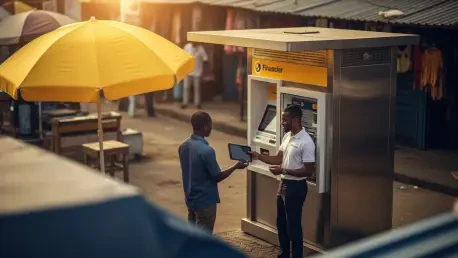

The vibrant street corners of Lagos and Abuja have undergone a profound transformation as the once-ubiquitous sight of independent Point of Sale operators under bright umbrellas faces the harsh reality of a saturated and increasingly digital financial ecosystem. For nearly a decade, these agents served as the vital connective tissue between the formal banking sector and the vast informal economy, bridging a gap that traditional brick-and-mortar institutions could not fill. These “human ATMs” provided essential cash-out services in areas where banking infrastructure was nonexistent or unreliable. However, the current landscape features over 1.5 million registered agents, a density that has surpassed the combined total of the rest of West Africa. This overwhelming surge in participation has commoditized a service that once offered high premiums, leading to a situation where operators in urban clusters are fighting over a shrinking pool of customers. As transaction volumes per terminal drop, the viability of the standalone kiosk is being questioned.
Regulatory Realities: Navigating the Complexities of Compliance and Security
Maintaining a profitable enterprise has become a logistical nightmare due to the phenomenon known as “float fatigue,” where agents spend a disproportionate amount of their working hours attempting to secure physical cash. In many urban centers, operators are forced to stand in long bank queues for hours or pay high premiums to black-market cash vendors just to have enough liquidity for daily transactions. This operational strain is exacerbated by frequent telecommunication outages and network failures that prevent transactions from being processed in a timely manner. Furthermore, the rising incidence of theft and targeted attacks on small kiosks has introduced significant security costs that many small-scale entrepreneurs cannot afford. Many agents have been forced to invest in reinforced steel grilles or hire private security, which further erodes their already thin profit margins. These challenges represent a shift from the early days of the industry when the primary barrier to entry was simply owning a terminal.
The regulatory environment has also tightened significantly as the Central Bank of Nigeria seeks to formalize the sector and curb rising cases of financial fraud. New mandates require all independent agents to register with the Corporate Affairs Commission and maintain a fixed physical location, effectively ending the era of the nomadic street-side operator. These rules aim to create a traceable trail for every transaction, but they also impose bureaucratic hurdles and registration costs that hit the smallest operators the hardest. Additionally, strict enforcement regarding the use of multiple terminals from different providers has limited the ability of agents to bypass network downtimes, which was a common survival tactic in the past. While these policies are designed to professionalize the industry and build consumer trust, they have stripped away the flexibility that allowed the sector to grow so rapidly. For many, the cost of compliance is beginning to outweigh the benefits of staying in the business under the current model.
Strategic Adaptation: Implementing Pivots for Long-Term Sustainability
The technological landscape shifted away from physical hardware toward software-driven solutions that threatened to make the standard plastic terminal a relic of the past. The emergence of SoftPOS and Near-Field Communication technology allowed merchants to transform any mid-range smartphone into a functional payment terminal without the need for expensive leases or hardware maintenance. This shift was particularly evident among small business owners, such as grocery store operators and transport drivers, who began accepting direct digital payments rather than requiring customers to visit a cash agent first. As consumers became more comfortable with mobile banking apps and peer-to-peer transfers, the demand for physical cash steadily declined in metropolitan areas. This trend suggested that the role of the “cash-out” middleman was becoming redundant as the economy moved closer to a truly cashless state. Reliance on a single-purpose device was no longer a sustainable strategy for those looking to remain competitive.
Successful operators recognized that survival required a fundamental shift in business strategy, moving from simple cash dispensing to providing a broader range of financial services. They reinvented themselves as “super-agents” or digital micro-branches that leveraged their presence in the community to offer high-value products like micro-insurance, small-scale credit, and structured savings plans. By acting as comprehensive financial hubs, these entrepreneurs generated revenue through diversified streams rather than relying solely on tiny commissions earned from withdrawals. This transition required a higher level of financial literacy and a commitment to customer education, as agents helped their clients navigate more complex digital tools. Those who embraced this multifaceted approach found themselves better positioned to withstand the pressures of market saturation and technological disruption. They demonstrated that the key to longevity was the ability to provide expert guidance and a diverse suite of digital tools rather than just cash.