
The traditional boundary between a physical storefront and a digital interface has dissolved into a single, fluid experience where the consumer’s intent is met with immediate, automated fulfillment. Modern retail technology represents a significant advancement in the global commerce sector, moving beyond simple electronic transactions to a sophisticated integration of hardware and software. This review explores the evolution of the technology, its key features, performance metrics, and the impact it has had on various applications. The purpose of this review is to provide a thorough understanding of the technology, its current capabilities, and its potential future development. By examining the shift from legacy systems to intelligence-driven platforms, this analysis highlights how the industry is navigating the transition from a labor-dependent model to one defined by autonomous efficiency and data-centric personalization.
The current state of retail technology is characterized by its ability to synthesize massive datasets into actionable consumer insights while simultaneously automating the physical logistics of the shopping experience. This evolution is not merely about adding a digital layer to an existing business but involves a fundamental reimagining of what a “store” is meant to accomplish. The focus has shifted from mere product availability to a hyper-personalized journey that prioritizes convenience and speed. As commerce becomes more decentralized, the role of technology as a unifying force has become indispensable, ensuring that brand identity and service quality remain consistent whether a transaction occurs on a mobile app, through a generative AI assistant, or inside a fully autonomous brick-and-mortar location.
The Digital Transformation of the Retail Landscape
The transition toward a digital-first retail environment is driven by the core principles of automation, artificial intelligence, and data-centricity. At the heart of this shift is the recognition that modern consumers no longer distinguish between online and offline shopping; they simply expect a seamless path to purchase. Automation serves as the backbone of this transformation, handling everything from inventory replenishment to checkout-free payment systems. Artificial intelligence acts as the brain, processing real-time signals to predict demand and personalize offers. Data-centricity ensures that every interaction is measured, providing a feedback loop that allows retailers to refine their operations with surgical precision. This context of shifting consumer expectations has forced traditional retailers to adopt a “tech-first” mentality, where software development is as critical as merchandising.
Furthermore, this digital transformation acts as a vital bridge between traditional brick-and-mortar experiences and the high-efficiency world of e-commerce. Historically, physical stores struggled to match the data-rich environments of websites, often operating in a “black box” where customer behavior was difficult to track until the moment of sale. Modern retail technology addresses this disparity by deploying Internet of Things (IoT) sensors, computer vision, and mobile integration to bring e-commerce-style analytics into the physical aisle. This allows retailers to understand dwell times, product engagement, and path-to-purchase metrics in real-time. Consequently, the physical store is evolving into a high-performance showroom and a local fulfillment hub, blending the sensory benefits of in-person shopping with the algorithmic efficiency of the digital world.
The relevance of this technology in the broader technological landscape cannot be overstated. It represents the practical application of edge computing and machine learning at a massive scale. As retailers move away from centralized, monolithic software architectures, they are adopting microservices and cloud-native platforms that allow for rapid iteration and deployment. This agility is necessary to keep pace with a market where competitors can launch new services in weeks rather than years. The broader impact is a retail ecosystem that is more resilient to labor fluctuations and supply chain disruptions, as technology provides the visibility and flexibility needed to navigate a volatile global economy.
Fundamental Components of Next-Generation Retail Systems
Autonomous Operational Models and Self-Service Infrastructure
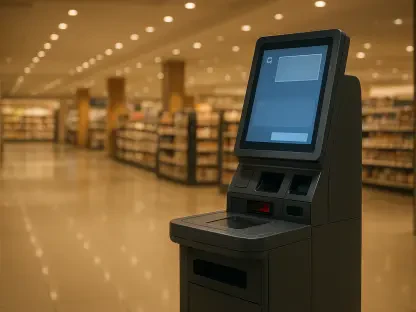
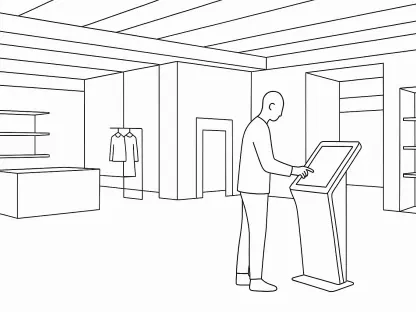
The emergence of staffless store environments is one of the most visible manifestations of modern retail technology, relying on a complex fusion of sensors, computer vision, and secure access systems. These stores utilize high-resolution cameras and weight-sensing shelves to track customer movement and product selection, essentially turning the entire facility into a giant point-of-sale system. This infrastructure allows for a “grab-and-go” experience where the transaction is completed automatically as the customer exits. The technical performance of these systems has improved dramatically, with low-latency processing ensuring that even high-traffic periods do not lead to errors in billing or inventory tracking.
These autonomous models are particularly significant in solving chronic labor shortages and the logistical challenges of maintaining traditional operating hours. By removing the requirement for constant human presence, retailers can keep locations open during non-traditional times, such as late nights or holidays, when staffing costs would otherwise be prohibitive. This hybrid operational model allows for a more flexible use of human capital, where employees are deployed for high-value tasks like customer service and restocking rather than repetitive cashiering. The significance of this shift lies in its ability to transform the economics of small-format urban stores, making it viable to provide 24/7 service in neighborhoods that were previously underserved.
AI-Driven Personalization and Generative Assistants
Generative AI and natural language processing are now functioning as virtual concierges, synthesizing vast amounts of product data to offer tailored recommendations that feel intuitive rather than algorithmic. Unlike older recommendation engines that relied on simple “if-this-then-that” logic, modern generative assistants can understand complex, conversational queries. A shopper can ask for a curated list of gifts for a specific occasion or request products that meet a highly detailed set of personal preferences. The AI processes these requests by scanning real-time inventory, customer reviews, and historical data to provide a response that mimics the expertise of a seasoned store associate.
The technical implementation of these assistants extends into mobile apps and livestream commerce, where they provide a real-time utility layer during shopping events. In the context of livestreaming, AI assistants can summarize viewer questions, provide instant product specifications, and facilitate checkout without disrupting the broadcast. This integration turns a passive viewing experience into a participatory commerce event. On mobile platforms, these assistants act as the primary interface for discovery, reducing the “decision fatigue” often associated with massive digital catalogs. By offering a conversational gateway to products, retailers are increasing conversion rates and building deeper brand loyalty through perceived personal service.
Advanced Retail Media and Unified Data Networks
Retail media platforms have evolved into a sophisticated advertising inventory that transforms loyalty data into measurable revenue. These networks leverage the first-party data collected through membership programs and transaction histories to allow brands to target consumers at the exact moment of purchase intent. The mechanics involve a multi-touch attribution model that tracks a customer’s journey from seeing a digital ad on a retailer’s app to interacting with a physical display and finally completing a purchase. This provides a level of measurement that was previously impossible, allowing advertisers to see the direct impact of their spend on actual sales rather than just “brand awareness.”
The streamlining of the brand-to-consumer connection through these unified data networks is a significant shift in how retail business models are structured. Retailers are no longer just sellers of goods; they are sophisticated data brokers and media owners. By creating a unified “intelligence layer” that connects online behavior with offline transactions, retailers can offer brands a holistic view of the consumer. This infrastructure reduces fragmentation, where data was once trapped in “silos” within different departments. The result is a more efficient marketing ecosystem where consumers receive more relevant advertisements and retailers unlock high-margin revenue streams that complement their traditional product sales.
Current Trends and Innovations in Consumer Engagement
One of the most prominent developments in the field is the rise of “agile retail” models, which prioritize the ability to pivot operations based on real-time data signals. This approach involves the use of modular store layouts and dynamic inventory management systems that can react to sudden shifts in consumer demand. For example, a store might reconfigure its front-of-house selection within hours based on trending social media topics or local weather changes. This level of agility is supported by digital twins—virtual replicas of the store environment—that allow managers to simulate different layouts and operational strategies before implementing them physically. This reduces the risk associated with changes and ensures that the retail space remains highly optimized.
Simultaneously, the integration of artificial intelligence into live shopping events has transformed how brands engage with audiences. Live commerce, which combines video broadcasting with real-time shopping capabilities, is no longer just about influencers talking to a camera. It now incorporates interactive AI elements that can answer technical questions, compare products side-by-side, and provide instant translations for a global audience. This trend reflects a shift toward “shoppertainment,” where the boundary between media consumption and commerce is non-existent. The goal is to capture the consumer’s attention in a crowded digital landscape and provide an immediate, frictionless path to purchase within the entertainment experience itself.
Furthermore, the evolution of delivery platforms into “lifestyle marketplaces” has accelerated the shift toward “quick commerce.” Modern delivery apps have expanded far beyond food, now offering everything from luxury skincare and office supplies to professional services. This trend is driven by the infrastructure of “dark stores”—fulfillment centers that are closed to the public and optimized solely for rapid picking and packing. As these delivery platforms integrate more deeply with a variety of retailers, they become the primary interface for local consumption. The consumer no longer shops at a specific store but rather “on the platform,” choosing items based on availability and delivery speed. This shift is forcing traditional retailers to rethink their logistics, often choosing to partner with these platforms to maintain their relevance in a convenience-driven market.
Practical Applications and Sector-Specific Implementations
Real-world applications of modern retail technology are already visible across various sectors, with grocery giants leading the way in adopting autonomous solutions. In many urban environments, large supermarket chains have implemented hybrid models that allow for autonomous Sunday or holiday hours. This allows them to comply with labor regulations or reduce costs during low-traffic periods while still serving the community. These stores utilize advanced access control systems, where customers gain entry via a mobile app or membership card, and the entire transaction is handled through automated checkout lanes. This implementation demonstrates how technology can bridge the gap between regulatory constraints and consumer demand for 24/7 access to essentials.
In the specialty retail sector, AI is being deployed for highly curated gifting and personal shopping experiences. High-end retailers are using generative assistants to help customers navigate complex product ranges, such as electronics or beauty supplies, where the average consumer might feel overwhelmed. For instance, a beauty retailer might use an AI tool that analyzes a customer’s skin type via a photo and then cross-references it with thousands of product reviews and clinical data to recommend a specific regimen. This level of personalization, once reserved for luxury boutiques with dedicated staff, is now being scaled through technology to a much wider audience, increasing the average order value and reducing product returns.
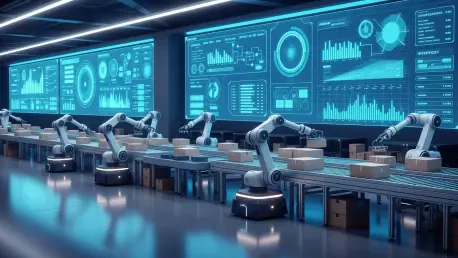
Unique use cases are also emerging in the backend of the retail supply chain, particularly in the realm of cold-storage robotics for meal-kit fulfillment. Managing temperature-sensitive goods requires a level of speed and precision that is difficult for human workers to maintain in chilled environments. Robotic systems designed for these conditions can navigate refrigerated warehouses with high efficiency, picking and packing orders with minimal human intervention. Additionally, the massive deployment of electronic shelf labels (ESLs) across thousands of stores has enabled retailers to manage pricing agility in volatile markets. These digital displays allow for instant price updates across an entire national network, ensuring that promotions are consistent and that retailers can respond to competitor pricing or inflationary pressures within seconds.
Critical Challenges and Market Obstacles
Despite the rapid advancement of retail technology, several critical challenges remain, most notably the fragmentation of legacy systems. Many established retailers are still operating on “disconnected” software architectures that were built decades ago, creating significant technical debt. Integrating a modern, AI-driven intelligence layer on top of an outdated point-of-sale system often leads to performance bottlenecks and data inconsistencies. This fragmentation prevents a truly unified view of the customer, as data from the online store may not sync in real-time with the physical location. Overcoming this hurdle requires a massive investment in backend modernization, a process that can be both costly and disruptive to daily operations.
Moreover, regulatory hurdles regarding labor and data privacy present ongoing obstacles to the widespread adoption of certain technologies. As autonomous stores and robotic fulfillment centers become more common, there is increasing scrutiny from labor unions and government bodies concerning the impact on employment and worker rights. Additionally, the use of computer vision and biometric data for tracking customer behavior raises significant privacy concerns. Retailers must navigate a complex web of data protection regulations, ensuring that their systems are transparent and that consumer data is handled securely. Failure to address these concerns can lead to significant legal liabilities and a loss of consumer trust, which is often more damaging than any technical failure.
Ongoing development efforts are currently focused on mitigating these limitations through the migration to public cloud infrastructures and the creation of unified intelligence layers. By moving away from on-premise servers and adopting cloud-native platforms, retailers can achieve the scalability and interoperability needed to support modern applications. These “intelligence layers” act as a central nervous system, aggregating data from every touchpoint and providing a single source of truth for the entire organization. Furthermore, there is a growing emphasis on “privacy-by-design,” where technology is built from the ground up to protect user data while still providing the insights needed to improve the customer experience. These efforts are essential for creating a sustainable technological foundation that can support future innovations.
Future Outlook: Toward a Hyper-Convenient Ecosystem
The future of retail technology is heading toward a state of total synchronization between physical and digital storefronts, where the concept of a “channel” becomes irrelevant. In this hyper-convenient ecosystem, a consumer’s interaction with a brand will be a continuous, contextual experience. For example, a customer might start a search on their smart home device, receive a personalized recommendation on their mobile app, and then walk into a physical store where their selected items are already waiting in a smart cart. The technology will handle all the logistical details in the background, allowing the consumer to focus entirely on their preferences and needs. This level of synchronization will require a massive leap in data interoperability and real-time processing capabilities.
Future developments are also expected to focus on autonomous last-mile delivery breakthroughs, further closing the loop between the store and the home. The integration of sidewalk robots and autonomous delivery vans will become a standard utility, reducing the cost and time associated with getting products to the consumer. As these systems become more sophisticated, they will be able to handle a wider variety of goods, including perishable items and fragile electronics. This will likely lead to a “predictive fulfillment” model, where AI anticipates a consumer’s needs and stages products at local hubs before the order is even placed. The result will be a retail environment where delivery times are measured in minutes rather than hours or days.
In the long term, the impact of AI will shift from being a specialized feature to becoming a standard utility across the entire retail value chain. It will not just be about “assistants” or “recommendations” but will involve the total optimization of the supply chain, from manufacturing to the final sale. AI will manage global inventory levels, predict market shifts with high accuracy, and even assist in product design based on real-time feedback from consumers. This transformation will make the retail industry more efficient and sustainable, as waste is reduced through better demand forecasting and logistics. Ultimately, the successful retailers will be those who treat technology not as an add-on, but as the fundamental infrastructure of their entire business.
Concluding Assessment of Retail Technology Integration
The review identified that the primary objective for modern retailers has shifted toward a radical reduction of friction in the customer journey. The integration of autonomous operational models, AI-driven personalization, and sophisticated retail media networks has successfully addressed many of the inefficiencies that previously plagued the sector. It was observed that the successful deployment of these technologies required more than just hardware; it necessitated a fundamental shift in corporate culture toward a data-driven, agile mindset. The transition was marked by a move away from siloed legacy systems and toward unified intelligence layers that allowed for real-time responsiveness. This modernization has proven to be a critical differentiator in a market where speed and convenience are the primary drivers of consumer loyalty.
The assessment of the technology’s current state revealed a landscape that is both promising and challenging. While the potential for creating “connected stores” is high, the industry still struggled with the technical debt of older infrastructure and the complexities of regulatory compliance. However, the move toward public cloud migration and the adoption of generative AI showed that retailers were actively working to overcome these obstacles. The transformative impact on global supply chains was evident, as robotics and predictive analytics began to stabilize fulfillment processes in a volatile economic environment. The review concluded that these advancements were not temporary trends but rather the new baseline for global commerce.
Looking forward, the long-term success of retail technology integration will depend on how well these tools are used to enhance, rather than replace, the human element of shopping. The review suggested that while automation handled the logistics of the transaction, the most successful implementations used AI to free up human staff for higher-level engagement. Actionable next steps for the industry include a deeper focus on data interoperability and the development of ethical AI frameworks to maintain consumer trust. Future considerations must also include the environmental sustainability of high-speed, last-mile delivery networks. Ultimately, the integration of these technologies has set the stage for a new era of retail that is more responsive, efficient, and personalized than ever before.