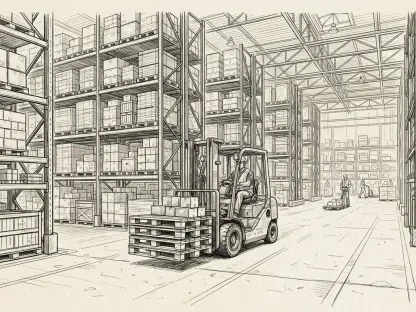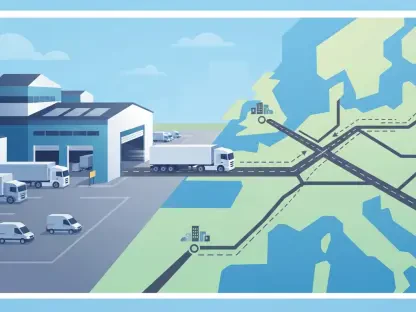

The global movement of goods is currently experiencing a profound structural realignment as Amazon transforms its internal delivery network into a comprehensive third-party utility. This metamorphosis marks the arrival of Amazon Supply Chain Services as a formidable challenger to legacy carriers such as UPS and FedEx. By offering a factory-to-doorstep model, the company effectively treats its vast infrastructure as a modular service available to any enterprise, regardless of their status on the retail marketplace. This shift fundamentally alters how industrial sectors perceive logistics, moving it from a cost center to a scalable strategic asset.
Strategic Drivers and Performance Metrics Reshaping the Industry
Emerging Trends in End-to-End Digital Supply Chain Orchestration
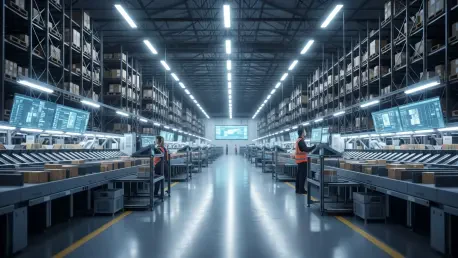
The adoption of centralized digital consoles allows businesses to manage complex movements across ocean, air, and ground channels from a single interface. Such orchestration reduces the traditional silos found in international trade, providing a unified view of inventory that can be redirected based on real-time demand. This level of transparency is particularly valuable for sectors like healthcare and automotive, where precision and timing are critical.
Moreover, the decoupling of logistics from the core retail platform enables companies to utilize unified inventory pools without being restricted by marketplace rules. This “logistics-as-a-service” approach allows major enterprise partners to streamline their operations, ensuring that stock is positioned closer to end consumers. By integrating these services, businesses can focus on product development while relying on a pre-built global network.
Measuring the Market Impact and Growth Potential of Amazon’s Physical Network
The physical scale of this ecosystem is staggering, encompassing a fleet of eighty thousand trailers and one hundred aircraft dedicated to seamless distribution. For businesses integrating these automated fulfillment tools, the results show significant performance boosts, including projected sales increases of nearly twenty percent. As this network expands, it captures a larger share of the global parcel delivery market, forcing traditional logistics giants to recalibrate their own operations to match this efficiency.
In contrast to older models, the current infrastructure provides a shipping network that functions seven days a week with consistent delivery windows. Forecasts suggest that this massive physical footprint will eventually serve as the primary backbone for a significant portion of global trade. The ability to offer such high-scale capacity at competitive rates positions the service as an essential tool for companies aiming to scale rapidly.
Overcoming the Operational and Competitive Hurdles of Decoupled Logistics
Transitioning a network originally designed for internal optimization into a client-facing service provider presents unique technical friction. Maintaining the hallmark delivery speed while catering to diverse industries with specialized requirements remains a significant operational challenge. Furthermore, the competitive response from legacy providers has intensified, as they leverage long-standing relationships and niche expertise to defend their market positions.
However, the pressure of maintaining twenty-four-seven global operations requires a relentless focus on reliability. Strategies to mitigate these hurdles involve the use of advanced automation to handle the complexities of multi-client fulfillment. Navigating these transitions successfully determines which providers can actually sustain the high-volume requirements of the modern industrial economy.
The Regulatory Framework and Compliance Standards for Global Distribution
Navigating the maze of international trade laws is essential for the continued success of global logistics services. Stringent security protocols and data privacy standards are mandatory to protect sensitive industrial information moving through digital networks. Additionally, compliance with environmental mandates and transportation safety standards requires constant investment in fleet modernization and monitoring technologies to ensure sustainable operations across borders.
Moreover, the interaction with cross-border logistics regulations often necessitates a localized approach within a global framework. Ensuring that every shipment meets the specific legal criteria of different jurisdictions prevents costly delays and maintains the integrity of the supply chain. These regulatory requirements serve as a high barrier to entry, reinforcing the dominance of players with the resources to manage complex compliance tasks.
The Roadmap for the Future of Data-Driven Global Commerce
Predictive intelligence is set to become the backbone of the product lifecycle, offering real-time visibility that minimizes waste and optimizes stock levels. This evolution positions the logistics infrastructure as a foundational utility for global trade, independent of the retail platform that birthed it. Future innovations in autonomous delivery and expansion into untapped global markets will likely cement this role as a primary driver of commercial activity.
Furthermore, the expansion of data-driven networks suggests a future where logistics is almost entirely automated. This trajectory points toward a global commerce environment where the physical delivery of goods is as seamless as the transmission of data. Such advancements will likely redefine the standard for consumer expectations and industrial efficiency worldwide.
Final Synthesis: Assessing the Long-Term Viability of the Logistics-as-a-Service Model
The evolution of this logistics ecosystem mirrored the trajectory of cloud computing, where internal tools eventually became indispensable global resources. Businesses that recognized this shift early secured a competitive advantage by integrating high-scale logistics into their core growth strategies. Ultimately, the transition toward integrated, data-driven networks provided a clear path for the next phase of global commerce.
Industry leaders moved toward these unified platforms to ensure reliability in an increasingly complex trade environment. These organizations identified that treating supply chain management as a modular utility allowed for unprecedented flexibility. Consequently, the adoption of such models set the stage for a new standard in global trade, where physical infrastructure and digital intelligence operated as one cohesive unit.