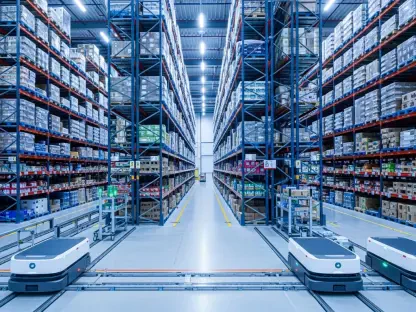

The global retail landscape is undergoing a profound metamorphosis as traditional brick-and-mortar operations yield to highly integrated omnichannel environments designed for speed. Retailers are racing to adopt robotics and computer vision to meet rising consumer expectations for immediate gratification. This shift has turned the last-mile race into a defining feature of modern logistics, forcing a total reimagining of how goods move across domestic and international distribution networks.
Analyzing the Core Drivers of Walmart’s Technological Pivot
Key Innovations Shaping the Omni-Channel Fulfillment Model
Strategic retrofitting of Regional Distribution Centers serves as the backbone of this strategy, transforming static warehouses into high-velocity engines. By deploying computer vision and handheld technology, the company empowers millions of associates with real-time inventory visibility. Consequently, physical stores have evolved into decentralized fulfillment nodes, drastically shortening the distance between products and consumers to maximize delivery velocity.
Evaluating Growth Projections and Operational Milestones
Automation investments are effectively lowering marginal costs in e-commerce fulfillment as systems scale. Currently, over sixty percent of stores receive freight from automated centers, marking a major operational milestone in the modernization journey. Despite robust sales growth, inventory levels have remained lean, proving that enhanced data visibility yields superior asset management compared to traditional methods.
Navigating the Complexities of High-Intensity Infrastructure Upgrades
Upgrading such vast infrastructure involves substantial financial risks, particularly when navigating economic fluctuations and capital expenditure peaks. Integrating sophisticated robotics into legacy systems requires meticulous planning to avoid service disruptions during peak demand periods. Moreover, the transition demands a focused strategy for workforce upskilling, ensuring that employees are prepared to operate alongside these advanced automated environments.
Compliance and Data Governance in the Age of Intelligent Supply Chains
Modern supply chains must navigate a dense thicket of regulatory standards regarding warehouse automation and robotic safety protocols. As systems rely more on interconnected devices and computer vision, data security and privacy have become paramount operational priorities. Furthermore, international trade requirements and environmental mandates are increasingly influencing the design of energy-efficient distribution networks across global markets.
The Future of Autonomous Commerce and Global Scaling
Emerging technologies like predictive AI and autonomous transit are poised to further decouple inventory replenishment from manual intervention. These advancements will likely enable a fully autonomous retail ecosystem that adapts to consumer demand in real-time. International markets represent the next frontier, where automation provides a decisive competitive edge over less technologically mature local retail competitors.
Synthesizing Efficiency and Innovation for Long-Term Retail Dominance
The strategic move toward peak automation spending served as a necessary precursor to securing long-term market dominance and sustainable profitability. Industry leaders observed how the convergence of physical footprints and high-tech logistics created a defensible moat against digital-only rivals. Stakeholders prioritized monitoring this transition into a technology-led powerhouse as the new standard for a future-proofed retail model.