
The sophisticated multi-billion dollar marketing strategies crafted in corporate boardrooms often evaporate the moment a consumer stands before a disorganized or understocked grocery shelf, highlighting a massive disconnect in retail execution. This specific point, frequently referred to as the last three feet of the shopper journey, remains the most volatile segment of the entire supply chain for Fast-Moving Consumer Goods (FMCG) companies. Even with the massive digital transformation witnessed across industries in recent years, many brands still struggle with significant revenue leakage caused by items that are out of stock, misplaced, or incorrectly priced. This disconnect between strategic intent and store-level reality creates a chaotic environment where potential sales are lost simply because the physical product did not meet the consumer at the right time. Artificial Intelligence has now emerged as the definitive bridge to close these execution gaps, providing the real-time visibility and automated precision necessary to reclaim lost profits. By moving beyond traditional, fragmented tracking methods, brands are utilizing machine learning and advanced data processing to harmonize their warehouse logistics with actual shelf conditions. This evolution shifts the focus from reactive damage control to proactive market leadership, ensuring that every marketing dollar spent translates directly into a verified presence on the retail floor.
Eliminating the Manual Audit Trap
For decades, FMCG brands have leaned heavily on a workforce of field representatives who traverse vast territories to manually audit shelf conditions using little more than spreadsheets or basic mobile forms. This legacy approach is fundamentally flawed by human subjectivity, fatigue, and the inevitable errors that occur when a person is tasked with counting hundreds of identical product units in a crowded aisle. The result is the notorious watermelon effect, where corporate dashboards appear healthy and green based on optimistic reporting, while the actual store environment is failing and red with chronic stockouts. Because manual audits are inherently slow, the data they generate is often obsolete by the time it reaches the regional manager, leaving headquarters with a distorted and outdated view of shelf compliance. This lack of transparency means that systemic issues, such as a retailer failing to stock a premium seasonal product, might go unnoticed for weeks, directly impacting the bottom line. Relying on these antiquated methods also places an immense burden on representatives, who spend a disproportionate amount of their store visit performing clerical tasks rather than engaging in high-value sales activities or negotiating for better shelf positioning with store managers.
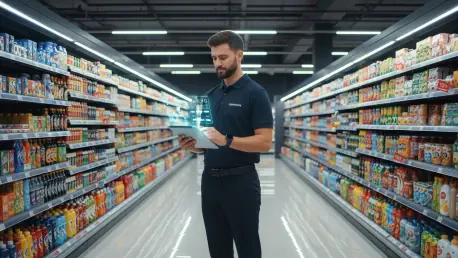
The integration of image recognition technology has revolutionized these field operations by allowing representatives to replace cumbersome clipboards with mobile cameras that capture the entire shelf in a matter of seconds. These AI-powered vision systems can identify every product, brand, and competitor SKU with a level of granular detail and near-perfect accuracy that no human auditor could ever achieve consistently. By automating the data collection process, brands effectively remove the element of human bias, ensuring that the insights flowing back to the central hub reflect the actual shopper experience. Beyond simple counting, these systems provide real-time feedback, alerting the representative to pricing errors or missing price tags before they even leave the retail location. This immediate corrective action transforms the field representative from a mere data collector into a high-impact strategist who can focus on building relationships and securing secondary displays. As these image recognition tools become more deeply embedded in daily workflows, they create a continuous loop of high-quality data that informs everything from planogram compliance to long-term category management strategies, ultimately ensuring the shelf looks exactly as the brand intended.
Solving the Crisis of Phantom Inventory
Out-of-stock items are perhaps the most significant killers of brand loyalty, often exacerbated by the phenomenon known as phantom inventory, where digital systems report a product as being in stock while the physical shelf remains empty. This discrepancy frequently occurs due to theft, breakage, or administrative errors in the receiving dock, creating a blind spot that prevents automatic reordering systems from functioning correctly. Traditional replenishment models, which rely almost exclusively on historical sales data, are fundamentally lagging indicators that cannot account for sudden, localized shifts in consumer behavior or micro-events. When a regional manager relies on yesterday’s sales figures to predict today’s needs, they are essentially driving by looking in the rearview mirror, which leads to missed revenue during high-demand periods. Without a mechanism for real-time visibility into what is actually happening at the shelf level, brands remain trapped in a cycle of reactive restocking that fails to keep pace with the modern consumer’s expectations for immediate availability. This lack of synchronization between the warehouse and the retail floor not only costs companies billions in lost sales but also erodes the trust that shoppers place in their preferred brands.
AI-driven demand sensing and predictive analytics have provided a sophisticated solution to this persistent inventory crisis by bridging the massive gap between warehouse logistics and the physical store shelf. By synthesizing current sales velocity with a wide array of external variables, such as local weather patterns, neighborhood events, and even social media trends, these advanced systems can forecast hyper-local demand with unprecedented precision. Instead of waiting for a stockout to occur, the AI can anticipate a spike in demand for specific products and alert the supply chain to prioritize shipments to the most critical locations. These systems are increasingly moving toward autonomous action, where the software can generate smart order suggestions or even trigger automatic replenishment requests based on visual evidence from on-shelf sensors or cameras. This level of granular forecasting ensures that products are distributed where they are most likely to be purchased, rather than being spread thinly across an entire region based on a generic average. By eliminating the reliance on flawed historical data, FMCG companies can maintain optimal stock levels, significantly reduce the incidence of phantom inventory, and ensure that their most popular products are always ready for the consumer.
Optimizing Field Logistics with Dynamic Routing
The efficiency of a field sales force is frequently undermined by the use of static beat plans, which mandate that representatives visit a predetermined list of stores on a fixed schedule regardless of the actual situation on the ground. This rigid approach often results in a prohibitively high cost to serve, as valuable time and resources are wasted visiting well-stocked rural outlets while high-volume urban locations suffer from urgent stockouts or display failures. In a dynamic retail environment, a store that required a visit last Tuesday might be perfectly fine today, while another location across town might be facing a sudden crisis that requires immediate intervention. Fixed schedules fail to account for these fluctuations, leaving brands in a position where they are perpetually behind the curve and unable to reallocate their human capital where it is most needed. This traditional routing logic ignores the immense potential for efficiency gains that can be achieved when field teams are managed as a responsive, data-driven network rather than a series of isolated routes. As fuel costs and labor expenses continue to rise, the inability to optimize these travel patterns represents a significant and unnecessary drain on a brand’s profitability and overall market effectiveness.
Dynamic routing has completely transformed the logistics of field execution by utilizing sophisticated algorithmic optimization to evaluate traffic patterns, sales velocity, and urgent stock alerts in real time. Rather than following a rigid path set weeks in advance, the sales force is intelligently directed to the specific locations that currently offer the most significant immediate revenue potential or require the most urgent shelf corrections. This shift ensures that every mile driven and every hour spent in the field is maximized for the highest possible return on investment, allowing smaller teams to cover larger territories more effectively. Furthermore, the integration of geospatial intelligence provides representatives with context-aware insights and automated upselling cues the moment they cross the geofence of a retail location. For instance, a representative might receive a notification that a specific product is trending upward in a neighboring store, allowing them to proactively pitch an expanded order to the current store manager. By empowering the field force with these real-time tactical insights, AI transforms the service model from a routine check-in to a strategic revenue-generating operation. This optimized approach not only reduces operational overhead but also significantly improves the brand’s agility in responding to local market conditions.
Closing the Loop on Trade Spend Leakage
FMCG brands dedicate a staggering portion of their gross revenue to trade promotions and marketing agreements, yet a large percentage of this investment vanishes into a black hole of poor execution and zero accountability. These expensive initiatives, ranging from premium end-cap displays to deep price discounts, often fail to reach their full potential because they are never properly set up by the retailer or are placed in low-traffic corners of the store. Without a reliable and automated way to verify compliance across thousands of locations, marketing departments and sales teams remain siloed, unable to provide the data needed to hold retailers accountable for the shelf space that has been bought and paid for. This lack of transparency means that billions of dollars are essentially gambled on the hope that store managers will follow through on agreed-upon merchandising standards. When promotional execution is left unmonitored, the brand not only loses the direct sales associated with that specific campaign but also lacks the empirical data necessary to understand why a particular promotion succeeded or failed. This structural gap in the execution loop prevents companies from learning from their past investments, leading to a repetitive cycle of inefficient spending that hampers long-term growth.
AI-driven optimization has introduced a closed-loop system where computer vision and automated reporting verify the physical placement and execution of every promotional asset in real time. By capturing images of displays and signage, the system can instantly cross-reference the visual reality with the contractual requirements of the trade agreement, flagging any discrepancies for immediate resolution. This verified data is then integrated with real-time sales figures, allowing executives to see a direct and undeniable correlation between display compliance and localized sales spikes. For the first time, brand leaders possess the visibility required to pull funding from underperforming or non-compliant campaigns and reallocate those resources toward the high-traffic stores and promotions that are actually driving incremental growth. This level of transparency fosters a more collaborative and accountable relationship with retail partners, as discussions are grounded in objective data rather than anecdotal evidence. By closing the loop on trade spend leakage, FMCG brands can ensure that every promotional dollar is working as hard as possible to capture consumer attention and drive volume. This shift toward data-driven merchandising not only secures the initial investment but also provides a clear roadmap for future marketing strategies based on proven performance metrics.
Achieving a New Standard of Retail Orchestration
The transition from reactive observation to proactive orchestration became the defining characteristic of the modern FMCG landscape as companies embraced the power of integrated intelligence. Organizations moved beyond the era where execution errors were only discovered weeks after the damage was done, opting instead to manage the last mile with a level of agility that previously seemed impossible. By integrating AI and predictive analytics into every level of the supply chain, successful brands finally aligned their high-level boardroom strategies with the micro-realities of the grocery aisle. This holistic approach allowed leaders to anticipate market shifts and stock requirements before they manifested as empty shelves or lost revenue. The ability to turn raw data into autonomous, store-level action proved to be the primary factor that separated market leaders from those who struggled to maintain their presence in an increasingly competitive environment. Those who invested in these technologies witnessed a dramatic reduction in waste and a significant improvement in shelf availability, which directly translated into higher consumer satisfaction and expanded market share. The historical barriers between the manufacturer’s vision and the shopper’s reality were effectively dismantled through the application of precision technology.
As the competitive landscape grew more complex, the path forward for FMCG executives involved a fundamental commitment to data democratization and the elimination of functional silos within the organization. Moving toward a unified data architecture enabled marketing, sales, and supply chain teams to operate from a single source of truth, ensuring that every strategic decision was backed by real-time shelf insights. Companies that prioritized the training of their field forces to work alongside AI tools found that their representatives became more influential partners to retailers, rather than just service providers. The next stage of this evolution focused on the deep integration of consumer sentiment analysis with physical shelf data to create a truly sentient supply chain that could adjust in real time to shifting social trends. Leaders also recognized that transparency in trade spending was no longer a luxury but a requirement for maintaining healthy margins in a low-growth environment. By focusing on these actionable areas, brands secured a resilient future where retail execution was no longer a point of failure but a core competitive advantage. This systematic shift in operational philosophy ensured that the brand’s promise to the consumer was consistently fulfilled at the moment of purchase, regardless of the store’s location or the complexity of the category.