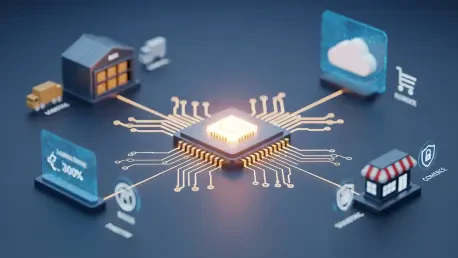

The landscape of British commerce is undergoing a radical transformation as merchants face the mounting pressure of managing complex inventories across multiple physical and digital storefronts simultaneously. In a strategic move to address these operational bottlenecks, DNA Payments has entered into a significant partnership with E-Trading and Business Services Ltd, the developers of the AI-enhanced TABS platform. This collaboration represents a fundamental shift in how trade and retail businesses function by merging high-capacity payment infrastructure with sophisticated enterprise resource planning. By embedding financial processing directly into the core management software, the two entities provide a unified digital environment that serves as a single source of truth for all business activities. This integration is designed to replace the fragmented patchwork of legacy systems that often lead to data discrepancies and administrative fatigue. As businesses look toward 2027 and beyond, the ability to view real-time performance metrics across warehouses, trade counters, and online platforms has become a critical requirement for maintaining a competitive edge in an increasingly fast-paced market.
Resolving Operational Fragmentation through System Integration
Modern retail environments have long been plagued by the inefficiency of using disconnected software packages for essential tasks such as point-of-sale transactions, web orders, and back-office accounting. This technological fragmentation creates isolated data silos where information in one system does not automatically reflect changes in another, leading to frequent inventory errors and manual data entry requirements. The alliance between DNA Payments and ETABS effectively dismantles these barriers by creating a cohesive ecosystem where payment data flows seamlessly into warehouse management and stock control modules. When a transaction occurs, the system updates everything from the general ledger to the dispatch list in real time, ensuring that staff members are always working with the most accurate information available. This level of synchronization is no longer a luxury but a necessity for merchants who need to pivot quickly in response to shifting consumer demands or supply chain disruptions.
Building on this foundation of technical unity, the practical benefits extend deep into the daily administrative workflows of a typical UK business owner. One of the most immediate improvements is found in the reconciliation process, which has traditionally been a time-consuming and error-prone task involving the manual matching of bank statements to sales reports. By automating this link through the TABS platform, the partnership removes the human element from repetitive bookkeeping tasks, allowing employees to redirect their efforts toward customer-facing activities or strategic planning. The elimination of manual entry not only reduces the risk of costly financial mistakes but also provides a level of transparency that simplifies internal audits and regulatory reporting. Merchants can now access a holistic view of their financial health through a single management portal, transforming the way they approach budgeting and resource allocation by basing decisions on verifiable, real-time data rather than historical guesswork.
Targeted Solutions for the Trade and Hardware Industry
While generic payment solutions often fail to account for the specific complexities of niche markets, this partnership specifically addresses the intricate requirements of the tool and hardware trade sector. ETABS has already established a strong presence in this industry, maintaining deep-rooted integrations with major trade suppliers such as Toolbank, Draper, and Sealey. By combining this industry-specific knowledge with the financial muscle of DNA Payments, the collaboration offers a bespoke platform capable of handling high-volume trade environments where speed is of the essence. At a busy trade counter, professionals expect rapid service and immediate confirmation of stock availability; any delay in processing or inventory lookup can result in lost revenue and damaged reputation. The integrated system ensures that even the most complex orders involving multiple SKUs and varied pricing tiers are processed with the precision required by the hardware sector, solidifying the supply chain for essential building and maintenance materials.
Beyond the efficiency of sales processing, the partnership addresses the critical need for advanced security and compliance measures within small and medium-sized enterprises. Many independent merchants lack the capital to build and maintain the robust cybersecurity frameworks necessary to protect sensitive cardholder data against modern threats. To solve this, the collaboration leverages the PCI DSS-compliant infrastructure of DNA Payments, which incorporates Point-to-Point Encryption and 3DS v2 authentication protocols as standard features. This approach effectively offloads the technical and legal burdens of data protection from the merchant to the service provider, ensuring that every transaction meets the highest global security standards. By utilizing these pre-integrated security layers, business owners can focus on expanding their operations without the constant worry of data breaches or the complexities of managing high-level encryption keys, providing a secure environment that builds long-term trust with their professional and retail clientele.
Adapting to the Emergence of Embedded Finance
The movement toward embedded finance marks a significant departure from the traditional model of standalone payment terminals, as businesses increasingly prefer financial tools that are natively built into their management software. This trend is driven by a shift in consumer behavior where the distinction between online browsing and in-store purchasing has almost entirely vanished, creating a demand for a frictionless omnichannel experience. This partnership serves as a direct response to this evolution, ensuring that a purchase made at a physical trade counter is instantly synchronized with online inventory levels and warehouse dispatch schedules. Such a high degree of connectivity prevents the common frustration of “out-of-stock” notifications for items that appear available online, thereby improving the overall customer experience and increasing brand loyalty. In the current economic climate, providing a consistent and reliable service across all buying channels is the most effective way for a merchant to differentiate themselves from competitors.
This strategic alignment also signals a broader change in how major fintech players are approaching growth in a saturated market. Rather than attempting to serve every industry with a one-size-fits-all product, companies like DNA Payments are prioritizing deep vertical integration within specific niches to provide more value to their users. By focusing on the hardware and tool trade, the alliance creates a scalable solution that allows smaller independent businesses to access the same sophisticated technology typically reserved for international conglomerates. This democratization of high-level business tools empowers local merchants to scale their operations efficiently from 2026 to 2028 without needing to overhaul their underlying infrastructure as they grow. Ultimately, this integrated model serves as a blueprint for the future of British commerce, demonstrating that the most successful technological solutions are those that simplify the complex realities of modern business management while providing the security and scalability required for long-term success.
Future Considerations for Operational Scaling
To maximize the benefits of this integrated ecosystem, merchants should begin by conducting a comprehensive audit of their existing data silos to identify where manual entry currently creates the most friction. Transitioning to a unified platform like the one offered by DNA Payments and ETABS is not just a software upgrade; it is an opportunity to redesign internal workflows for maximum efficiency and better customer engagement. Business owners should focus on training their staff to utilize the real-time analytics provided by the TABS portal, as these insights are invaluable for optimizing stock levels and identifying emerging sales trends before they become obvious through traditional reporting. Implementing a phased migration strategy can help minimize disruption to daily sales, ensuring that both the trade counter and the digital storefront remain fully operational while the new systems are being integrated into the core business logic.
Looking ahead, the successful adoption of embedded finance will require a proactive approach to technology management where the merchant views their payment provider as a strategic partner rather than just a utility. As the retail landscape continues to evolve, businesses must stay informed about upcoming updates to the TABS platform, particularly those involving AI-driven inventory forecasting and automated procurement features. Engaging with the provider to offer feedback on sector-specific needs can lead to further refinements that benefit the entire trade community, fostering an environment of continuous improvement and innovation. By embracing this unified approach, UK merchants positioned themselves to handle the complexities of modern commerce with confidence, ensuring they have the technological backbone needed to thrive in a market that rewards speed, accuracy, and a seamless customer experience across every possible point of contact.