
The once-simple paradigm of the neighborhood convenience store has been fundamentally dismantled by an intricate web of autonomous systems and predictive algorithms that now dictate every facet of the modern shopper’s journey. This evolution marks a departure from the legacy model, which relied almost exclusively on physical proximity and real estate value. Today, the sector is defined by a “tech-centric” architecture where software intelligence precedes the physical transaction. This shift toward predictive convenience implies that the store is no longer a passive destination but an active participant in a consumer’s daily routine, anticipating needs through a combination of historical data and real-time environmental triggers.
The core principles of this technological surge rest on the integration of disparate data streams into a unified operational intelligence. By 2026, the industry has moved beyond simple point-of-sale systems toward a decentralized ecosystem where every cooler door, fuel pump, and shelf sensor contributes to a live digital twin of the retail environment. This context is vital for understanding how the modern convenience store maintains relevance in an era of ultra-fast delivery and digital-first shopping. The technology reviewed here represents the culmination of years of experimentation, moving from speculative pilots to robust, revenue-generating infrastructure.
The Transformation of Convenience: From Location-Based to Tech-Centric Models
The transition toward a tech-centric model represents a significant ideological pivot for retail operators. Historically, a store’s success was determined by its corner location or its visibility from a main highway. However, the current landscape prioritizes “digital visibility” and the ability to insert the brand into the consumer’s pre-trip planning phase. This transformation is driven by the necessity to solve the friction inherent in traditional retail, such as wait times and out-of-stock items, which are now mitigated by a sophisticated stack of hardware and cloud-based software.
Central to this evolution is the concept of predictive convenience, a strategy that utilizes machine learning to forecast demand at a hyper-local level. This allows retailers to move away from a reactive posture—waiting for a customer to enter and browse—to a proactive one, where inventory and labor are optimized hours before peak traffic arrives. In this broader technological landscape, the convenience store serves as a high-frequency testing ground for innovations that eventually trickle up to larger big-box retailers. The emphasis is on a seamless handoff between the digital interface and the physical environment, ensuring that the brand experience remains consistent regardless of the touchpoint.
Core Components of the Modern Convenience Ecosystem
Agentic and Generative Artificial Intelligence
The deployment of agentic artificial intelligence represents the most profound shift in how commerce is conducted within the convenience sector. Unlike basic automation, which follows a rigid set of rules, AI “agents” possess the capability to perform multi-step tasks and make autonomous decisions on behalf of both the retailer and the consumer. In the context of autonomous commerce, these agents manage complex logistics such as inventory replenishment and dynamic pricing without human intervention. They function as the connective tissue between a customer’s smart home devices and the store’s backend, ensuring that routine purchases are handled with surgical precision.
This shift has effectively altered the retail paradigm by removing the cognitive load from the shopper. When an AI agent handles the procurement of household staples or frequent snacks, the physical store must pivot its value proposition toward experience and immediate gratification. For the operator, the performance of these agents is measured not just by accuracy but by their ability to reduce operational overhead. By automating the mundane aspects of commerce, retailers are seeing a marked increase in efficiency, allowing store personnel to focus on high-touch tasks like fresh food preparation and customer engagement.
Integrated Retail Media Networks (RMNs)
Retail Media Networks have emerged as the “hidden engine” of profitability in the modern convenience store ecosystem. By transforming physical assets like fuel dispenser screens and in-store digital boards into high-value advertising real estate, retailers have unlocked a secondary revenue stream that often carries higher margins than the products themselves. These networks function on a sophisticated technical architecture that allows for real-time bidding and hyper-targeted content delivery based on the profile of the individual standing at the pump or the checkout counter.
The technical performance of these systems is rooted in their ability to bridge the gap between digital impressions and physical sales. Advanced RMNs use computer vision and loyalty data to provide “closed-loop” reporting, showing advertisers exactly how many people who saw a digital ad actually purchased the product within the same visit. This level of transparency has attracted significant investment from consumer packaged goods brands. As a result, the physical store has become a dynamic media platform, where the environment itself adapts to the consumer’s preferences, creating a personalized marketing experience that was previously only possible in the digital realm.
Innovations and Emerging Industry Trends
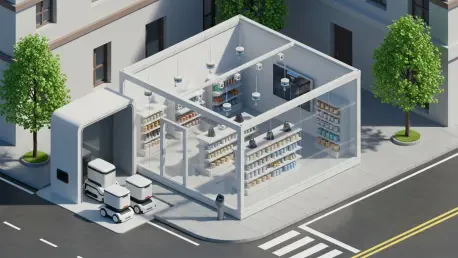
The industry is currently witnessing a transition described as “from screens to streets,” where digital convenience manifests in physical mobility. This trend is most visible in the proliferation of autonomous delivery robots and checkout-free store formats that utilize sensor fusion and weight-sensitive shelving. These innovations are designed to eliminate the final barriers to a truly frictionless experience. For instance, the deployment of small-scale robotic fleets allows a convenience store to extend its reach beyond its physical walls, serving a three-mile radius with zero-emission, low-cost delivery.
Simultaneously, the landscape of loyalty is being radically overhauled through hyper-personalized programs that have phased out physical reward tags in favor of biometrics and mobile-first identification. The modern loyalty program is no longer a simple “buy ten, get one free” scheme; it is a sophisticated data-gathering tool that creates a unique value proposition for every individual. By analyzing purchase frequency, time of day, and even weather patterns, these systems generate bespoke offers that feel intuitive rather than intrusive. This shift away from generic marketing toward behavioral science is a critical component of maintaining customer retention in an increasingly fragmented market.
Real-World Applications in Modern Retail Operations
Operational Efficiency and Knowledge Management
In the realm of internal operations, artificial intelligence has become the primary tool for streamlining Standard Operating Procedures (SOPs). Modern retailers are utilizing generative AI to create “living documents” that employees can query in real-time. Instead of searching through a dusty binder for food safety protocols or equipment maintenance steps, a worker can simply ask a voice-activated terminal for instructions. This immediate access to internal data retrieval significantly reduces the time required for onboarding and ensures a higher level of consistency across multiple locations.
Furthermore, retailers have implemented vision-based AI to monitor store cleanliness and foodservice safety. Cameras equipped with edge-computing capabilities can detect if a coffee carafe is nearly empty or if a spill has occurred on the floor, alerting the staff via wearable devices. This proactive monitoring ensures that the store environment remains inviting without requiring constant manual inspections. The data collected from these interactions is then fed back into the central system, allowing management to identify store-level performance trends and allocate resources more effectively.
Frictionless Payment Systems and Service Subscriptions
The modernization of the payment stack has moved beyond simple contactless cards toward a mobile-first, integrated financial ecosystem. Modernized payment stacks now prioritize speed and security, often utilizing Automated Clearing House (ACH) transactions to bypass traditional credit card fees. This allows retailers to offer deeper discounts to loyal customers who use the store’s proprietary payment app. The result is a more direct financial relationship between the brand and the consumer, which fosters a sense of exclusivity and reduces transaction friction.
In addition to traditional transactions, the industry has seen a massive uptick in recurring revenue models, such as car wash or coffee subscriptions. By leveraging automated payment systems, retailers can secure a predictable monthly income while encouraging frequent store visits. These subscription models are often managed through the same loyalty app, creating a unified hub for all customer interactions. This transition toward a service-based economy within the retail sector represents a fundamental change in how profitability is measured, shifting the focus from individual transaction value to long-term customer lifetime value.
Technical Hurdles and Market Implementation Challenges
Despite the rapid advancement of these technologies, the industry faces the significant challenge of “data fatigue.” Retailers are often overwhelmed by the sheer volume of information generated by sensors, loyalty apps, and POS systems. The technical necessity of cleaning and normalizing this information within centralized data lakes is a massive undertaking. Without a clean data set, the insights generated by AI agents can be misleading or outright incorrect, leading to poor inventory decisions or ineffective marketing campaigns. Retailers must invest heavily in data engineering to ensure that their tech stack remains an asset rather than a liability.
There are also regulatory and market obstacles that threaten to stifle the growth of automated systems. One major concern is the potential loss of impulse purchases—the historical backbone of c-store profitability—due to the efficiency of automated replenishment agents. If a customer never enters the store because an AI agent ordered their snacks for delivery, the retailer loses the opportunity to upsell. Additionally, there are ongoing debates regarding data privacy and the ethical use of computer vision for customer tracking. Navigating these complexities requires a balanced approach that prioritizes transparency and consumer trust over pure technical efficiency.
Future Outlook: The Path Toward 2026 and Beyond
As the industry moves forward, the trajectory of “Agentic AI” will likely lead to a physical retail landscape that is almost entirely self-correcting. We are moving toward a period where the “New C-Store Tech Playbook” focuses on real-time performance management, where the store environment adjusts its lighting, temperature, and even digital signage based on the collective mood and behavior of the people inside. Potential breakthroughs in energy management systems, powered by the same AI cores that manage inventory, will also make these high-tech stores more sustainable and cost-effective to operate in the long term.
The evolution of retail will also see a deeper integration with the broader “smart city” infrastructure. Convenience stores are positioned to become essential hubs for the electric vehicle (EV) charging network, where the downtime spent charging is monetized through premium digital content and high-quality foodservice. The store of the near future will not just be a place to buy goods but a critical node in the urban grid, providing everything from data processing power to localized logistics support. This expansion of the c-store’s utility will redefine the boundaries of what a retail brand can be.
Final Assessment of the Technological Evolution
The technological evolution of the convenience store has successfully redefined the sector from a low-tech necessity to a high-tech innovation hub. The integration of AI, digital loyalty, and retail media has provided operators with the tools to defend their margins against the encroachment of purely digital competitors. While the shift toward automation and data-driven decision-making has introduced new complexities, the overall impact on industry profitability has been overwhelmingly positive. The concept of “convenience” has been elevated from a simple matter of location to a sophisticated service that prioritizes time-savings and personalization above all else.
Retailers who embraced this transition early on managed to secure a significant competitive advantage. They utilized data to move beyond the “one-size-fits-all” approach, creating environments that resonated with a more diverse and demanding consumer base. The move toward frictionless payments and subscription models stabilized cash flows and deepened customer relationships in ways that traditional marketing never could. These organizations successfully navigated the technical hurdles of data normalization, ensuring that their systems remained agile and responsive to shifting market conditions.
Ultimately, the blueprint for success in the modern era became a robust, integrated tech stack that treated every customer interaction as a data point for improvement. The industry proved that physical retail could thrive in a digital world by leveraging its unique strengths—proximity and physicality—through the lens of advanced technology. Operators who focused on the “screens to streets” philosophy effectively extended their brand influence far beyond the physical footprint of their buildings. As a result, the convenience store evolved into a resilient, multi-dimensional business model that set the standard for the broader retail landscape.